














































canstar
canstar
Fact Checked

Answer a few questions to refine these results

Get started
Showing results forRefinancing a $500k owner-occupied fixed rate loan on a $1.0M property in New South Wales
Star Rating
Interest rate p.a.
Comparison rate p.a.
Monthly repayment
Macquarie Bank
Star Rating
3 year fixed
Principal & Interest
  • Minimum deposit: 30%
  • Application fee: $0
  • Ongoing fee: $0
  • Additional repayments

Fees & charges apply. Australian Credit Licence 237502

NRMA Home Loans
Star Rating
2 year fixed
Principal & Interest
  • Minimum deposit: 50%
  • Application fee: $0
  • Ongoing fee: $15/mth
  • Offset account
  • Additional repayments
  • Redraw facility

Fees & charges apply. Australian Credit Licence 237879 is held by Bendigo and Adelaide Bank Limited, the credit provider.

IMB
Star Rating
2 year fixed
Principal & Interest
  • Minimum deposit: 5%
  • Application fee: $449
  • Ongoing fee: $6/mth
  • Additional repayments
  • Redraw facility

Fees & charges apply. Australian Credit Licence 237391

Unity Bank
Star Rating
3 year fixed
Principal & Interest
  • Minimum deposit: 5%
  • Application fee: $500
  • Ongoing fee: $0
  • Additional repayments
  • Redraw facility

Fees & charges apply. Australian Credit Licence 238311

AMP Bank
Star Rating
2 year fixed
Principal & Interest
  • Minimum deposit: 20%
  • Application fee: $0
  • Ongoing fee: $415/yr
  • Additional repayments
Go to Broker
with Finspo

Fees & charges apply. Australian Credit Licence 234517

ING
Star Rating
1 year fixed
Principal & Interest
  • Minimum deposit: 20%
  • Application fee: $0
  • Ongoing fee: $299/yr
  • Additional repayments
Go to Broker
with Finspo

Fees & charges apply. Australian Credit Licence 229823

loans.com.au
Star Rating
1 year fixed
Principal & Interest
  • Minimum deposit: 10%
  • Application fee: $0
  • Ongoing fee: $0
  • Additional repayments

Fees & charges apply. Australian Credit Licence 395219

St.George Bank
Star Rating
2 year fixed
Principal & Interest
  • Minimum deposit: 30%
  • Application fee: $0
  • Ongoing fee: $395/yr
  • Additional repayments
  • Redraw facility
Go to Broker
with Finspo

Fees & charges apply. Australian Credit Licence 233714

NAB
Star Rating
2 year fixed
Principal & Interest
  • Minimum deposit: 30%
  • Application fee: $0
  • Ongoing fee: $12/mth
  • Additional repayments
Go to Broker
with Finspo

Fees & charges apply. Australian Credit Licence 230686

MyState Bank
Star Rating
2 year fixed
Principal & Interest
  • Minimum deposit: 30%
  • Application fee: $300
  • Ongoing fee: $0
  • Additional repayments
Go to Broker
with Finspo

Fees & charges apply. Australian Credit Licence 240896

Firstmac
Star Rating
1 year fixed
Principal & Interest
  • Minimum deposit: 10%
  • Application fee: $0
  • Ongoing fee: $0
  • Additional repayments
Go to Broker
with Finspo

Fees & charges apply. Australian Credit Licence 290600

Showing 11 of 11 results

To see more results adjust the filters above

Unsure of a term in the above table?

The initial results in the table above are sorted by Star Rating (High-Low), Comparison rate (Low-High), Interest rate (Low-High), then Provider Name (Alphabetical). Additional filters may have been applied, see top of table for details.

Compare from a range of home loan providers

provider logo
provider logo
provider logo
provider logo
provider logo
provider logo
provider logo
provider logo
provider logo
provider logo
provider logo
provider logo
provider logo
provider logo
provider logo
provider logo
provider logo
provider logo
provider logo
provider logo
provider logo
provider logo
provider logo

We do not compare all brands in the market, or all products from our participating brands. At times certain brands or products may not be available or offered to you. Learn more.

A better way to compare fixed rate home loans

Teal Scales

It’s free to compare

There’s no cost to use our comparison tool. See your options side by side to help you in your search.

Pages opening icon

See more of the market

We show you hundreds of home loans from our database, whether they’re partners or not, so you can compare in minutes.

Shield with a tick

Research and ratings that showcase true value

Our Research team rates and reviews lenders and products without commercial influence to help you easily compare fees, features, and repayments.

How to compare home loans better with Canstar

Aerial view of a suburb

Discover our latest award-winning home loan providers

2026 Outstanding Value Award
award logo
Home LenderFixed Home LenderInvestment Home LenderInvestment Fixed Home Lender
2026 Outstanding Value Award
award logo
Home LenderFixed Home LenderInvestment Home LenderInvestment Fixed Home LenderInvestment Variable Home Lender
2026 Outstanding Value Award
award logo
Investment Variable Home Lender

Better deals are found when you compare

Canstar helps millions of Australians each year compare and find better deals

Google Logo

Rated 4.3 / 5

by our customers on Google Reviews

Based on 317 reviews

Ratings as of 10/08/2026

Fixed rate home loan tips from our expert

Longer fixed terms trade flexibility for certainty 

Locking in for longer can protect you from rate rises during that whole period, but you’ll also limit your ability to switch loans or benefit if rates fall.

Break costs can be significant if your plans change 

Selling, refinancing, or paying off a fixed loan early can trigger break fees. These are calculated based on the interest your lender stands to lose and can run into the thousands of dollars.

Fixed loans often limit extra repayments 

Most fixed rate loans cap additional repayments (commonly at around $10,000 per year) before fees apply. Keep in mind most variable loans offer unlimited extra repayments.

Guide to fixed rate home loans

What is a fixed rate home loan?

A fixed rate home loan has an interest rate that’s locked in (or fixed) for a set period of time. During this time, your interest rate won’t change and your repayments will remain relatively the same. This can give you certainty around how much your repayments will cost you and may help you when budgeting.

What happens at the end of your fixed home loan term?

At the end of your fixed rate period, your loan will usually transition to a ‘revert’ rate. A revert rate is often your lender’s standard variable rate, which will typically be higher than other variable rates it offers.

From here you can choose to lock in another fixed rate period - keeping in mind rates may have changed, negotiate a different variable rate, or consider a split rate home loan.

If you find a better deal elsewhere, you could also consider refinancing to a new lender. There may be costs involved for doing so, like loan discharge fees from your current lender and loan application fees from your new one.

How long can you fix a home loan rate for?

Most lenders offer fixed rate home loans with terms between one and five years. Longer terms are quite rare and usually determined on a borrower-by-borrower basis.


What are the best fixed rate home loans?

While there’s no one ‘best’ fixed rate home loan, you can find the best one for you by thinking about your needs and budget. 

If you’re comparing fixed rate home loans, Canstar’s Home Loan Awards recognise the financial institutions offering outstanding value to borrowers. Our most recent award winners were:

2026 Outstanding Value Award - Home Lender: Australian Mutual Bank, BankVic, Hume Bank, Pacific Mortgage Group, People’s Choice (now part of People’s First Bank), Unity Bank, and Up.

2026 Outstanding Value Award - Fixed Home Lender: Australian Mutual Bank, BankVic, Greater Bank, Hume Bank, and Unity Bank.


How to find the best fixed rate home loans

When searching for the best fixed rate home loan using the comparison table above, you should consider a loan’s:

  • Interest rate, which determines how much interest you pay each repayment, expressed as a percentage per year. Fixed interest rates are set for the period of time you choose.
  • Comparison rate, which takes into account both the interest rate and certain upfront and ongoing fees. This can give you a better idea of the true cost of a loan each year.
  • The loan’s required loan-to-value ratio (LVR), which is the amount you need to borrow compared to the value of the property you’re buying or refinancing.
  • Fees like loan application and establishment, valuation, legal, settlement, and ongoing fees.
  • Features that may help you manage your money and mortgage more smoothly.
  • Whether the provider is an Award Winner, as Award-winning loan products have been reviewed and rated by our expert researchers and found to offer customers outstanding value on both price and features.

What are the lowest fixed rate home loans?

You can find some of the lowest fixed rate home loans from our online partners by using the comparison table above.

Just because a loan has the lowest rate doesn’t necessarily mean it's the cheapest. That’s why it’s important to take into account both the interest and comparison rate when comparing fixed rate home loans. Some of the lowest fixed rates are also usually reserved for borrowers with lower LVRs.


What features do fixed rate home loans come with?

Fixed rate home loans typically have fewer features than variable rate ones, meaning you may not be able to benefit from offset accounts, redraw facilities, or have the ability to make unlimited additional repayments.

Some lenders do offer a rate lock on fixed rate home loans, which allows you to ‘lock in’ a fixed rate before your loan settlement, generally for up to 90 days. This can protect you from potential rate rises in the time between applying for the home loan and your loan settling.

Say, for example, you apply for a home loan with a fixed interest rate of 6% p.a., but by the time your purchase of your new property settles, the fixed rate could have risen to 6.25% p.a.

If you’d locked in your rate, you’d be guaranteed the 6% rate, even if your lender’s rates have gone up.

How much does a rate lock cost?

Some lenders charge a flat fee for a rate lock, while others will charge a percentage of the loan amount. To give you an idea, at the time of writing, here’s what the big four banks charge:

  • ANZ: $750 per $1 million in lending
  • CommBank: $750
  • NAB: 0.15% of loan amount
  • Westpac: 0.10% of loan amount

Are there downsides to locking in a rate?

There are some potential drawbacks to be wary of, so it’s important to consider the fact that:

  • Rate lock fees tend to be non-refundable.
  • If rates stay the same or go down during the rate lock period, or if your lender does not approve your application, you’ll still pay the fee.
  • If you change your mind during a rate lock period, and find a more favourable rate you want to switch to, you’ll be charged another fee for locking that rate in.

Make sure you look at what features are available on the specific fixed rate home loan you’re considering before you apply.


What happens when you refinance your fixed rate home loan?

If you refinance a fixed rate home loan during the fixed term, you may need to pay break fees. The cost of break fees are usually based on how much is still owing on the loan, the time remaining on the fixed period, and how much variable interest rates have changed since you first took out the loan. If rates are lower than they were when you fixed, you’ll likely face higher break costs, and vice versa.

There may be regular refinancing costs to keep in mind as well, like discharge and loan establishment fees.


What are the pros and cons of a fixed rate home loan?

Pros

  • Certainty: Your repayments will stay relatively the same during your fixed period. This could make budgeting easier.
  • Protected against future rate rises: If your lender decides to increase its rates, your repayments will not be affected.

Cons

  • You may miss out on lower rates: If your lender decreases its rates, you won’t benefit and may miss out on a lower rate.
  • Less flexible: For example, there may be restrictions on making additional repayments and you may be charged a break fee if you decide to change your loan during the fixed term.
  • Less features: Fixed rate home loans generally lack features that typically come with variable rate ones. For example, you may not be able to access an offset account or a redraw facility.

Why apply for a fixed rate home loan?

If you’re someone who values certainty, you might find a fixed rate home loan beneficial. Since your repayments stay relatively the same, it’s usually easier to budget for this kind of loan as well.


When should you choose a fixed rate home loan?

There are a few different situations in which you may choose a fixed rate home loan over a variable rate one:

  • Fixed rates are low: If rates are particularly low (and you don’t expect them to get lower), fixing could be a good idea.
  • You value certainty: Fixed rate home loans are generally easier to budget for, as your repayments will stay relatively the same throughout your fixed term.
  • You want to manage cash flow: If you’re an investor, you may find a fixed rate helps you forecast your cash flow and plan your finances. This can be particularly helpful if you have investment properties generating rental income.

How long should you fix your home loan rate for?

This will depend on your financial situation and preferences, as well as the current and forecasted interest rate environment. For example, if rates are likely to increase in the long term, fixing at a lower rate for an extended period of time may be beneficial. On the other hand, if rates are poised to drop, you may only want to fix for a shorter period of time, say one year, in order to cash in on predicted rate cuts. Of course, it’s worth noting that rate changes aren’t guaranteed.


Who decides when fixed interest rates go up or down?

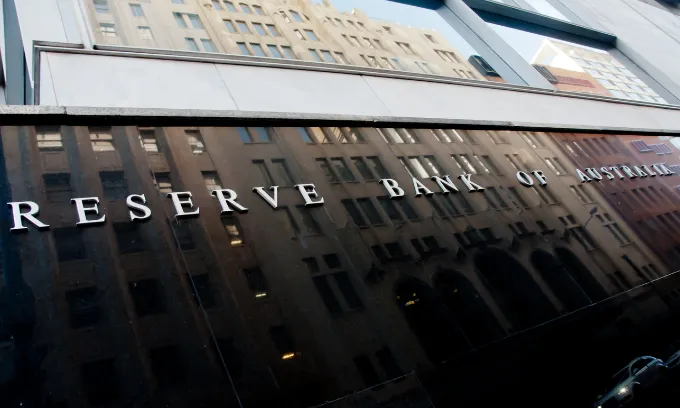
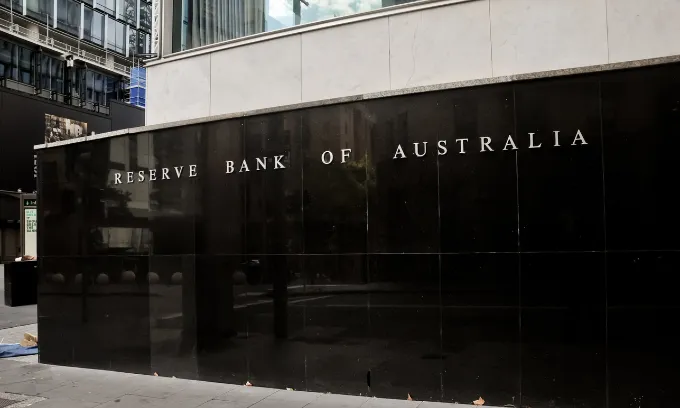
Your lender decides whether to put rates up or down, guided by both its own operating costs and the cash rate set by the Reserve Bank of Australia (RBA). The cash rate, in large part, determines banks’ operating costs, as it represents how much they need to pay to borrow on the overnight money market (which many need to do in order to meet their liquidity requirements).

Your lender is not required to set rates based on the cash rate, however it will generally follow the RBA closely. If the RBA puts the cash rate up, your lender will typically pass its additional costs onto you in the form of increased rates, whereas if the cash rate drops, lenders will generally cut rates to stay competitive.

Even when the cash rate is held steady, rates can change due to other factors.


Who’s eligible for a fixed rate home loan?

Eligibility for a fixed rate home loan should be much the same as any other type of owner-occupier home loan. Generally, you’ll need to:

  • Be over 18 years of age
  • Be an Australian citizen or permanent resident (or be applying with one)
  • Meet your chosen lender’s lending criteria, like having an eligible source of income
  • Have a deposit or equity of at least 5% of a property’s value 
  • Have a positive credit history and a good credit score

FAQs about fixed rate home loans

Normally, when you take out a fixed rate home loan, your lender will source the funds it provides you from the wholesale money market, and it will pay a lower rate of interest to do so.

If you break your fixed rate agreement when interest rates are lower than you locked in for, your lender might struggle to redistribute the funds and realise the same profit margin. If it stands to lose money, it will usually pass this loss onto you in the form of a break fee.

On the other hand, if rates are higher than when you fixed, your lender may charge you a far smaller break fee, or even waive the cost altogether.

You still may wish to incur break fees if you can refinance to a better rate that could save you money in the long run. Some lenders also offer cashback deals when you refinance with them, which you could put towards these costs. But be mindful to compare a loan’s interest and comparison rates, fees, and features, alongside any deal.

This will depend on your lender’s terms and conditions, but many fixed rate home loans allow for extra repayments up to a set dollar amount per year. If you exceed this amount, you may be charged a fee.

The quickest way to find out when your fixed rate period is ending is usually via your lender’s internet banking portal or app. If you’re with a lender that doesn’t offer these tools, you can usually find out by checking your loan statement or by contacting your lender directly.

Your lender will generally send you a reminder a couple of months out as well, letting you know your fixed rate period is coming to an end soon.

The answer to whether fixed or variable rates will be cheaper will depend on the interest rate environment at the time, as well as your own situation, like your LVR.

For example, fixed rates will usually be higher than variable ones if the cash rate is expected to increase, typically to account for the extra money a lender might miss out on if rates were to rise. On the other hand, they could be lower if cash rate cuts are forecast during the fixed rate period.

Fixed rate interest-only home loans are usually available from certain lenders in Australia. These allow you to only make fixed interest payments towards your home loan for a set period of time, meaning the amount you initially borrowed (the principal) won’t be paid down during this time.

While these can be helpful during times when you need to free up your cash flow, like when building your next home, your repayments won’t be helping to increase your equity during this interest-only period.

About our home loan experts

As a Finance Writer, Nick provides assistance to Canstar's Editorial Team in its mission to empower consumers to take control of their finances. He has written hundreds of articles for Canstar across all key finance topics. Coming from a screenwriting background, Nick completed a Bachelor of Film, Television and New Media Production from Queensland University of Technology. Nick has also completed RG 146 (Tier 1), making him compliant to provide general advice for general insurance products like car, home, travel and health insurance, as well as giving him knowledge of investment options such as shares, derivatives, futures, managed investments, currencies and commodities.

Nick’s role at Canstar allows him to combine his love of the written word with his interest in finance, having learned the art of share trading from his late grandfather. Nick strives to deliver clear and straightforward content that helps the everyday consumer navigating the world of finance. Nick is also working on a TV series in his spare time. You can connect with Nick on LinkedIn.

Brooke Cooper is Canstar’s Finance Editor, leading the team’s coverage of home loans, consumer finance, and economics. With years of specialist experience, she dedicates herself to helping Australian households feel empowered about managing their money. Her work and expertise have appeared across a variety of comparison industry sites and media outlets including Yahoo Finance, ABC Radio, and The Motley Fool. Brooke holds a Bachelor of Communication, specialising in journalism and international studies, from Charles Sturt University. When she’s not keeping a close eye on the RBA cash rate or property trends, she loves getting out into nature, picnicking in the park with her dog, and window shopping in antique stores. You can follow Brooke on LinkedIn.

Important Information

For those that love the detail

This advice is general and has not taken into account your objectives, financial situation or needs. Consider whether this advice is right for you.

Fight back against rising costs

Stay on top of the news that counts when it comes to your bills. We’ll send you expert tips, insights and the stories that matter. Unsubscribe anytime.

By proceeding, you agree that Canstar Pty Ltd & its subsidiaries collect, handle, hold, use & disclose your personal information to provide services to you, including marketing, in accordance with our privacy policy which explains how you may exercise your privacy rights.

Follow us