
































.webp?w=384)
Switching electricity and gas plans
How to switch electricity and gas plans or providers
- Review your current plan: Check for any exit or termination fees and compare your current rates against other plans.
- Determine your energy needs: Knowing how you consume energy can help you find the tariff type that saves you the most. Are there times of day when you use more energy? Do you have electricity-draining appliances such as a pool pump or heated floors? How does your typical usage change each season?
- Compare electricity/gas plans at your postcode on our rates table (at the top of the page). You’ll want to focus on the following:
- The average annual cost of each plan and how it compares to the electricity comparison price (known as the reference price in VIC). You can also compare quarterly or monthly costs by selecting them from the ‘see estimated price’ dropdown list.
- The plan’s daily supply charge and usage rate in kilowatt hours (kWh), and if these are variable or fixed.
- If there are any discounts offered and their pre-conditions (if any).
- If you have solar panels, look out for solar feed-in tariffs (FiT).
- Any other offers or inclusions, such as new customer discounts or credits.
- Keep an eye out for where a provider ranks in Canstar’s Most Satisfied Customers ratings in your state.
- Once you’ve found the right plan, follow the link in our tool if available to be directed to your provider’s site or switch through our partner CIMET. You can also head to the provider's site directly or give their customer service number a call to sign up.
- Unless you’re moving houses, you won’t need to contact your old electricity and/or gas provider when switching.
- Look out for a welcome pack from your new provider and confirmation that your service has changed.
- Your new plan will list a ‘benefit period’ where conditions such as discounts, memberships or fixed rates apply – this is usually 12 months.
Why do I need to compare electricity and gas plans?
Comparing energy plans regularly is the best way to make sure you’re on a competitive offer. You should think about getting energy quotes if:
- You’ve experienced a higher-than-expected electricity or gas bill.
- You’re moving house.
- You’re installing solar panels.
- You’re interested in green, renewable or carbon neutral energy.
- You’re considering bundling electricity and/or gas with internet or mobile services.
Most importantly, if you haven’t shopped around for electricity or gas plans for a while, you’re primed to save hundreds of dollars a year by switching to a cheaper plan.
You should set a reminder to compare energy plans after July 1 each year, if not more often. This is when default electricity offers change in each state and most providers update their prices.
Electricity in Australia
Can I switch electricity providers?
If you’re in NSW, VIC, South East QLD, SA, TAS or the ACT, you should be free to choose your electricity or gas provider/retailer – these markets are deregulated, meaning there’s competition and a choice of providers.
Before switching, check you’re not currently locked into a contract with your current provider; you may be subject to cancellation or exit fees. These hidden fees can be found on your plan’s basic production information document (BPID).
Otherwise, you’re free to compare energy plans and sign up to a new offer – your old energy provider will complete the transfer to your new plan.
Customers in NT can choose between Jacana Energy or Rimfire Energy for electricity, although both brands offer the same rates due to price regulation in the state.
WA customers can choose their gas provider, but are generally unable to choose their electricity provider or switch, and are either limited to Synergy or Horizon Power, depending on location.
Who is my electricity supplier?
Your electricity supplier will be named on your electricity bill (typically on the top right-hand corner) or in recent written communications (e.g., mail, emails).
How does electricity supply and billing work in Australia?
Most of the electricity supply in Australia is controlled by the National Electricity Market (NEM), which covers the east coast including NSW, VIC, SA, QLD, TAS and the ACT. The supply chain includes:
- Generators: Power stations which create electricity from a mix of sources including coal, gas, sunlight, wind and water.
- Transmission networks: A system of powerlines, towers and equipment that transport bulk electricity at high voltages from generators to distribution networks.
- Distribution networks: A system of poles, wires, substations and other equipment that picks up electricity from the transmission grid at lower voltages and transports it into homes and businesses.
- Retailers: Also called providers, these are companies that offer electricity plans and pricing and deal directly with consumers.
You’ll generally only deal with electricity retailers/electricity providers – these are the companies that sell you energy and bill you for what you use.
How is electricity use calculated and charged?
Usage rate
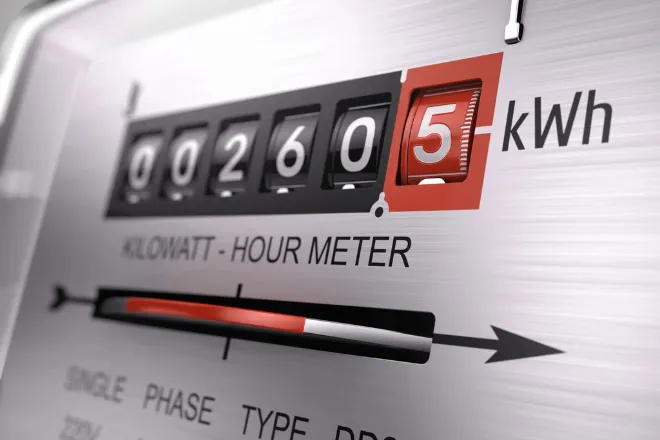
A usage rate refers to the rate providers charge you for each kilowatt hour (kWh) of electricity used, in cents per kilowatt hour (c/kWh).
Electricity usage is measured in kilowatt hours (kWh). A kWh represents the amount of power (in kilowatts/kW) used each hour: for example, if you use a 5kW appliance for one hour, that will use 5kWh of electricity.
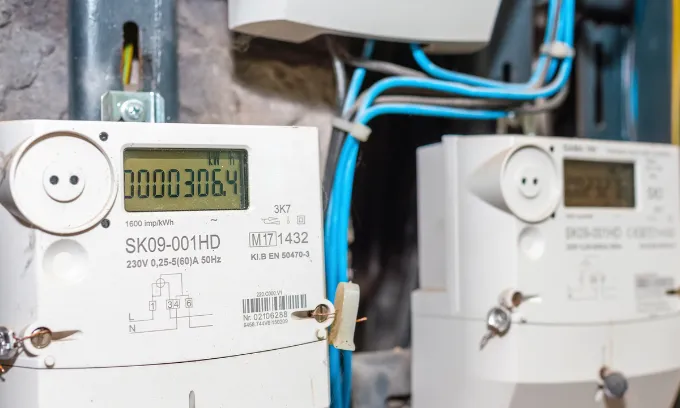
Your household electricity usage in kWh is recorded by your electricity meter each billing period, then passed on to your energy provider who then bills you for that cycle.
Your power bill will list the number of kWh you’ve used, plus the usage rate in c/kWh. Multiply the c/kWh cost by the number of kWh used, and you’ll get the total usage charge for that billing period.
Supply charge
A supply charge is a fixed daily fee set by your provider that typically covers network charges and is calculated in cents per day. Your total bill will consist of both your usage and supply charges.
Keep in mind that usage charges apply even if you haven’t used any electricity.
What's the difference between electricity standing offers and market offers?
Standing offers
Also called default offers, these are electricity plans with prices set by the Australian Energy Regulator (AER), Essential Services Commission (ESC) or the state government (depending on the state you live in) every July 1.
They act as the default plan if you haven’t chosen a market offer. Default offers typically cost more than market offers and don’t include discounts.
While you’re able to be on a standing offer indefinitely, they also represent the maximum price a retailer is willing to bill you for electricity.
Market offers
These are energy plans designed by retailers. These are likely to include discounts, incentives or bonuses for customers.
Most of these offers come with variable rates, meaning their rates can change before they expire (provided they give you written notice).
No credit check electricity in Australia
What is a credit check?
A credit score (or credit report) determines how reliable a person is to repay their debts.
Credit scores vary across different agencies, generally ranging from 0 to 1,200 or 0 to 1,100, with a higher number representing a better credit score.
All you need to receive your credit score is a few personal details and a valid form of ID. It will take 10 days to receive the results, but you can pay a small fee to speed up the process.
Why do energy companies run credit checks?
Credit history checks are used to determine a customer’s suitability for a market contract. As the majority of energy services are postpaid, customers are billed for electricity or gas after it’s used, not before.
If you’re signing up for a new electricity or gas provider for the first time, it’s likely your new retailer will run a credit check to determine your ability to pay bills on time.
However, not all energy providers will perform checks, especially if you’re on a no-contract offer. You also won’t be subject to a new check just for adding or changing existing products with your current provider, or when moving house.
Electricity plans with no credit checks
Prepaid electricity plans, which enable customers to prepay for their preferred amount of electricity, completely bypass the need for a credit check.
This is an excellent option for customers with a poor credit score. Currently, these are the retailers offering prepaid plans:
- Powershop in NSW, VIC, South East QLD and SA offers customers add-on, pre-paid ‘Powerpacks’ in addition to standard postpaid plans.
- Horizon Power in WA.
- Jacana Energy in the NT (prepaid meters).
However, don’t just assume that your retailer won’t look into your credit history. If you have any concerns about a credit check, ask the retailer about it before making a decision.
What types of electricity tariffs are available?
A tariff refers to the pricing structure of your electricity usage charges. Depending on your tariff, you may be charged different rates based on when or how you use electricity.
You have a choice of tariff types, but time of use, demand and controlled load tariffs typically require you to install a digital or smart meter.
Smart meters are currently being rolled out nationwide, but you can request one sooner from your energy provider if you’re still using an analog meter (fees may apply).
Tariffs can vary between retailers, but the most common electricity tariffs are:
Single rate tariffs
A single rate tariff charges electricity at a flat rate, no matter the time of day or season. This is generally the standard tariff an energy customer is placed on and doesn’t require additional metering or resources.
These charges are often referred to as a ‘peak’, ‘anytime’ or ‘general usage’ rate on your bill.
Time of use tariffs
A time of use tariff charges different rates for power depending on the time of day (or in some cases the time of year) you are using energy. These charges are generally broken into three sections: peak, off-peak and shoulder:
- Peak time is when customers are charged the most for power as it correlates to the greatest demand on the grid – typically between 3pm and 9pm on weekdays.
- Off-peak times are generally the cheapest, and are usually in the middle of the day or later in the evening.
- Shoulder times cover all other hours.
Controlled load tariffs
A controlled load (CL) tariff is a separate charge for measuring power use from high-usage appliances, such as hot water systems or pool pumps. Typically, this tariff only applies for limited hours daily and only measures usage from the nominated appliance.
Controlled load tariffs require a separate CL meter or smart meter, so you’ll need to request this tariff type from your electricity provider. Controlled load charges are listed on your electricity bill under ‘usage’ and form part of the total amount you’ll be billed for.
Demand tariffs
A demand tariff is a way of charging for electricity that encourages people to use less power when the grid is busiest.
It includes three parts: a supply charge, a usage charge, and a demand charge.
The demand charge is based on the most electricity your household uses at once during peak times. Use more in that busy period, and your demand charge goes up.
Are there discounts available on electricity plans?
Some electricity market offers come with conditional discounts, which are typically calculated as a percentage deduction from your electricity usage or supply costs. As its name implies, conditional discounts only apply if their specified conditions are met. These may include:
- Pay on time discount: Applied when a customer pays a bill by the due date.
- Direct debit discount: Applied when a customer chooses to pay bills by direct debit.
- Bundled energy discount: Applied for bundling electricity with gas or other products.
- Email billing discounts: Applied for signing up to e-Billing only.
However, large conditional discounts may be masking higher usage and supply charges, meaning you could end up paying more than you save. Always look at a plan’s conditional discounts in relation to its rates, which can be found on its BPID.
Other non-traditional discounts and incentives include:
- Rewards programs: Typically, access or membership is offered to a provider’s (or partner’s) reward program. Points are then awarded for every dollar spent on energy bills, which can be exchanged for lifestyle rewards (e.g. movie tickets, appliances).
- Sign-up discounts: New customers signing up may be eligible for a one-off bill credit.
If you're interested in sign-up discounts and rewards bonuses, you can visit our energy deals page, which is updated monthly with the latest gas and electricity deals.
While rare, plans with guaranteed discounts are usually expressed as a percentage off a plan’s listed price and have no criteria to meet.
Do note that all these discounts may also be offered on gas market contracts — the gas plan equivalent of an electricity market offer.
What energy concessions or rebates are available?
Energy concessions and rebates are available in all Australian states and territories. Some of these include:
New South Wales
- Energy Accounts Payment Assistance (EAPA)
- NSW Government Gas Rebate
- NSW Seniors Energy Rebate
- NSW Family Energy Rebate
- NSW Life Support Energy Rebate
- NSW Medical Energy Rebate
- Low Income Household Rebate.
Victoria
- Annual Electricity Concession
- Excess Electricity Concession
- Winter Gas Concession
- Excess Gas Concession
- Life Support Concession
- Medical Cooling Concession
- Non-Mains Energy Concession
- Utility Relief Grant Scheme
- Utility Relief Grant Scheme (non-mains).
Queensland
- Queensland Electricity Rebate
- Queensland Reticulated Natural Gas Rebate
- Electricity and Reticulated Natural Gas Rebates (Home Parks and Multi-unit residences)
- Home Energy Emergency Assistance Scheme
- Electricity Life Support Concession
- Medical Cooling and Heating Electricity Concession Scheme.
South Australia
- Energy Bill Concession
- Emergency Electricity Payment Scheme (EEPS)
- Cost of Living Concession (COLC)
- Residential Park Resident Concession
- Medical Heating and Cooling Concession
- Home Dialysis Electricity Concession.
Australian Capital Territory
- Electricity, Gas and Water Rebate (previously known as Utilities Concession)
- Home Energy Support Program (Homeowners)
- Home Energy Support Program (Rental Providers)
- Heating and Cooling Upgrade (offered by ActewAGL)
- Sustainable Household Scheme
- Access to Electric Program.
Western Australia
- Energy Concession Extension Scheme.
Tasmania
- Annual Electricity Concession
- Heating Allowance
- Life Support Concession
- Medical Heating or Cooling Concession.
Northern Territory
- Electricity Concession
- Medical Support Allowance.
Why do Canstar's electricity ratings vary by state?
Electricity providers, plans and prices vary across states due to the different electricity distribution networks used to supply each region. This is why Canstar’s Most Satisfied Customers ratings for electricity are awarded by state, rather than a single national award.
Award winning electricity providers in Australia
Canstar's annual Most Satisfied Customers awards recognise the top-rated electricity providers by state, as well as dual fuel, business and solar electricity providers nationally.
We base our awards on the feedback of bill-paying customers, and rank providers based on factors such as value for money, customer service and overall satisfaction.
- Best-Rated Electricity Provider NSW: Red Energy (2026)
- Best-Rated Electricity Provider in VIC: Alinta Energy (2026)
- Best-Rated Electricity Provider in QLD: Red Energy (2026)
- Best-Rated Electricity Provider in SA: Lumo Energy (2026)
- Best-Rated Dual Fuel Provider Nationally: Lumo Energy (2026)
- Best-Rated Small Business Electricity Provider Nationally: Red Energy (2026)
Gas in Australia
Is gas available in my state?
Natural gas availability is based on your location – not all states or areas are connected to a gas network.
Areas that are not serviced by natural gas networks (e.g. rural regions) may instead have access to Liquefied Petroleum Gas (LPG), which is delivered in cylinders rather than piped through a mains connection.
States that offer natural gas connections in all or most locations are:
- New South Wales
- Victoria
- South Australia
- Queensland
- Western Australia
- Australian Capital Territory
- Tasmania
The Northern Territory is majority serviced by LPG, with no connected gas network.
If your home is located near a gas main, contact the gas distributor in your area to establish a gas connection for a fee. This process may take three to five days, depending on the difficulty (e.g. if your home doesn’t have the necessary piping, gas meter installation).
Gas rates and charges explained
Gas bills consist of two main charges: usage charges and supply charges.
Gas usage charges
Gas usage charges are measured in cents per megajoule (c/MJ). Gas usage charges are typically priced according to tariffs — single or block rates.
A single rate tariff charges a flat rate regardless of the time of day or season you use gas.
On a block rate tariff, rates reduce as more gas is used. This is measured in usage blocks,
For example, a customer may be charged 5c/MJ for the first 20 MJ used, 3.5c for the next 20 MJ of usage, and 2.5c/MJ for the rest
Usage charges are recorded through a gas meter and will be shown on your bill. Your usage charges may vary according to your gas supplier’s usage rates, as well as your location.
Gas supply charges
Gas supply charges are the fixed portion of your bill and reflect the cost of being connected to the mains gas network. Supply charges are generally measured in cents per day (e.g. 70 cents per day) or as a total sum amount for your billing period (i.e. 90 days).
You will be billed for supply charges regardless of how much gas you use.
Additional fees or charges you may incur include:
- Move in/new connection and disconnection fees
- Early exit fees (on contracts)
- Credit card surcharges
- Dishonour fees
- Paper billing fees.
Some plans may also offer opt-in extras such as carbon offsets, which come at an additional cost outlined on your bill. These hidden fees and opt-in extras can be found on a gas plan’s BPID.
What's the difference between gas standing contracts and market offers?
Standing contracts
Like electricity, a standing contract is the gas plan given to customers by default if they haven’t chosen a gas plan. Their prices are regulated by their state governments, protecting Aussies from overpaying for gas.
Standing contacts have no frills attached, with no discounts, rewards programs or sign-up bonuses. They’re also usually the maximum price a provider is comfortable with charging customers for their gas use.
There’s no contract length attached to a standing contract, but they are also typically the highest price a retailer is comfortable with charging customers for their gas use.
Market offers
Market offers are gas plans freely set by retailers. These are likely to include competitive rates, discounts, incentives or bonuses to entice new customer sign-ups.
Keep in mind that most of these plans have variable rates, so their rates can change at any time before their contract length ends (provided your gas provider notifies you in writing).
Seasonal factors in gas demand
Natural gas demand in Australia typically spikes in winter from April to August due to increased gas heating and gas hot water usage. In addition to the extra cost from increased usage, retailers may raise usage rates if gas supplies are lower than demand.
Winter is generally the biggest contributor to increased gas usage and prices, but other factors include:
- Adverse weather events
- Global conflicts affecting supply
- Economic factors.
Why are Canstar’s gas ratings state-based?
Gas providers, plans and prices vary across states due to the different distribution networks used to supply each region. This is why Canstar’s Most Satisfied Customers ratings for standalone gas are awarded by state, rather than a single national award.
Award winning gas suppliers in Australia
Canstar’s annual Most Satisfied Customers awards recognise the best-rated gas suppliers by state, as well as dual fuel and LPG suppliers nationally. We base awards on the feedback of bill-paying customers, and rank providers based on factors such as value for money, customer service and overall satisfaction.
Our current 2025 and 2026 winners are below.
- Best-Rated Dual Fuel Provider (National): Red Energy (2025)
- Best-Rated Natural Gas Supplier in VIC: Momentum Energy (2026)
- Best-Rated Natural Gas Supplier in NSW: Red Energy (2026)
- Best-Rated Natural Gas Supplier in WA: Kleenheat (2026)
- Best-Rated Natural Gas Supplier in QLD: Origin (2026)
- Best-Rated Natural Gas Supplier in SA: AGL (2026)
- Best-Rated LPG Supplier (National): Supagas (2026)
- Most Trusted Natural Gas Supplier (National): Kleenheat (2025)
Should I bundle electricity and gas?
Pros of dual fuel:
- Simplifies your bills, as it’s all through one energy provider.
- Can save you money if you get a discount and a competitive rate.
Cons of dual fuel:
- Doesn't guarantee you’ll pay a lower usage or supply rate for your energy.
- Some retailers only offer natural gas if you are already on an electricity plan.
- Electricity and gas plans from two providers may still be cheaper than bundling energy plans from one provider.
To find the best deal, compare electricity and gas offers separately, and get energy quotes from a range of providers before deciding.
What to compare
What to look for when comparing electricity plans
- Average annual cost: Compare this to the comparison/reference price in your area – ideally, you want a plan that’s much less.
- Tariff type: Whether a plan has a single rate, time of use, controlled load or demand tariff.
- Usage rate: What you pay for each kWh of electricity your household uses, measured in c/kWh.
- Supply rate: The daily cost charged for staying connected to an energy network. Even if you don’t use any power, you will still need to pay the supply cost, which is charged in cents per day.
- Discounts: Any conditional or guaranteed discounts available, such as pay on time or direct debit.
- Solar FiT: If you have solar panels, the bill credit you’ll receive for exporting unused solar electricity to the grid.
- Fees and charges: Any additional charges that may occur as a result of an action, such as late payment, credit card payment, opting for paper bills or connection and disconnection fees. This also applies to gas plans.
- Switching offers: Any other offers or inclusions, such as new customer discounts or credits – just make sure these aren’t covering for higher usage or supply rates.
- Green or carbon neutral energy: If a plan features opt-in GreenPower, carbon neutral or renewable energy options (typically for an extra cost).
What to look for when comparing gas plans
- Usage rates: Measured in cents per megajoule (c/MJ), this refers to the cost you’ll pay for every unit of gas consumed at home.
- Supply rates: A daily fixed cost you’ll pay for being connected to the gas mains.
- Conditional discounts: Any discounts that may be applicable on the plan if a certain condition is met, e.g. paying on time.
- Contract length: How long your plan will be valid for. Benefit periods may also play into this if you have a discount or are on a fixed rate plan.
Solar in Australia
What is solar?
Solar energy is a type of renewable energy from converting heat and light from the sun into electricity. This energy can be used to replace or supplement the grid-supplied electricity you buy from an energy retailer.
A home solar energy system typically uses photovoltaic (PV) solar panels and an inverter to collect sunlight and convert it into usable electricity. It’s also possible to have a solar thermal system that turns sunlight into heat, which can heat your home or hot water system.
What is a solar feed-in tariff?
A solar feed-in tariff (FiT) is a rate paid to customers who export their solar-generated electricity back into the grid. A FiT is calculated based on the number of kilowatt hours (kWh) exported, and is applied as a credit on your electricity bill.
FiTs can vary between states, providers and plans, so it’s important to check what’s on offer when comparing solar options. Canstar’s tools allow you to sort plans by highest FiT, in addition to seeing the estimated annual cost.
What is the solar sharer offer?
The solar sharer offer (SSO) is an opt-in only standing offer with three hours of free electricity (capped at 24kWh) in these states:
- NSW and South East QLD: 11am - 2pm
- SA: 12pm - 3pm.
The Midday Power Saver, which is VIC's version of the SSO, will roll out on 1 October 2026, with free electricity restricted to 11am - 2pm.
However, the solar sharer offer relies on a time-of-use tariff by default, with higher usage and supply rates compared to other market offers. It's important to evaluate if any savings from migrating your electrictiy use to the free period exceeds the higer supply rates before signing up for it.
What is the average solar electricity bill in Australia?
According to a survey conducted by Canstar in January 2026, the average quarterly electricity bill for homes with solar panels is $397.
What solar concessions and rebates are available in Australia?
Several nation-wide rebates and incentives are available for installing solar, including:
- The Small-scale Renewable Energy Scheme
- The Cheaper Home Batteries Program
- Household Energy Upgrades Fund.
Award winning solar providers in Australia
Canstar’s annual Most Satisfied Customers awards recognise the best-rated solar electricity providers in Australia. We base our awards on the feedback of bill-paying customers, and rank providers based on factors such as value for money, customer service and overall satisfaction.
Our current 2026 winner is below.
Best-Rated Solar Energy Provider Nationally: OVO Energy (2026)
.webp?w=640)
![Electricity price changes in Australia [July 2026]](https://cns-payload-prod-01-content.global.ssl.fastly.net/payload-media/169%20Ratio%20Images%20(640px%20x%20360%20px)%20(1).webp?w=640)