
































.webp?w=384)
How does the gas market work in Australia?
Gas suppliers in Australia
A gas supplier, provider or retailer is the energy provider a customer buys gas from.
There are over 20 gas suppliers across NSW, VIC, QLD, SA, WA, TAS and the ACT, although the number available will depend on your location. The retailers Canstar compares include:
- 1st Energy
- ActewAGL
- AGL
- Alinta Energy
- Aurora Energy
- CovaU
- Dodo
- EnergyAustralia
- Energy Locals*
- Engie
- GloBird Energy
- Kleenheat
- Kogan Energy
- Lumo Energy
- Momentum Energy
- Origin Energy
- Powershop
- Red Energy
- Sumo
- Tango Energy
*Energy Locals will stop onboarding new customers, merging with 1st Energy on 12 September.
What is a gas distribution network?
Gas distributors deliver gas to homes and businesses. A distribution network is the gas pipes and infrastructure that move gas from where it’s produced and stored, to your home’s gas connection.
There are multiple gas distributors operating across Australia, and each services a specific location.
NSW:
- Central Ranges System: Tamworth
- Jemena Gas Networks NSW: Sydney, Newcastle, Central Coast, Wollongong, parts of country NSW
- Wagga Wagga Gas Distribution Network: Wagga Wagga
VIC:
- Australian Gas Networks: Nationwide
- Multinet Gas: Melbourne Eastern suburbs
- AusNet Services: Melbourne’s outer Northern and Eastern suburbs, eastern Victoria
QLD:
- Allgas Energy: South of Brisbane River, South Coast, Toowoomba and Oakey
- Australian Gas Networks: Nationwide
SA:
- SA Power Networks: All of SA
- Australian Gas Networks SA: Nationwide
ACT:
- Evoenergy: All of the ACT
WA:
- ATCO Gas: All of WA
TAS:
- Tas Gas Networks: All of TAS
If you’re a gas customer, you won’t need to contact your gas distributor about your gas plan or price – those are your gas retailer’s responsibility. But your distributor should be contacted in an emergency, such as if there is a gas leak or fault.
What is natural gas?
Natural gas is the second most popular fossil fuel used in Australia, behind coal. Consisting primarily of methane, it’s an odourless, colourless gas that can be used to power appliances, as well as energy generation.
Because natural gas is formed underground, it’s extracted through various drilling or fracking methods. It’s then refined to remove any impurities.
Once this process is complete, it’s exported to your home through a large network of gas pipelines.
Gas prices and plans in Australia
How is gas usage calculated and charged?
Gas usage is measured in megajoules (MJ), a unit of energy equivalent to one million joules. The amount of gas you use each billing period makes up the usage charge on your bill.
Usage in Australia is usually separated into ‘blocks’, which is a specific rate for a certain number of MJ used. For example, you may pay one price for the first 20MJ of gas used per day, then a different price for the next 20MJ, and a third price for all remaining usage. Blocks can apply to daily, monthly or quarterly usage.
Gas rates and charges explained
Gas bills consist of two main charges: usage charges and supply charges.
Gas usage charges
Gas usage charges are measured in cents per megajoule (c/MJ). These rates are usually charged as a ‘block rate’, which means the rates either reduce or increase as more gas is used. This is measured in usage blocks.
Usage charges are recorded through a gas meter and will show on your bill. Your usage charges may vary according to your gas supplier’s usage rates, as well as your location.
Gas supply charges
Gas supply charges are the fixed portion of your bill and reflect the cost of being connected to the mains gas network. Supply charges are measured in cents per day.
You will be billed for daily supply charges regardless of how much gas you use.
Other fees
Additional fees or charges you may expect include:
- Move in/new connection and disconnection fees (only for homes in close vicinity to a gas mains)
- Early exit fees (on contracts)
- Credit card surcharges
- Dishonour fees if you don’t have enough money in your account
- Fees to receive paper bills.
Some plans may also offer opt-in extras such as carbon offsets, which come at an additional cost.
What to look for when looking for the cheapest gas plan
The landscape for gas plans is constantly changing, with providers offering cheaper gas plans to win customers. Here’s what to look for when searching for the cheapest gas plan for your situation:
- Cheaper supply rates: The lower the supply rate, the less you spend daily to maintain a gas connection.
- Cheaper usage charges: The same rule applies, with lower usage rates equating to a lower gas spend. However, it’s equally important to map out your household’s gas use.
- Understand your household gas use: Both block or fixed usage rates can help save you money. However, the usage rate that saves you the most money will depend on how much gas you use. Here’s how:
- Typically, block usage rates decrease with higher gas use (e.g. $3.00 per MJ for the first 20 MJ, then $1.70 per MJ for the remaining 20 MJ). If your gas use consistently qualifies for the cheapest ‘block’ rate, the block usage rate will offer the highest potential savings.
- If you don’t use much gas, a fixed usage rate plan offers price certainty.
- Be wary of conditional discounts: They apply only if a condition is met, e.g., paying on time. However, make sure these discounts aren't masking higher rates by scrutinising a plan’s basic plan information document (BPID). If the conditional discount is too enticing to pass up, make sure you satisfy eligibility requirements.
- Calculate how much a dual fuel offer actually saves you: A ‘dual fuel’ discount is a discount for bundling electricity and gas plans from one provider. Convenience aside, a dual fuel discount isn’t always cheaper than having an electricity and gas plan from two providers. Calculate if having separate plans from separate providers saves you more than the dual fuel discount before making a decision.
However, if you’re short on time, you can always use Canstar’s rates table (near the top of the page) to shop around for gas plans at your address in mere minutes.
Our tool conveniently showcases the average annual price for each gas plan, based on general annual usage figures within each distributor network. These figures offer a quick point of comparison, simplifying your search for the cheapest gas plan in our database.
Average Gas Bill
The following table shows average annual gas bills across Australia, based on a Canstar survey of more than 3,000 households.
Average gas bill by state
Average Annual Household Gas Bill By State | |
Age | Average Bill |
Queensland | $863 |
New South Wales | $950 |
Victoria | $1,136 |
South Australia | $1,037 |
Western Australia | $739 |
ACT | $991 |
Source: www.canstar.com.au - 25/05/2026. Based on Canstar Household Survey data (n=2,831). Excludes Northern Territory and Tasmania due to insufficient responses | |
Average gas bill by household size
Average Annual Household Gas Bill By Household Size | |
Age | Average Bill |
1 person | $176 |
2 people | $937 |
3 people | $1,083 |
4 people | $1,161 |
5 people | $1,230 |
More than 5 people | $1,266 |
Source: www.canstar.com.au - 25/05/2026. Based on Canstar Household Survey data (n=2,831). | |
Gas provider award winners in Australia
Canstar’s annual Most Satisfied Customers awards recognise the top-rated gas suppliers by state, as well as dual fuel and LPG suppliers nationally.
We base these results on those rated best by bill-paying customers like you in areas like value for money, customer service and overall satisfaction.
Our current 2026 and 2025 winners are below.
- Best-Rated Dual Fuel Provider (National): Red Energy (2026)
- Best-Rated Natural Gas Supplier in VIC: Momentum Energy (2026)
- Best-Rated Natural Gas Supplier in NSW: Red Energy (2026)
- Best-Rated Natural Gas Supplier in WA: Kleenheat (2026)
- Best-Rated Natural Gas Supplier in QLD: Origin (2026)
- Best-Rated Natural Gas Supplier in SA: AGL (2026)
- Best-Rated LPG Supplier (National): Supagas (2026)
- Most Trusted Natural Gas Supplier (National): Kleenheat (2025)
Step-by-step: How to compare and switch gas plans
- Check if your home is connected to a gas mains: You will need to verify if your home has a gas connection. If you’re not connected to a gas mains, contact the gas distributor in your area to assist. Do note that a gas connection may attract a fee. If your home isn’t located near a gas mains, you won’t be eligible for a gas plan, with LPG being the direct alternative.
- Review your current gas plan (if you’re already on one): See if there are any exit or termination fees, and check your current rates so you can compare these with other plans.
- Determine your energy needs: Knowing how and when you use gas can help you figure out the plan that will save you the most, especially when comparing block rate tariffs.
- You can start comparing gas plans on our rates table (near the top of the page). Click on the 'showing results for' section and enter your postcode to view gas plans at your address. You’ll want to look at:
- The average annual cost of each plan. You can also view their average quarterly or monthly costs (using the ‘see estimated price dropdown’
- The plan’s daily supply charge and usage rate in megajoules (MJ), and if these are variable or fixed.
- How a plan’s tariff blocks work – you’ll likely pay one rate for the first ‘block’ (a specific amount of MJ used), then a different rate for the next block. Blocks may apply to daily, monthly or quarterly gas usage.
- If there are any discounts offered (listed under a blue banner below each plan)
- Any other offers or inclusions, such as new customer discounts or credits.
- If you're interested in comparing energy plans (including electricity), click on the 'Get started' button at the top of the rates table.
- Once you’ve found the right plan, follow the link in our rates table if available, or contact the provider directly to sign up.
- Provide your Delivery Point Identifier (DPI) number, which identifies your gas meter.
- Unless you’re moving, you won’t need to contact your old gas provider when switching.
- Look out for a welcome pack from your new provider and confirmation that your service has changed.
- Your new plan will list a ‘benefit period’ where conditions such as discounts, memberships or fixed rates apply – this is usually 12 months.
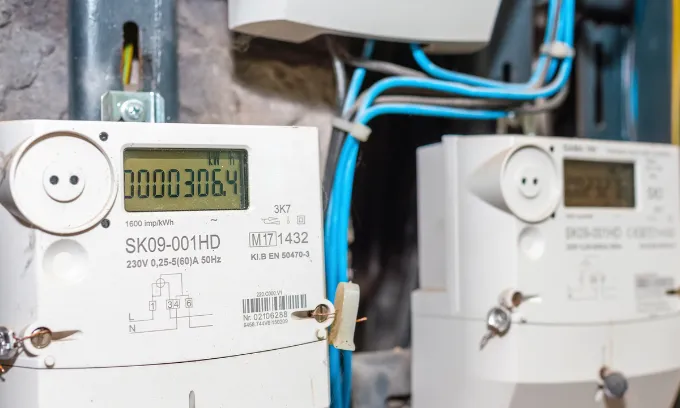
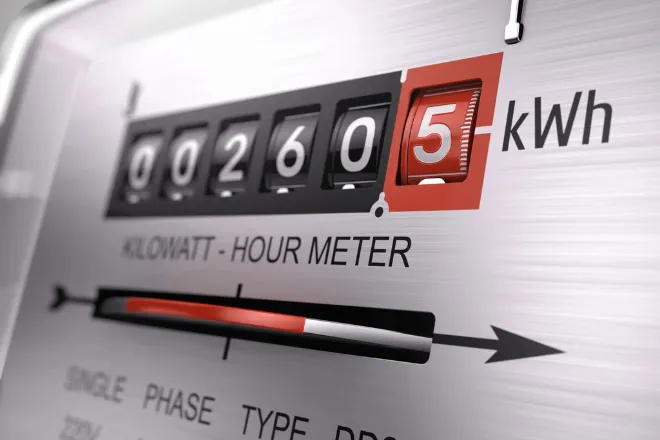
How to read your gas meter
Before reading your gas meter, you’ll need to work out which type of meter your property is connected to – imperial or metric.
An imperial gas meter will usually have an analog clock face and a metric gas meter will have a digital screen.
Imperial gas meter reading
- Take note of the pointer on each dial and record the numbers from left to right. If a pointer is positioned between two numbers on a dial, read the lowest number.
- Some old imperial gas meters may have an additional two dials on the top or bottom which are for testing purposes, so disregard them.
- Once you’ve noted the numbers from each dial, convert them from cubic feet into cubic metres, with one cubic metre roughly equal to 35.3ft³.
Metric gas meter reading
- The meter should have a display panel of about eight numbers with m³ (cubic metres) next to it.
- Record each number from left to right, ignoring the numbers in red.
- You’ll need to move the decimal point within the sequence of numbers two spaces to the right. For example, it may read 17.225, which equals 1,722.5m³.
If you need extra help, contact your gas provider.
Natural gas vs LPG
What is LPG?
Like natural gas, liquid petroleum gas (LPG) is a common form of gas regularly used for households and commercial purposes. In Australia, it consists of propane gas, which is either extracted in the natural gas production process or produced as a byproduct of oil refinement.
LPG is stored under pressure in a liquified state, and burns at a higher temperature than natural gas, making it more efficient.
What’s the difference between LPG and natural gas?
Natural gas consists of methane and is distributed via the mains pipe connected to a house. It’s mostly used for cooking, heating and hot water.
LPG in Australia is made of propane and is supplied in a cylinder or tank. These canisters are then connected to a specific appliance, such as a barbeque or outdoor heater.
Where is LPG and natural gas available?
Natural gas mains
Natural gas is available across most of Australia, but you’ll need to have access to a mains pipe. If there’s no gas distribution network in your area, you’ll need to go electric-only or use LPG.
Liquid petroleum gas bottles and refills
LPG is available Australia-wide: you can order it anywhere that a supplier is able to deliver or refill cylinders and tanks.
Aussies can refill their empty cylinders or tanks at the following locations:
- Hardware stores
- Gas suppliers
- Camping outdoor stores.
Most of these locations may have the option to swap out your empty cylinder for a full one.
Keep in mind that medium-to-large-sized bottles (45kg to 90kg) are less portable and bulky, meaning refills or swaps must be conducted at your address with an LPG delivery driver.
Alternatively, specialist gas suppliers such as Elgas and Origin Energy offer a subscription service, automatically scheduling on-site refills or bottle swaps at your convenience. Payments for this service are made over direct debit.
Gas usage and efficiency
What appliances are powered by natural gas?
Natural gas can be used for residential, commercial and industrial purposes, as well as electricity generation for the power grid.
In households, natural gas is commonly used to power appliances like heaters, stovetops and ovens, hot water systems, barbeques and tumble dryers.
What are the benefits of natural gas?
Natural gas has a number of advantages, including:
- Lower running costs: Gas is generally cheaper to use than electricity on a per-unit basis.
- More efficient: Gas-powered appliances such as hot water systems, stovetops and heating are typically cheaper to run and more efficient.
- Reduced carbon emissions: Natural gas power plants emit about half as much carbon dioxide (CO2) into the atmosphere as coal-fired power plants.
- Cheaper to produce: Unlike electricity and oil, gas prices can sometimes decrease in times of demand because gas is easier to distribute in larger quantities.
- Lifestyle preferences: Some Aussies prefer gas over electricity for personal reasons, such as cooking on gas stovetops (which can be popular for cooking efficiency).
Energy-efficient gas appliances
Gas heaters and gas hot water systems may come with a blue Gas Energy Rating label. This label uses a rating of up to 6 stars to indicate how energy-efficient the appliance is when compared to other models. It will also show the estimated annual gas consumption.
Gas appliances will still require electricity to run any electrical components, so this will also factor into a product’s overall energy efficiency.
Quick tips to reduce your gas usage
- Heating: If you use a gas heater, keep the temperature as low as comfortable (the higher the setting, the more energy a heater uses), keep your heater well-maintained and restrict your heating to specific ‘zones’ rather than the whole home. You can also set timers to make sure your heater isn’t running throughout the day or night.
- Hot water systems: Take shorter and cooler showers, install a low-flow showerhead and switch to cold water for washing and dishwashing where possible.
- Keep your home insulated to maximise the benefits of heating and cooling.

.webp?w=640)
![Electricity price changes in Australia [July 2026]](https://cns-payload-prod-01-content.global.ssl.fastly.net/payload-media/169%20Ratio%20Images%20(640px%20x%20360%20px)%20(1).webp?w=640)