
































.webp?w=384)
How to change energy providers
1. Read your power bill
Review the rates, discounts and features for your current electricity or gas plan under the ‘charging periods’ section of your power bill:
- Usage charges: The rate that varies with your electricity or gas use. Usage rates are charged in cents per kilowatt hour (kWh) for electricity or cents per megajoule (MJ) for gas.
- Supply charges: A fixed daily charge (in c/day) you pay to remain connected to the grid (for electricity) or gas mains (for gas).
- Discounts: Typically, there are two types of discounts: conditional discounts, with criteria to be met to be eligible, and guaranteed discounts with no conditions attached. If you’re switching to a new provider for the first time, you may also be eligible for a new customer sign-up deal.
- Exit fees: While not something you pay if you remain on your plan, you’ll have to account for this as a cost when switching to a new plan or provider.
Your plan’s rate breakdown gives you a baseline for comparing energy plans and retailers.
For a more accurate comparison, note your average energy usage (kWh or MJ) for that billing cycle (e.g. quarterly, monthly).
You can use our electricity bill calculator to quickly estimate your potential savings from switching to our database’s cheapest plan using the information above.
2. Shop for energy plans
Using Canstar’s energy rates table (near the top of the page), you can see all plans available on our database.
To start, click on the 'showing results for' section at the top of the page and input your postal code and if your home has solar panels installed.
You can then filter the results of your search to match your needs:
- Tariffs, which reflect how your plan is priced (for electricity only):
- Single rate: Flat usage rate regardless of the hour of the day
- Time of use: Usage rate that varies depending on the time of day (e.g. off-peak, peak and shoulder periods)
- Controlled load tariffs (for electricity only): Power-intensive appliances (e.g. hot water systems) are metered separately at a lower usage rate.
- Monthly, quarterly or estimated cost.
You can also sort the results based on the following options:
- Estimated price (ascending or descending)
- Provider names alphabetically (ascending or descending)
- Feature rating (ascending to descending)
- Comparison price (known as the reference price in VIC) for electricity only.
To switch between electricity and gas plans, click on the toggle at the top of the rates table.
Discounts or deals will be shown as a blue banner situated below relevant plans — simply hover on the banner with your cursor or click on it on your mobile phone to learn more.
3. Compare energy plans
Research each energy plan’s fact sheet (under the basic plan information prompt) on our rates table.
If you’re short on time, you can compare each plan’s estimated yearly, quarterly or monthly cost to what you’ve paid on your recent power bill.
However, note that these prices are derived from annual usage estimates, which may differ greatly from your actual usage and habits.
Alternatively, you can compare your existing plan’s rates against what’s listed on competing plans and their fact sheets.
Here are some other things to consider:
For electricity
- If you use more electricity during peak periods (e.g. evening), a single rate tariff will be cheaper than a time-of-use tariff.
- If you use more electricity during off-peak hours (e.g. daytime or midday), a time-of-use tariff will be cheaper than a single-rate tariff.
- If you have a power-intensive appliance (e.g., pool pump), a controlled load tariff can save you more money if you’re willing to shorten its operating hours.
- Be wary that discounts could be hiding increased usage and supply charges. A discount is only worth it if it exceeds any increase in rates — the same rule applies to gas plans.
For gas
- If your home uses little gas, a single rate tariff and lower supply charges will save you more money.
- If your home uses a lot of gas, a block rate tariff and lower usage charges are more affordable.
4. Switch to a new energy plan
Once you’ve picked a new plan, follow the link on our table if available or head to the energy provider’s site separately.
You can complete the sign-up process online or by phone. Here are a few things to keep in mind when signing up for your new plan:
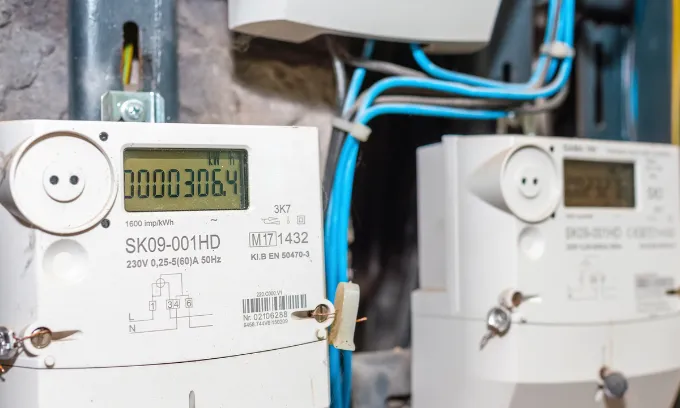
- If you’re switching electricity plans: Your new provider will need your National Meter Identifier (NMI) to find your electricity meter and organise your billing. This number can be found on the top of your electricity bill or on the meter itself.
- If you’re switching gas plans: Your new provider will need your Delivery Point Identifier (DPI) to organise your billing. This number can be found on the top of your gas bill or on the meter itself.
- Credit check: Your new provider may request a credit check before approving your plan.
- No need to contact your old provider: You do not need to notify your old provider that you’re switching plans. Your new provider will take care of this for you.
- Cooling-off period: There is typically a 10-day cooling-off period for all contracts. This allows you to cancel within this window without any consequences.
Initiating the switch should take minutes online (longer by phone), with the actual switch taking five to ten working days.
After the switch, you’ll likely receive a final electricity or gas bill from your old energy provider. Remember to cancel your direct debit to avoid being double-charged.
5. Frequently compare energy plans at later dates
Energy prices don’t last forever. There are a few times a year when it could be worth comparing your plan against other providers.
- Before your contract length is up: After your contract expires, most providers will default you back to their standing offer (for electricity) or standing contract (for gas), which is often hundreds of dollars more expensive per year. Mark your calendars for your contract expiry and plan to avoid paying more for electricity.
- July 1st (Electricity only): Every July 1st, the electricity comparison/reference price for each state and distributor changes. In NSW, QLD and SA, the comparison price is called the Default Market Offer (DMO) and is revised by the Australian Energy Regulator (AER). In VIC, it is called a Victorian Default Offer (VDO) and is set by the Energy Securities Commission (ESC). Rates will typically increase after this date, so it is worth comparing your options before July 1st passes.
How much can you save by changing energy providers?
On average, customers can expect to save as much as $491 by switching to the cheapest electricity plan available on our database:
Average and Cheapest Single Rate Electricity Annual Costs by Distributor | ||||
State | Distributor | Lowest Annual Cost Plan Annual Cost | Average Annual Cost | Savings from Switching to the Cheapest |
NSW | Ausgrid | $1,458 | $1,785 | $327 |
Endeavour Energy | $1,790 | $2,194 | $404 | |
Essential Energy | $2,037 | $2,528 | $491 | |
VIC | Ausnet Services | $1,425 | $1,787 | $362 |
Citipower | $1,155 | $1,443 | $288 | |
Jemena | $1,222 | $1,528 | $306 | |
Powercor | $1,273 | $1,589 | $316 | |
United Energy | $1,176 | $1,477 | $301 | |
QLD | Energex | $1,654 | $2,003 | $349 |
SA | SA Power Networks | $1,805 | $2,173 | $368 |
ACT | Evoenergy | $2,032 | $2,418 | $386 |
TAS | Tasnetworks | $1,229 | $1,343 | $114 |
Source: www.canstar.com.au - 10/06/2026. Based on single rate electricity plans on Canstar's database; excluding solar-only plans. One product shown per distribution network. Annual costs calculated based on the estimated lowest possible price a representative customer would be charged in a year, assuming all conditions of discount offered (if any) have been met. Representative customer based on the reference usage for NSW, VIC, QLD, ACT, and SA (per Victorian default offer for VIC, ICRC for ACT, and AER for others) or the median usage in the Office of the Tasmania Regulator's report, Typical Electricity Customers in Tasmania 2025 for TAS. | ||||
Keep in mind that these costs are based on annual usage estimates, so how much you’re spending annually on electricity could vary significantly.
Who can change energy providers?
Whether you can change energy providers will depend on the state you live in.
You should be able to switch energy providers in the states below:
Electricity | Gas |
New South Wales (NSW) Victoria (VIC) South East Queensland (SEQ) South Australia (SA) Tasmania (TAS) Australian Capital Territory (ACT) | NSW QLD VIC SA |
However, there are things to consider in the remaining states:
Electricity | Gas |
Northern Territory (NT): While the Northern Territory energy market is open to competition, government-owned Jacana Energy is still the dominant supplier for electricity, and customers need an interval meter to switch retailers. Western Australia (WA): There are two electricity providers in WA, but they operate in different areas and customers are not able to switch. Regional QLD: Customers may be able to switch in regional QLD, depending on location. However, there are limited electricity retailers on the Ergon distribution network. | TAS: Currently, there are only two natural gas retailers in Tasmania – Solstice Energy and Aurora Energy. WA: The natural gas market is fully contestable in WA, but the maximum price for gas is regulated in the most populated regions. NT: The NT gas market isn’t very competitive because most households aren’t connected to mains gas (the underground pipes that supply gas to households). |
Why change energy providers?
Apart from cheaper rates, here are other reasons why you may want to switch providers.
Moving houses
Moving homes is an excellent chance to change energy providers because prices, plans and providers may differ at your new address. That’s because prices, plans and providers may differ at your new address.
Our guide on connecting electricity and gas to a new home explores the moving process more deeply.
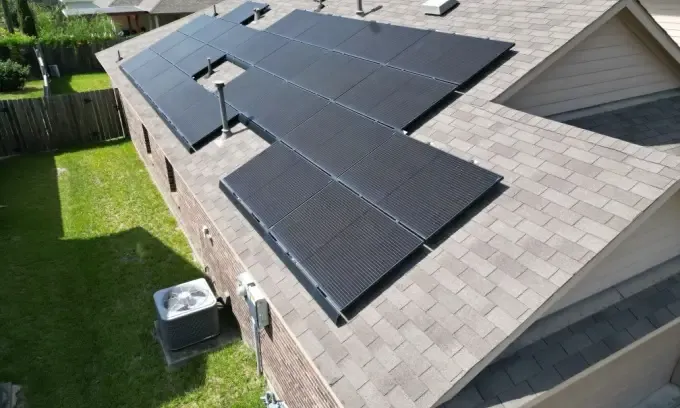
Installing solar panels
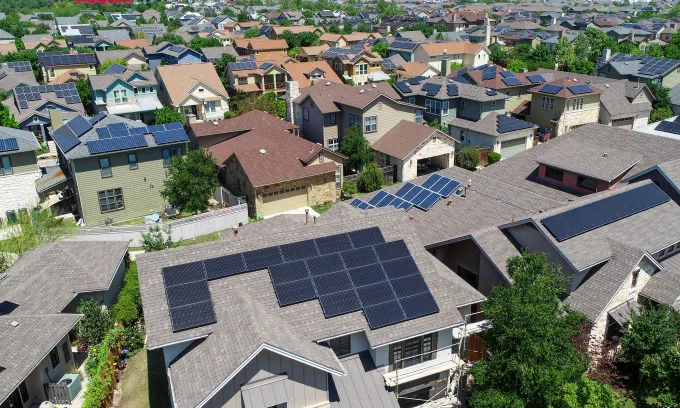
If you’re installing solar panels or moving to a house with an existing solar system, you may have to change providers to access an electricity plan with a solar feed-in tariff (FiT).
A solar FiT is a bill credit for every kilowatt hour (kWh) of excess solar fed back to the grid from your solar panels. Putting your new solar panels to good use can help slash your electricity bills.
If you'd like to learn more about how you could benefit from a solar FiT, feel free to visit our guide on all things solar FiTs.
You’d like to bundle energy with other products
Bundling electricity and gas plans from one provider could entitle you to a ‘dual fuel discount’. A dual fuel discount is an incentive to have one provider service all your energy needs.
Some providers also offer telco options, including home internet and mobile phone services as part of a bundled discount. Bundling your utilities can also help if you want a simplified bill.
Just be mindful that a bundled discount does not guarantee the most savings. You could save more by having electricity and gas plans from separate providers.
Is changing energy providers worth it?
If cheaper plans are being offered at your address from another provider, switching energy providers is worth it.
Whether you’ve already made up your mind to switch or you’re on the fence, changing providers isn’t the only option on the table.
If you’re reluctant to leave your current energy provider, you may be in a position to negotiate a better energy deal with your energy retailer.
Under the ‘best offer messaging’ section of your latest power bill, your provider must highlight how much you could save by switching to their best offer (assuming you’re on a more costly plan).
It could also be financially worthwhile to notify your provider of your intention to switch. They may offer other incentives for you to stay on.

.webp?w=640)
![Electricity price changes in Australia [July 2026]](https://cns-payload-prod-01-content.global.ssl.fastly.net/payload-media/169%20Ratio%20Images%20(640px%20x%20360%20px)%20(1).webp?w=640)