





%20(1).webp?w=256)
Electricity price changes in July 2026
Note: Price changes will take effect from 1 July 2026 onwards. However, changes may take multiple business days to reflect on retailer websites and Canstar’s database. For more information, please visit each retailer’s respective websites.
As set by the DMO and VDO, default electricity prices will decrease on July 1st (except SA, with a $33 rise), meaning all retailers must reflect these changes on their standing offer plans.
Retailers are still free to set prices for market offer plans, which are more competitive deals available in addition to a standing electricity offer. Changes to market offers typically follow similar trends to standard offers, e.g. if default prices fall, market offers drop too.
These are the providers on Canstar’s panel that have announced a price change on their market offers for July 1st.
AGL

- Any applicable solar feed-in tariff on AGL’s standing offers will decrease to 0c/kWh.
- Market offer prices will change on 1 July 2026 in NSW, QLD and SA.
- Customer reports from NSW suggest that daily supply charges will increase significantly.
EnergyAustralia

- Market offer prices will change on 1 July 2026 in NSW, QLD and SA, and 1 August 2026 in VIC.
- In NSW, Solar feed-in tariffs (buyback rates) decrease from 4c/kWh to 3c/kWh from 1 July across all electricity plans, but remain unchanged in SA and QLD.
Origin

- Market offer prices will change on 1 July 2026 in NSW, QLD and SA, and 1 August 2026 in VIC.
- Customers in NSW and QLD have generally reported that their daily supply charges are set to increase significantly.
ActewAGL

- On average, ActewAGL’s standing offer tariffs in the ACT will increase by 2.7 per cent.
Alinta Energy

Market offer prices will change on 1 July 2026 in NSW, QLD and SA, and 1 August 2026 in VIC.
- Reports from QLD suggest that daily supply charges will experience a massive hike.
Dodo Power & Gas

- Market offer prices will change on 1 July 2026 in NSW, QLD and SA, and 1 August 2026 in VIC.
Engie

- Market offer prices will change on 1 July 2026 in NSW, QLD and SA, and 1 August 2026 in VIC.
- If you sign up for an Engie electricity plan before 1 July 2026, your rates will remain unchanged until 1 July 2027 (NSW, SA, and QLD) and 1 August 2027 (VIC).
GloBird Energy

- Market offer prices will change on 1 July 2026 in NSW, QLD and SA, and 1 August 2026 in VIC.
- Customers in QLD report their solar feed-in tariff rates decreasing and their supply charges rising.
Kogan Energy
- Market offer prices will change on 1 July 2026 in NSW, QLD and SA, and 1 August 2026 in VIC.
Momentum Energy

- In NSW, QLD or SA, if you’ve signed up for an electricity market offer before 31 May 2026, your prices will change on 1 July 2026.
- In VIC, if you sign up for a market offer (gas or electricity) before 30 June 2026, your prices will change on 1 July 2026.
- In NSW, SA and QLD, customers who signed up for a Momentum electricity market offer on or before 31 May 2026 will have their solar feed-in tariff change from 1 July:
- NSW: Decrease from 5c/kWh to 3c/kWh
- QLD: Decrease from 2.9c/kWh to 2c/kWh
- SA: Decrease from 2.5c/kWh to 0.8c/kWh
- VIC: Decrease from 1.1c/kWh to 0.9c/kWh (after 1 August 2026).
Powershop

- Market offer prices will change on 1 July 2026 in NSW, QLD and SA, and 1 August 2026 in VIC.
- For most market offers, solar feed-in tariffs will remain unchanged, unless stated otherwise in customers’ price change emails.
Red Energy

- Market offer prices will change on 1 July 2026 in NSW, QLD and SA, and 1 August 2026 in VIC.
What are electricity prices?
Electricity prices (not to be confused with the cost of each electricity bill) are the rates you pay for electricity on your current plan:
- Supply charges: Fixed cost (in c/day) paid to remain connected to the grid.
- Usage charges: Variable cost (in c) for every kilowatt-hour (kWh) of electricity consumed.
These charges are outlined on your power bill or your plan’s Basic Product Information Document (BPID).
Why do electricity prices increase?
Energy retailers may increase the price households pay for electricity for the following reasons.
Increase in wholesale electricity prices
Wholesale electricity prices reflect how much energy retailers pay energy generators to buy wholesale electricity, which is then sold on to retail and business customers.
These prices change every five minutes based on real-time supply and demand — these are known as ‘spot prices’.
Retailers have fixed-length contracts with wholesale generators to freeze electricity prices, meaning minute-by-minute changes are not mirrored in the prices they pay.
Energy retailers then resell this wholesale electricity to customers at prices they set. If wholesale electricity prices increase, providers will pass those costs onto their customers by increasing their plans’ rates.
Increase in network costs
Network costs or network tariffs refer to the costs of operating (e.g., supplying electricity to your home) and maintaining grid infrastructure (e.g., power lines, poles, smart meters).
Network costs typically make up the largest portion of customers’ power bills. If network costs increase, customers can expect their plans’ electricity rates to increase.
Increase in retail costs
Retail costs refer to the cost of running a business (e.g. staffing, rent). An increase in retail costs will increase the electricity rates you pay.
Changes to the standing offer
A standing offer is the government-regulated comparison price across different distributors in each state:
Name of standing offer | Who regulates it | States |
Default Market Offer (DMO) | Australian Energy Regulator (AER). | NSW, South East QLD and SA |
Victorian Default Offer (VDO) | Essential Services Commission (ESC) | VIC |
A standing offer typically reflects the maximum retailers are willing to charge. Because it is the plan you’re moved onto indefinitely if your previous plan has expired, it’s a safety net preventing Aussies from overpaying.
It’s also called the reference price because it’s a benchmark for assessing other energy plans (price differences are listed as a percentage).
Every July 1st, the standing offer in each state changes. If the standing offer increases, providers will typically use it as a baseline to increase prices across all their market offers (plans with rates and features freely set by the retailer.
Currently, the standing offer only applies to flat rate plans. However, on 1 July 2026, the DMO and VDO are set to introduce comparison prices for time of use (ToU) tariffs, where usage rates fluctuate between peak, off-peak and shoulder times.
An Australian first, both regulators will set rate caps for both supply and usage rates across all standing offers, shielding customers from excessive rate hikes.
The AER will also unveil a ‘Solar Sharer Offer’ standing offer on 1 July 2026, promising three hours of free mid-day electricity:
- NSW and South East QLD: 11am - 2pm
- SA: 12pm - 3pm.
The VDO has a similar scheme called the ‘Midday Power Saver’, but it’s slated for release on 1 October 2026.
When do electricity prices change?
Electricity prices will increase or decrease at least once a year to coincide with the DMO or VDO on July 1st.
However, the frequency of changes depends on the type of energy contract you’re on:
- Variable rate plans: Retailers can change their rates at any time during the contract’s fixed length. However, you must be given at least five business days’ written notice (e.g. email, mail). On 1 July 2026 onwards, the DMO will only permit retailers to increase prices once every 12 months.
- Fixed rate plans: Electricity rates are locked in throughout your contract’s length, even on the July 1st cutover.
What can I do if electricity prices increase?
If electricity prices on your plan increase, here’s what you can do to manage it:
- Compare energy plans and switch: You can compare plans through Canstar, choosing the cheapest plan available at your address.
- Look into energy concessions and rebates: An energy rebate is a discount on your power use. Depending on the criteria, you may be eligible for one or more federal or state concessions. Keep yourself updated on any relevant rebates and check your bills to make sure they are applied. If not, speak to your provider.
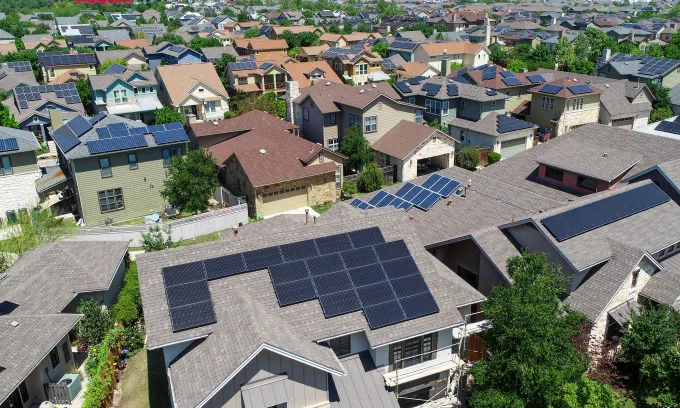
- Install a solar system: Solar generation can reduce your reliance on costlier grid electricity. Alternatively, you can sign up for an energy plan with a solar feed-in tariff, rewarding you with a bill credit for every kWh of electricity exported to the grid. However, you’ll only start making ‘real savings’ once your solar-related savings surpass your system’s installation costs — this is known as a payback period.
- Install a solar battery: A solar battery can save you money by storing unused solar energy (if you have solar panels) or cheaper off-peak electricity (if you’re on a ToU tariff) for use at hours when electricity is costlier. Like solar panels, you’ll only start saving once your battery’s payback period has passed. To lower your upfront spend, you can apply for the Cheaper Home Batteries program for a discount of up to 30%.


.webp?w=640)