




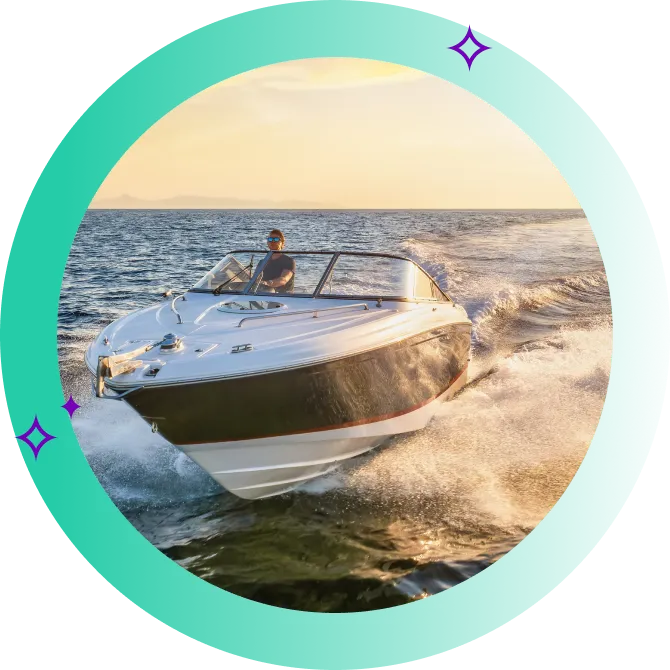








































What is a boat loan?
A boat loan is a personal loan used to buy a boat or other watercraft.
How do boat loans work?
Boat loans work much the same as standard personal loans. You’ll agree to borrow a certain amount of money to buy the boat, and then repay it regularly, including interest, over a set period of time.
Your loan will either charge you a fixed or variable interest rate, plus certain fees, like a fee for setting up the loan or to cover its ongoing admin costs.
You might be able to opt for either a secured or unsecured loan. The table above shows unsecured personal loans that can be used to buy a boat. An unsecured loan doesn’t require an asset to be tied to it and may charge higher interest rates as a result.
If you’re buying a newer boat, a secured loan–one where you use an asset (like the boat you’re buying) as security against the loan–could be an option. A secured loan may offer a lower interest rate, but the lender can repossess the security if you don’t repay your loan.
Who has the best boat loans in Australia?
There’s no one ‘best’ boat loan provider–the best loan for you will depend on your financial circumstances, needs, and personal goals.
To work out what the best boat loan is for you, ask yourself:
- How much do you need to borrow?
- How soon do you need the money?
- How much can you afford in repayments?
- How long would you be willing to be in debt for?
- Can you fulfil a lender’s eligibility criteria (minimum income, residency status, credit score threshold)?
- Are there any alternative finance options available to you (like using your savings or accessing equity in your home)?
You can also use Canstar's personal loan calculator to get a better idea of what your repayments could be and how the interest rate, loan amount, or term length could affect them.
Once you know what you’re after, you can use the comparison table above to view a variety of boat loan options from our Online Partners. Use the table’s filters to narrow down the options to best suit your needs.
You can also click the ‘GET STARTED NOW’ button at the top of the page to find loans you’re likely eligible for. Simply provide information on how much you want to borrow, your ideal loan term, information on your financial situation, and either connect your credit score or estimate your credit band. If you’re unsure of your credit score, you can check it for free with Canstar or via the Canstar App.
How to compare boat loans
When choosing a boat loan, think about:
- Is the interest rate fixed or variable? With a fixed rate, the interest rate and your repayments will stay the same during the loan term. With a variable rate, the interest rate can go up or down and the size of your repayments will vary as a result.
- What’s the comparison rate? The comparison rate on a personal loan takes into account both the interest rate and most upfront and ongoing fees and charges. It’s designed to give you a better idea of the total cost of the loan per year.
- What are the fees? Personal loan fees can include establishment, monthly service, missed payment, extra repayment, and early repayment fees.
- What’s the loan duration? By choosing a loan with a longer duration, you’ll typically get lower repayments each week, fortnight, or month. But you’ll usually end up paying more in interest over the life of the loan.
- What features are available? Some lenders offer different features, some of which you may find useful. For example, can you make extra repayments on the loan, and is there a fee for doing so? Is there a redraw facility attached so you can access extra repayments if you need to?
Read any terms and conditions carefully and consider the loan’s documentation like the Key Facts Sheet and Product Disclosure Statement (PDS) before signing up.
Can you buy a used boat with a loan?
You can generally use a personal loan to purchase either a new or used boat. When buying a used boat, you may not be able to use the boat itself as security for the loan.
To get a secured boat loan, you’d need to be offering up a new or near-new boat or another asset, like your home or car, as a security. Otherwise you’ll only be able to take out an unsecured boat loan.
Is a new or used boat easier to get a loan for?
Getting finance for a new or near new boat is generally easier, as boats often come with warranties, which can reduce the lender’s risk. That’s why secured loans for new boats usually offer more competitive rates and terms.
For used boats, you may still be eligible for a secured loan—especially if the boat meets your lender’s criteria and you’re buying it from a dealer. But if you’re buying on the private market, an unsecured personal loan may be a good option. You can also choose to take out an unsecured loan to buy a new boat if you don’t want to offer the vessel as a security.
Am I eligible for a boat loan?
Boat loans have similar eligibility requirements to regular personal loans. You’ll have to be:
- At least 18 years or older
- An Australian citizen or permanent resident
- Employed or have a steady source of income to repay the loan with
- Able to demonstrate a good credit history
Some providers may have extra eligibility requirements, such as a minimum income or credit score.
How to apply for a boat loan
Most boat loan lenders have an online application form on their website. To apply for a boat loan, you’ll need to supply information such as:
- Photo ID like a driver’s licence or passport and supporting documents like your Medicare or bank card.
- Proof of income, typically in the form of payslips or your annual tax return.
- Proof of savings, typically bank statements.
- Your employment details for the past three years.
- A list of any assets you own, including vehicles and property.
- A list of debts you already have, such as other personal or home loans, credit card debts and credit limits, and outstanding buy now pay later (BNPL) balances.
- A list of your general living expenses, including groceries, utilities, streaming services, rent, medical and transport costs, and education fees.
You may not need to provide all of this information, but it’s good to have on hand just in case.



%20(1).webp?w=640)
.webp?w=640)
%20(2).webp?w=640)