





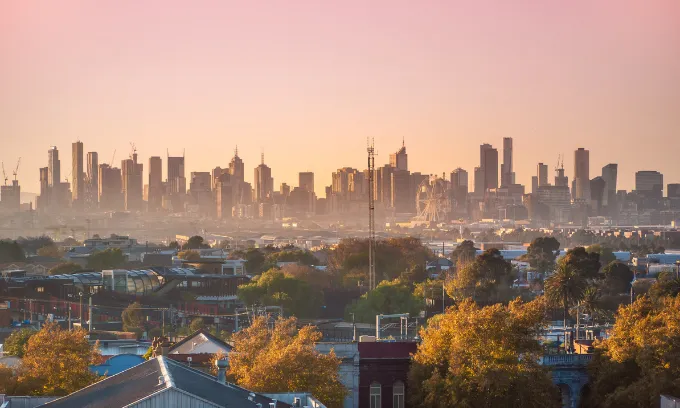
Melbourne property prices dipped over the first half of 2026. In fact, as of August, the average Melbourne home was priced 5.5% cheaper than the city’s all-time high. So, there might be an opportunity for first-home buyers to get in there.
PRD Research released its 2026 ‘Smart Movers’ report for the second half of 2026 in March, highlighting its top suburbs for buyers, based on metrics including affordability, liveability, and long term growth potential.
Here are some of the top suburbs (five for houses, five for units) PRD picked out.
Top Melbourne suburbs for first home buyers looking for houses
St Albans
North-west of the CBD, near Tullamarine Airport, St Albans has underlying numbers that suggest favourable conditions for first home buyers, according to PRD.
House prices there grew nearly 10% over the twelve months to March 2026—significantly stronger than the Melbourne average—but prices remain below Melbourne’s median.
While St Albans may have a bit of a reputation, its vacancy rate is below the Melbourne median, suggesting it’s still an in-demand place to live.
It has excellent proximity to schools (according to Domain Research), a train station, and, as one of Melbourne’s most multicultural suburbs, it’s renowned for its international cuisine.
Median house price | $720,000 |
|---|---|
Vacancy rates | 0.8% |
Growth (over the year to March 2026) | 9.8% |
All data from PRD and SQM Research
Epping
Epping is a northern suburb that’s rapidly evolving, with almost $100 million worth of construction planned for the future.
It also has low vacancy rates and a median house price of $740,000, despite the latter growing 9.6% in the year to March.
The unemployment rate in the area is also just 2.2%, pointing to a robust local economy and potential for further growth.
As amenities go, Pacific Epping is one of the biggest shopping centres in northern Melbourne, while Northern Hospital is one of the busiest in Victoria.
Median house price | $740,000 |
|---|---|
Vacancy rates | 0.7% |
Growth (over the year to March 2026) | 9.6% |
All data from PRD and SQM Research
Lalor
Just south of Epping is Lalor, named after gold miner Peter Lalor, who led the Eureka Rebellion in 1854.
Like Epping, Lalor has low vacancy rates, has seen strong recent growth, and house prices are still below Melbourne’s median.
It has a train station and is currently serviced by eight bus routes, as well as being another suburb with excellent proximity to schools, according to Domain.
Median house price | $775,000 |
|---|---|
Vacancy rates | 0.9% |
Growth (over the year to March 2026) | 10.8% |
All data from PRD and SQM Research
Sunshine North
Sunshine North is one of the closest suburbs to the Melbourne CBD with a median house price below $800,000. House prices grew 4.7% through the twelve months to March, but the area’s ten year growth rate is 60.8%—far above the average for Melbourne.
It’s another gentrifying suburb with over $100 million worth of future construction scheduled as of 2026.
Median house price | $780,000 |
|---|---|
Vacancy rates | 1.2% |
Growth (over the year to March 2026) | 4.7% |
All data from PRD and SQM Research
Heidelberg West
Heidelberg West is about 10 kilometres northeast of the CBD, with a median house price of just under $800,000, and has seen prices decline slightly over the twelve months to March.
Considering nearly every surrounding suburb has a median house price of at least $900,000, houses in Heidelberg West could prove a decent alternative.
PRD also found the suburb ticks several important liveability metrics: lots of greenery, the Northland shopping centre is close by, and there’s plenty of nearby schools.
Median house price | $788,000 |
|---|---|
Vacancy rates | 1.5% |
Growth (over the year to March 2026) | -1.5% |
All data from PRD and SQM Research
Top Melbourne suburbs for first home buyers looking for units
Maribyrnong
Maribyrnong, about eight kilometres north-west of the CBD, was one of PRD’s top picks for units.
The median unit price in the area is $488,000. For reference, less than a third of all unit sales in Melbourne over the twelve months to March were priced below $500,000.
Just 0.9% of rentals were vacant, making it appear as an in-demand spot to live, while Domain ranked Maribyrnong’s retail options the best in all of Melbourne in 2019.
Median unit price | $488,000 |
|---|---|
Vacancy rates | 0.9% |
Growth (over the year to March 2026) | -2.4% |
All data from PRD and SQM Research
St Kilda
St Kilda is even closer to the CBD, yet still has a median unit price below $500,000, with prices having dropped 7.5% through the twelve months to March.
It’s one of the cheapest suburbs that sit on the bay of Port Phillip. Locals can walk along the ocean towards the city or get the ferry across the bay.
St Kilda is also one of Melbourne’s most culturally relevant suburbs, with a perennially unlucky AFL team and a lively music scene—Nick Cave had his first residency there!
Median unit price | $490,000 |
|---|---|
Vacancy rates | 1.5% |
Growth (over the year to March 2026) | -7.5% |
All data from PRD and SQM Research
Abbotsford
Abbotsford is just four kilometres from the CBD, with its eastern edge bordered by the Yarra river. House prices there rose a modest 2.9% over the twelve months to March, but PRD research found its vacancy rate as of March remarkably low, only 0.3%, which points to strong underlying demand to live there.
About $140 million worth of construction is scheduled for Abbotsford, so local economic prospects also look good—another potential growth driver.
On liveability, Abbotsford is close enough to the CBD that you shouldn’t go wanting for much, while it backs onto parklands that continue all the way out of the city.
Median unit price | $530,000 |
|---|---|
Vacancy rates | 0.3% |
Growth (over the year to March 2026) | 2.9% |
All data from PRD and SQM Research
Hawthorn
Another name that will be very familiar to AFL fans, Hawthorn is an inner city suburb east of the CBD. Unit prices in Hawthorn have been somewhat stagnant for a while, growing just 7.5% over the past ten years.
However, PRD feels there are indicators that could change: over $150 million worth of planned construction, while vacancy rates sit below the Melbourne average.
Median unit price | $545,000 |
|---|---|
Vacancy rates | 1.3% |
Growth (over the year to March 2026) | -6% |
All data from PRD and SQM Research
Ormond
Ormond is PRD’s final pick for units, about 12 kilometres southeast of the CBD. Unit prices in the area dropped 9% over the twelve months to March, but vacancy rates are very low and Ormond ranks well for liveability.
Domain ranked its public transport access the best in Melbourne in 2019, mitigating the distance from the city, the crime rate is low, and there are plenty of schools nearby.
Median unit price | $545,000 |
|---|---|
Vacancy rates | 0.5% |
Growth (over the year to March 2026) | -9% |
All data from PRD and SQM Research
Buying your first home in Melbourne: What to know
If you’re looking to buy your first home in Naarm, here are a few extra tips and things to keep in mind.
- If you’re building or buying a new home you could be eligible for the $10,000 Victoria First Home Owner Grant.
- The RBA cash rate and interest rates more broadly are subject to change. Changes in interest rates can impact both your mortgage costs (if you have a variable rate) and house prices.
- As of August, the median house price in Melbourne was $920,000 and the median unit price was $629,000 (according to the Cotality Home Value Index). Both figures are down from the same time the previous year.
- Many major forecasters expect Melbourne prices will continue to decline in the coming months.
- In Victoria if you’re buying your first home and it’s worth $600,000 or less, you’ll pay no stamp duty. If it’s valued between $600,000 and $750,000 you could pay a reduced rate.