




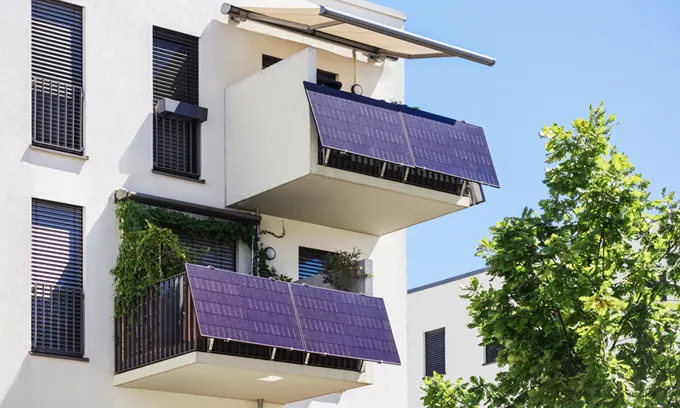
Aussies have embraced rooftop solar in world-leading numbers, but renters and apartment owners have largely been shut out of the savings. That could soon change, thanks to a nation-first move by the Western Australian Government to legalise plug-in solar panels and batteries.
A consultation into plug-in solar safety is currently underway, and the outcome is likely to be a game-changer for WA residents who can’t install traditional solar panels. Once plug-in kits are greenlit in WA, a national rollout may follow – meaning renters and homeowners without roof space can finally access cleaner, cheaper energy.
What is plug-in solar?
Plug-in solar panels and batteries offer a simple alternative to conventional rooftop solar. Instead of being professionally installed on a building’s roof, plug-in solar panels plug directly into a standard household power point. A microinverter converts the panels’ DC electricity into usable AC power, which is then fed into your home’s electrical circuit.
The panels themselves can be positioned in a secure spot on your balcony, patio, or anywhere they can absorb sunlight directly. They’re also portable, so you can easily take your plug-in system with you if you move.
Do-it-yourself plug-in solar is hugely popular in Europe, where it’s commonly called balcony solar. New Zealand has also committed to legalising the technology, although no date has been set.
Plug-in solar is currently illegal in Australia because these systems feed generated electricity into your home’s wiring, which poses safety concerns if something goes wrong.
The WA Government’s consultation process will determine regulatory and technical standards to ensure that once plug-in solar products are legally available, they’re safe and compatible with our electricity grid. The consultation is open until December 9, 2026.
How much money can plug-in solar save you?
The WA Government estimates that a typical plug-in system can save the average home about $240 per year on electricity bills. Pair your panels with a plug-in battery, and that figure increases to $500 per year.
A Perth household on Synergy’s Home Plan (A1) tariff, which includes a current flat usage rate of 33.26 cents per kilowatt-hour (kWh), would need to move around 2 kWh of electricity use per day to solar to hit the estimated $240 in annual savings.
However, what you can save will depend on a number of factors, including your electricity plan, the size of your panels, and how you actually use energy. Diverting as much of your appliance use as possible to peak solar generation hours will boost your savings, as will adding a solar battery to store electricity for later use.
Long-term savings will also vary based on the actual upfront cost of a plug-in system. Some Australian sellers are already advertising plug-in kits; one currently lists an on-sale price of just under $1,400 for an 800W system and microinverter. If you’re saving $240 on power annually, that system would pay for itself in about five to six years.
Can I just buy portable solar panels instead of a plug-in system?
The plug-in solar systems currently under review are different from the portable solar panels already legally available to buy and use in Australia.
While plug-in solar will target household use, portable solar panels are designed to generate electricity when you’re temporarily off the grid (e.g. when you’re camping, 4WDing or caravanning). Portable panels need to be paired with a standalone power station, so they can’t be plugged into a power outlet. These panels also produce much less power than household solar systems.
Australians can technically buy plug-in solar kits now from overseas sellers, but these are illegal to use. Be warned: these kits are usually not compatible with Australian plugs and electrical standards, and using them could even put your home insurance at risk.
