






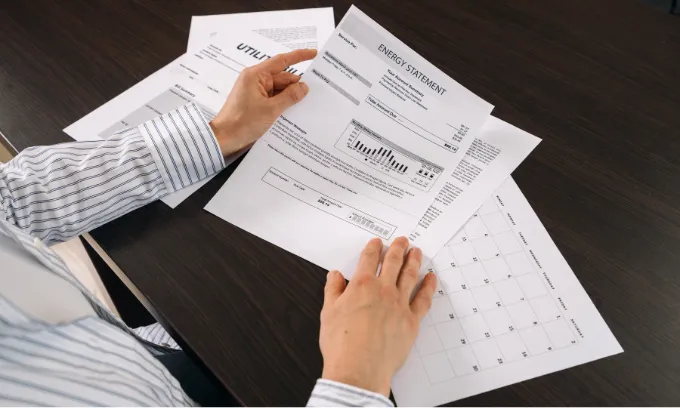
Millions of households will see their electricity rates drop today: however, customers should make sure to check the details of their price change notification, because not everyone will come out ahead.
Default plans in New South Wales, Victoria and South East Queensland will drop by up to 8% for a typical household on a flat rate plan, while customers in South Australia, ACT and Tasmania will see a rise of up to 4.2%.
Change to default electricity plans for average households by state | |||
|---|---|---|---|
Change | Annual change ($, max) | % on default plans | |
NSW | -3.4% to -5.0% | -$137 | 7% |
Victoria | -3 to -8% | -$160 | 17% |
SE Queensland | -7.2% | -$155 | 10% |
South Australia | +1.4% | +$33 | 8% |
Tasmania | +4.2% | +$113 | 91% |
ACT | +2.7% | +$64 | 12% |
Source: Canstar. Notes: Based on domestic flat tariff for the 2026-27 financial year for a residential property without a controlled load in NSW, Victoria, SE QLD and SA. ACT and Tasmania price changes are an average across different plan types. Average household electricity use is determined by the regulators and varies across networks. Tasmania is for Aurora network.
Note: WA, north QLD and NT are operated separately from the national energy market.
Market plans also on the move
Many market plans, which are set by retailers rather than the regulator, are also moving today, with the big three providers largely confirming drops for an average household. However, this will depend on where people live, what provider they are with and how much energy they use.
While Origin, AGL and EnergyAustralia customers in NSW, SE QLD and SA will see their prices change from today, Victorian households with the big three providers won’t see their prices change until 1 August.
Big three: average price changes for market electricity plans | |||
|---|---|---|---|
Origin | AGL | EnergyAustralia | |
NSW | -0.8% | -2.4% | +1.8% |
VIC | -2% | -4.1% | +0.4% |
QLD | -5.4% | -8.7% | -5.8% |
SA | +0.8% | -1.0% | +1.3% |
Source: Canstar. Average is across all tariff types. Excludes DMO/VDO plans, existing customers only. AGL changes based on price from same time last year. QLD is Energex network only. Price changes in Victoria take effect on 1 Aug. All other states listed are 1 July.
Jump in supply charges could see low energy households pay more
Household electricity bills are typically made up of two components: the rate(s) charged for using electricity, and a daily supply charge, which is the cost of being connected to the grid.
From today, many households will now start paying less for the electricity they consume, but significantly more for their daily supply charge, with some customers reporting increases of over 70%.
This means that while, on average, households might be better off under the new pricing structure, homes that consume a relatively low amount of electricity could end up paying more this financial year.
New rules now in place will provide more certainty for households
The start of the new financial year also marks the introduction of a raft of new rules. In NSW, SE QLD and SA:
- Price hikes are now limited to no more than once a year.
- Unreasonably high penalties for not paying bills on time are now banned.
- All fees are now restricted to reflect the actual costs paid by providers.
- Fees, except for network charges, for vulnerable customers are banned.
- Hardship customers must be financially no worse off than if they were on the providers’ lowest cost plan.
VIC, under the Essential Services Commission (ESC), follows different rules, which already include a requirement for providers to limit price hikes to just once a year.
New rules coming in for VIC include:
- Customers who have been on the same plan for four or more years must be on a reasonably-priced plan. This could see up to 53,000 households moved to cheaper plans, at an estimated annual saving of $230, according to the ESC (1 July).
- Customers having trouble paying their bill must be automatically moved onto their provider’s cheapest available plan (1 October).
- Offer payment methods other than direct debit for each plan (1 October).
- Increase the minimum debt owing before disconnection from $300 to $1,000 (1 October).
Proportion of customers behind on their electricity bills rise
These price changes come as the latest report from the Australian Energy Regulator for the March quarter shows that the proportion of customers in debt, hardship or payment plans has risen.
Proportion of residential electricity customers behind on their electricity bills | ||
|---|---|---|
Dec 2025 | Mar 2026 | |
Proportion of customers in hardship | 2.0% | 2.1% |
Proportion of customers on payment plans | 1.5% | 1.7% |
Source: AER, prepared by Canstar. Includes data for NSW, Queensland, South Australia, Tasmania and the ACT. Does include data for Victoria, Western Australia or Northern Territory.
Customers urged to check their rates
Canstar's Data Insights Director, Sally Tindall, says, “Electricity price drops of up to 8 per cent look like a win on paper for households in NSW, VIC and QLD, but the devil is firmly in the detail.”
“The shake-up between electricity rates, which are largely falling, and daily supply charges that in some cases have gone up by more than 70 per cent, could end up penalising energy-conscious households.
“If that’s you, get into the details of your price change notification to see if you might be better off switching to a different electricity plan. While it’s a bit of added work, if you’re taking the time to be energy efficient at home, it’s worth applying that same fastidious approach to shopping around.
“New rules coming into effect today will also give customers greater certainty around their electricity costs, with providers in NSW, SE QLD and SA now unable to increase their customers’ prices more than once a year.
“VIC is going one step further this financial year, with a new rule that now forces providers to make sure customers who have been on the same plan for four or more years are paying a reasonable price, and to move them to a cheaper plan if they’re not.
“This one change has the potential to help up to 53,000 Victorian households, saving them an estimated $230 a year – savings that could potentially help prevent some customers from falling behind on their electricity bill this winter.”