






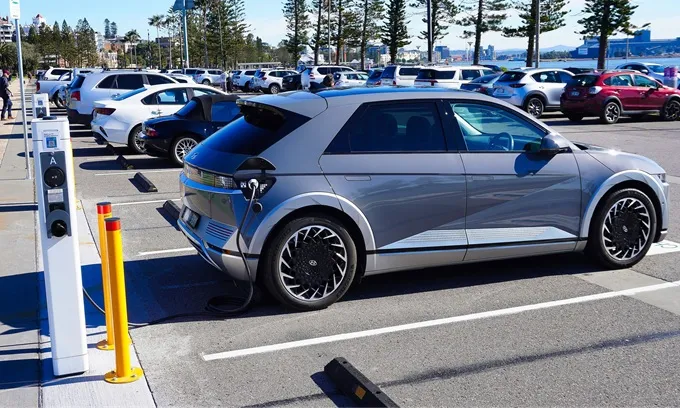
The price of fuel has ramped up again after the government’s excise relief ended, leaving many drivers feeling the pinch at the pump and perhaps considering an electric vehicle to avoid the sting. With that backdrop, it might not come as a surprise that sales of battery electric vehicles (BEVs) have grown this year, accounting for one in five new vehicle sales in the month of July, according to data from the Federal Chamber of Automotive Industries (FCAI).
But savvy drivers shifting from petrol to electric might face a reckoning when they realise many traditional fuel saving habits—like turning off your engine to avoid idling during long waiting periods, shifting gears early to keep revs low, and avoiding heavy braking or accelerating—don’t necessarily translate to more mileage in an EV.
If you’re one of the many motorists looking to switch to an EV, we’ve put together some tips on saving money when going electric.
How to save when charging your EV
It’s generally cheaper to charge an EV compared to filling up a petrol vehicle, with new data from NRMA suggesting charging an EV can cost $2,400 to $3,000 every five years, while a traditional car might demand between $6,000 and $10,000 worth of petrol in that same period.
Even when using charging stations away from your home you still may be able to find savings. For example, $39 is all it’s estimated to cost to fully charge an EV with a 60 kWh battery at a DC fast charging station, with an average rate being around 65 cents per kilowatt, according to Solar Calculator. Slower, AC chargers may offer more competitive rates, demanding around $27, or 45 cents per kilowatt, for the same charge. Compare that to the $119 it would cost to fill a 60-litre petrol tank at $1.99 a litre. But don’t let the savings stop there.
Charge up when power is cheapest
Charging at home is usually the most cost effective method to ‘fill up’, and it’s best practice to check your electricity plan to see if you’re on a time of use (ToU) or flat-rate tariff, says Canstar’s Senior Energy Journalist, Kevin Goh.
If you have a ToU plan, you might avoid charging during peak electricity rates.
You may even be able to access EV-specific electricity plans that offer cheaper tariff periods at times you’re more likely to charge your EV.
Those in New South Wales, Queensland, and South Australia may even consider taking advantage of the Solar Sharer Offer, providing eligible households with three hours of free electricity in the middle of the day. You could set your EV for ‘scheduled charging’ during these hours.
Be savvy when selecting public chargers
If you find yourself out and about and need a charge, DC Ultra-Fast chargers (150kWh-350kWh) are generally more expensive due to the convenience of their fast charging capabilities.
If you have the time, you could opt for a Standard Level 2 AC charge at a shopping centre, council park, or even some workplaces. These chargers can cost half as much and, in some cases, are even free. Some state motoring clubs (like NRMA, RACQ, and RACV) offer discounts when using certain charging networks, like they do for filling up at certain petrol stations.
How to get the most out of your EV’s battery
An EV's high-voltage battery pack is arguably its most important part. It powers the electric motor and provides energy for many of the vehicle's systems, from air conditioning to the electronics that support everyday driving. If you treat it poorly, it may not last the distance.
The three main things that can hurt your EV’s battery are extreme heat, high voltage, and rapid power transfer. High voltage refers to leaving your EV charged at 90% to 100%, causing the battery’s individual cells to work a lot harder, and rapid power transfer means using a more powerful DC charger to force more electrical current into your battery pack in a short period of time.
While your EV will have a battery management system in place to combat these issues, there are a few things you can do to protect it:
Optimise your daily charging
Keeping your EV’s battery between 20% and 80% can help prevent internal chemical stress. The best way to care for your powerhouse depends on the type of battery pack you have:
- Nickel Manganese Cobalt (NMC) packs: Charge to 80% for daily driving and save charging to 100% for long road trips.
- Lithium Iron Phosphate (LFP) packs: Can be more forgiving when charged to higher levels, but usually still prefer the mid-range for daily use. You may want to top up to 100% each week or month to help calibrate the battery’s range estimator (how far it thinks it can drive before requiring a charge).
For regular charging, it’s recommended to use slower AC chargers rather than DC fast chargers. You also may find frequently topping up from the 50% mark to 70% or 80%, rather than running your battery all the way down to 5% before recharging, is gentler on your battery.
Control the temperature where possible
If you’re like me and live in a warmer climate (thanks Brisbane), parking your vehicle out in the sun, especially in summer, isn’t a great idea. Alongside fading your interior and risking a seatbelt-shaped burn, excessive heat can also damage your EV’s battery. If you can, park your EV in a garage or shaded area in both hot and cold weather.
Your EV will likely have systems in place to protect the battery’s cells during periods of extreme heat and cold, but these run on your vehicle’s battery and will deplete it.
If you’re going on holiday or leaving your EV unused for an extended period, letting the battery rest at roughly 50% charge can also help minimise voltage stress.
Drive more efficiently
Utilising your EV’s regenerative braking, which recaptures energy from forward momentum (kinetic energy) whenever you ease off the accelerator, can help you go further on a single charge. Depending on the model you have, you may need to put it in ‘one-pedal’ mode or turn on regenerative braking to see the effects (one of which might be your passengers turning slightly green—you’ve been warned).
How can I finance the purchase of an EV?
There’s several different ways you can finance the purchase of your new EV:
- Using your savings to buy one outright: Buying with funds you already have on hand can help you avoid paying interest on a loan for what’s typically a depreciating asset.
- Taking out a novated lease through your employer: If your workplace offers salary sacrificing, a novated lease could see repayments on your new EV, as well as most ongoing running costs, paid for using your pre-tax income. That said, if you choose to purchase the EV at the end of the lease, you’ll have to pay out the residual value (or balloon payment).
- Explore your car loan options: You may be able to access dedicated green car loans when buying an EV, which often come with lower interest and comparison rates than other new car loans.
One thing to keep in mind is that EVs don’t tend to hold their value as well as other vehicles due to rapid technology improvements, new model introductions, and aggressive price competition. That said, if you don’t mind buying a used EV, you may be able to get a good deal.
How does car insurance work for an EV?
Protecting a new car you’ve likely spent tens of thousands of dollars on from accidental damage is important. You generally take out car insurance for an EV the same way you would for a petrol or diesel vehicle, with some comprehensive policies even covering your charging equipment and accessories as well. If you’re planning on buying with a car loan, it may also be a condition that you get comprehensive car insurance.
During analysis for this year’s Car Insurance Awards, Canstar’s Research team noticed some brands didn’t offer coverage for all the electric and hybrid vehicles they assessed, while others did. So if one provider won’t cover your new EV, don’t panic, it’s likely others will.
As for the cost of car insurance, Canstar found car insurance for an EV was almost 26% more on average than for an equivalent petrol vehicle. This is based on quotes from a selection of providers for a 45 year old male living in North Sydney driving 10,000km annually. The EV quoted for was a Kia EV3 Air - Standard Range and the non-EV quoted for was a Kia Seltos GT - AWD.
This is likely due to it being more expensive to repair an EV after an accident and that there are fewer mechanics and repairers with qualifications and experience to work on them.
How to be more confident and prepared to drive an EV
While 68% of EV drivers said they felt prepared to get behind the wheel of their new car, many struggled to adapt to features like touchscreen controls, one-pedal driving, instant acceleration, and charging management, according to new research from Allianz Australia.
Switching to a new car, especially your first EV, can be daunting. While confidence can get you started, building knowledge and gaining experience behind the wheel can help you get the most out of your EV, Allianz Australia’s Emerging Risks Manager, Chris Wood, suggests.
Mr. Wood compiled a list of tips to help you build on your confidence and prepare you for when you start driving your new EV:
- Talk to those in the know: After switching to an EV, be sure to use credible information on its features from trusted sources, like the dealership who sold you the vehicle or someone familiar with a similar vehicle, like a specialised mechanic.
- Explore your vehicle’s technology: Take time to understand EV-specific settings, features, and driver assistance technologies before hitting the road.
- Practice makes perfect: When you first drive your new EV, you may want to go back to basics. Take familiar roads in off-peak times to get a handle on the new technology before testing yourself in a multi-lane motorway or roundabout.
- Understand regenerative braking: Familiarise yourself with how regenerative braking works and how it can affect the way your EV accelerates, slows, and handles.
- Power up: When you first use a public DC charger, make sure you have spare time and sufficient charge to move on if needed. There’s nothing worse than trying to wrangle new technology while under stress.
- Build charging habits that work for you: Establish a charging routine that suits your lifestyle and understand the different options available at home and on the road. The Electric Vehicle Council provides a handy charging station map on its website.
- Find your community: Organisations like the Australian Electric Vehicle Association offer advice, support, and events for EV drivers and enthusiasts.
While you may be keen to get down to your local dealership to pick up an EV, there’s still a risk that EV uptake will outpace the supply of public charging infrastructure, warns FCAI’s chief executive Tony Weber.
If you live in an area with limited charging options and drive long distances, you may not be able to make the most of your new EV. That said, you could instead consider other energy efficient vehicles, like hybrid electric or plug-in hybrid electric vehicles, which can run on both a battery-powered motor and a combustion engine.