



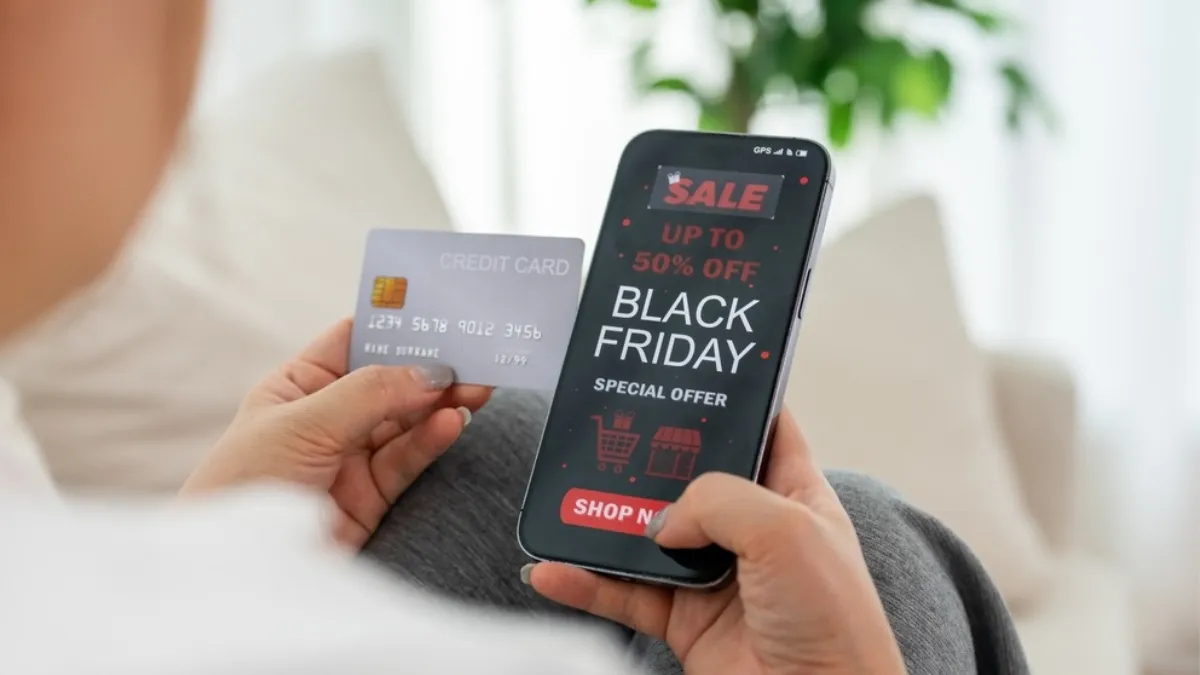
Black Friday is almost here, and your inbox is probably already overflowing with promises of massive markdowns and savings.
But before you reach for your card, check you aren’t being fooled by clever marketing or a scam. The four-day sales event, which stretches from Black Friday to Cyber Monday, is designed to get you spending, and both retailers and scammers have ways to help you do it.
The watchdog is watching
The ACCC has officially put retailers on notice. Its third annual Black Friday sweep is on, and for the first time it will check advertising across retailers’ marketing emails and social media, not just their sites.
It is looking for ‘sitewide’ or ‘storewide’ claims when lots of products are excluded, countdown timers that run past their stated end, fake low-stock warnings, misleading testimonials and ‘was’ prices that products were never really sold at. ACCC Deputy Chair Catriona Lowe has also warned retailers that fine print shouldn’t be used to water down a promotion’s headline message.
That matters for shoppers, because just because a store is participating in the Black Friday sales, doesn’t mean you’re guaranteed a bargain.
1. The deadline
One of the most common tactics used to get you spending is a deadline. It’s an age-old trick (it was around back when lay-by was a thing) designed to rush you so you don’t stop to compare prices.
Countdown timers are common on many websites now, especially during a limited four-day Black Friday event, often with a clock ticking away in the corner of the screen.
But the pressure can come at you in other ways too:
- Pop-ups saying ‘Hurry! Only two left in your size’
- Messages like ‘22 people are viewing this item right now’
- Virtual waiting rooms just to get into a sale
Businesses are allowed to use countdown timers, but only if they’re genuine. In September, furniture retailer James Lane and trampoline seller Vuly paid ACCC penalties of $19,800 and $39,600 respectively. The ACCC alleged that last Black Friday, both told shoppers their sales would end at a set time, and then the discounts kept going.
In Vuly’s case, the ACCC said its countdown timers simply reset to a new end date once they hit zero, with the same or bigger discounts still on offer. James Lane, the ACCC said, had decided before its sale even started that it would run past the advertised end date.
2. ‘Up to’ and the fine print
Black Friday is a marketing event, plain and simple. It’s not about clearing stock, and it’s not out of the goodness of retailers’ hearts. It’s designed to get you spending, and every trick comes out of a well-worn playbook.
Treat the words ‘up to’ with caution (if you can spot them). A store might advertise ‘up to 50% off’, but often only a handful of items are discounted that heavily.
The ACCC has made it clear that teeny-tiny fine print isn’t okay, and an asterisk that sends you to terms tucked away somewhere obscure can also be misleading.
3. Overstated savings
You know the ones: a big red line through the old price and a promised saving of hundreds of dollars.
Say you spot a suit that was $900, now slashed to $500. Fantastic! That gets the shopping endorphins going, and it can nudge you into buying a pricier brand because it feels like great value.
But if that suit was only listed at $900 for a couple of weeks in winter, and has been $600 ever since, your real saving is $100, not $400.
4. Welcome vouchers and contract ‘discounts’
You may have already seen those pop-ups that hit you the second you land on a website: ‘Give us your email for 10% off’ or ‘$20 off’. You hand over your details, try the code at checkout, and the computer says no.
First, they’ve just collected your email address for marketing. Then, when you read the tiny terms and conditions, you might find for example:
- You need to spend at least $150 to get that $20 off
- The code can’t be used on Black Friday sale items
- You have to make a purchase first, and the code comes later
By the time you shop there again, you’ve probably forgotten about it. Or worse, you buy more than you planned and pay for a second round of shipping just to redeem that $20.
The fine print matters even more when you’re signing up to an ongoing service, like a new NBN or phone plan, which can also go on sale during Black Friday.
Some telcos are offering up to $1,000 off new smartphones if you sign up to a one-to-three-year contract. But read the terms and you may find that if you leave the contract early, the discount disappears. You could end up paying full price for the handset, even after paying for six months of a 12-month plan.
How to actually bag a bargain
Not every sale is a dud. Black Friday can knock hundreds of dollars off your Christmas shopping if you’re savvy about it. You just need a plan of attack and your head screwed on.
- Go in with a list and a firm budget. Write down what you actually need, and how much you can afford to spend.
- Compare prices. However big (or small) the saving, take 10 seconds to search online and see if it’s cheaper elsewhere at a known retailer, not a dodgy website. In a cost-of-living crisis, what matters is how much you spend, not how much you save.
- Sleep on anything over $100. If a deal is genuinely good, it will still make sense after a cup of tea, and ideally a full night’s sleep.
- Made a mistake? Send it back. Check the store’s returns policy. You’re better off having money left at the end of the month for the bills than owning the latest kitchen mixer.
- Report anything dodgy. Let the store know, and report it to the ACCC. The ACCC won’t resolve your individual complaint, but every report gives it valuable intel on where to look during crackdowns like this one.
Scammers love Black Friday even more than shoppers do
Buying-and-selling scams are big business. Over the past 12 months, Scamwatch received 37,925 reports of buying-and-selling scams, with $22.2 million lost and a median loss of $220. The ACCC says 58.7% of Scamwatch reports involving a financial loss in the first nine months of 2026 related to buying-and-selling scams.
Scamwatch has also warned about travel scams at this time of year, as people look to book trips ahead of the Christmas and school holidays. Scammers will impersonate airlines, airports, travel agents and accommodation providers to pressure you into clicking a link, sharing information or making an urgent payment before the deal expires.
The simplest way to protect your money and your holiday plans is to avoid clicking links in unexpected messages and always go straight to your airline or travel agent’s website to verify information.
How to protect yourself
- Buy from stores you know and trust. Social media isn’t a secure place to shop. Fake websites used to be easy to spot, but with AI they can now look completely legit. Always check the web address, and if you don’t know the store, read reviews, or better yet, walk away.
- Think about which card you use. Consider a second bank account with limited funds for online shopping. If someone gets in, there’s only so much they can take, and it helps you stick to your budget too.
- Turn on real-time alerts. Set up your banking app to notify you every time money leaves your account.
- Don’t click links you don’t trust. Never pay extra for a delivery you’ve already paid for at a secure checkout. If you’re selling, never ‘verify your account’ or ‘receive payment’ through a link sent by message or email.
If you do get scammed, act fast:
- Contact your bank immediately.
- Contact the police, if warranted.
- Report it to Scamwatch and ReportCyber.
- Contact IDCARE if your identity has been compromised.
- Tell your friends and family so they don’t fall for the same scam.
The golden rule
If you remember just one thing this Black Friday, make it this: if it wasn’t on your wish list yesterday, it’s not a bargain today.
Put that on a sticky note on your laptop.
