




























canstar
canstar
Fact Checked
Budget Direct
Cover Rating
$
  • 24/7 claims
  • Online discount
  • Storm, fire & theft
  • New for old replacement

Cover Rating for the Home & contents profile. Read the PDS & check suitability.

QBE
Cover Rating
$$
  • 24/7 claims
  • Online discount
  • Storm, fire & theft
  • New for old replacement

Cover Rating for the Home & contents profile. Read the PDS & check suitability.

YOUI
Cover Rating
$$
  • 24/7 claims
  • Storm, fire & theft
  • New for old replacement

Cover Rating for the Home & contents profile. Read the PDS & check suitability.

Allianz Australia
Cover Rating
$
  • 24/7 claims
  • Storm, fire & theft
  • New for old replacement

Cover Rating for the Home & contents profile. Read the PDS & check suitability.

NRMA Insurance
Cover Rating
$$
  • 24/7 claims
  • Online discount
  • Storm, fire & theft
  • New for old replacement

Cover Rating for the Home & contents profile. Read the PDS & check suitability.

NRMA Insurance
Cover Rating
$$$
  • 24/7 claims
  • Online discount
  • Storm, fire & theft
  • New for old replacement

Cover Rating for the Home & contents profile. Read the PDS & check suitability.

Kogan Insurance
Cover Rating
$$
  • 24/7 claims
  • Storm, fire & theft
  • New for old replacement

Cover Rating for the Home & contents profile. Read the PDS & check suitability.

Huddle Insurance
Cover Rating
$$
  • 24/7 claims
  • Storm, fire & theft
  • New for old replacement

Cover Rating for the Home & contents profile. Read the PDS & check suitability.

Real Insurance
Cover Rating
$$
  • 24/7 claims
  • Storm, fire & theft
  • New for old replacement

Cover Rating for the Home & contents profile. Read the PDS & check suitability.

Real Insurance
Cover Rating
$$
  • 24/7 claims
  • Storm, fire & theft
  • New for old replacement

Cover Rating for the Home & contents profile. Read the PDS & check suitability.

Showing 10 of 65 results

To see more results adjust the filters above

  • Included
  • Not Included
  • Optional
  • Not applicable
  • Canstar Cover Rating

Unsure of a term in the above table?

Additional filters may have been applied, which impact the results displayed in the table - filters can be applied or removed at any time.

Compare from a range of home insurance providers

provider logo
provider logo
provider logo
provider logo
provider logo
provider logo
provider logo
provider logo
provider logo
provider logo
provider logo
provider logo
provider logo
provider logo
provider logo
provider logo

We do not compare all brands in the market, or all products from our participating brands. At times certain brands or products may not be available or offered to you. Learn more.

Why compare fire insurance with Canstar?

scissors cutting a dollar sign to represent cost savings

Save money, hassle-free

See all your home insurance options in one place to find a policy that fits your home and your budget.

Head with layers within the brain to represent thinking

Fast, free, and easy

Get a quote in minutes. No fees, no hard sell, just the information you need to make the right choice.

Checklist on a computer

Choose your provider

Compare, choose, and switch to a better policy using Canstar’s comparison tool.

How to compare fire insurance with Canstar

Front driveway of a home

Discover our latest award-winning home insurance providers

2026 Outstanding Value Award
award logo
Home & Contents Insurance - AustraliaHome & Contents Insurance - South QLDHome Insurance - AustraliaHome Insurance - South QLDContents Insurance - AustraliaContents Insurance - NSWHome & Contents Insurance - WAContents Insurance - SA
2026 Outstanding Value Award
award logo
Home & Contents Insurance - AustraliaHome & Contents Insurance - NSWHome Insurance - AustraliaHome Insurance - NSW
2026 Most Satisfied Customers Award
award logo
Home Insurance Claims - Australia

Canstar customers share their experiences

We help millions of Australians each year compare and find better deals

Google Logo

Rated 4.3 / 5

by our customers on Google Reviews

Based on 317 reviews

Ratings as of 10/08/2026

Fire insurance cover tips from our expert

Don’t assume every fire scenario is treated the same

Most home building policies cover fire (including bushfire and house fires) but the fine print matters. Check whether cover includes things like smoke damage, ember attack and damage caused while firefighters are accessing your property. Read the PDS so you know exactly where you stand.

Review your sum insured before fire season

Rebuilding costs can surge after major bushfires due to demand for trades and materials. Make sure your building sum insured reflects today’s rebuild costs, not what you estimated years ago. If you’re underinsured, you could be left footing a big chunk of the bill.

Check temporary accommodation limits

If your home becomes unliveable after a fire, your policy may pay for temporary accommodation, but only up to a set limit or time period. Confirm how much is covered and for how long, so you’re not scrambling if the worst happens.

Nina Rinella, Editor in Chief at Canstar

Guide to fire insurance

Does your home insurance include fire protection?

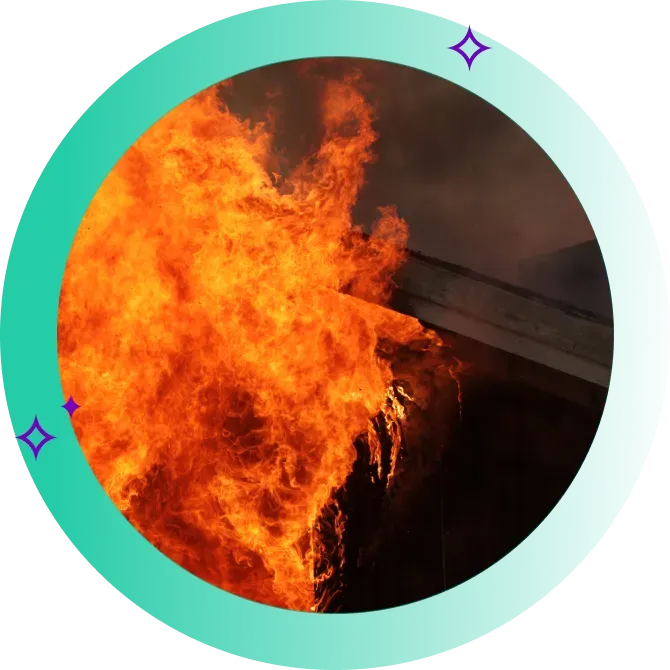
At the time of writing, all home and contents insurance policies on Canstar’s database include cover for loss or damage caused by fire, including bushfires and house fires, as standard.

While you may find your insurance does cover for fire, it could still be worth checking your policy’s Product Disclosure Statement (PDS) or contacting your insurance provider directly to determine exactly what’s covered, and what waiting periods apply.

For example, different insurers will likely have different definitions of what they consider to be fire damage. For instance, one insurer might cover most of the damage caused by a bushfire, but another may only cover damage caused by flames, and not water or smoke.


What insurance is available for fire damage?

Fire damage is typically covered under several types of home insurance policies, depending on what you own and your living situation.

Home (building) insurance

Also known as building insurance, this covers damage to the physical structure of your home and permanent fixtures like garages, sheds and fences. Depending on your policy, this can include cover for:

  • Repairing or rebuilding your home
  • Demolition and debris removal
  • Temporary accommodation if your home is unliveable
  • Professional fees (e.g. architects or surveyors)

Contents insurance

Contents insurance covers your belongings if they’re damaged or destroyed in a fire. This can include:

  • Repairing or replacing furniture, electronics and personal items
  • Removal of damaged goods
  • Spoilage of food or medication (up to policy limits)
  • Guests’ belongings damaged during the event (up to policy limits)
  • Storage or moving costs for undamaged items if you can’t stay in your home

Home and contents insurance

Home and contents insurance are separate types of cover, although they are typically sold together as a package, and you may be able to get a discount for bundling them up.

Many insurers offer building and contents insurance as a combined policy. This can be a convenient option and may come with a discount, while ensuring both your home and belongings are protected under the same insurer.

Landlord insurance

If you own an investment property, landlord insurance typically includes cover for fire damage to the building, and may also cover loss of rental income if the property becomes unliveable after a fire.

Renters insurance

Also known as contents insurance for tenants, this covers your personal belongings if you’re renting and they’re damaged or lost in a fire. It doesn’t cover the building itself—that’s the landlord’s responsibility.


What is not covered under a home insurance policy?

When it comes to insurance and fires, it’s very important to be aware of some common exclusions. Depending on your policy, you could find that you’re not covered for damage from:

  • Heat, ash, soot and smoke when your home or contents have not caught on fire, unless it’s caused by a burning building within a certain distance of your home
  • Electrical arcing, scorching, or melting where there were no flames, unless a fire spreads from the initial burn spot
  • Deliberate, malicious or criminal acts carried out by the policy holder and/or family members, or by guests to the house.

There may also be exclusions surrounding items which are designed to be exposed to heat, such as cooking appliances or home heaters. If these items are damaged or destroyed during normal use, then cover may not be available to replace or repair them.

If a fire starts from these items and that fire damages other items in your home or the home itself, then your insurance may provide cover. Read your policy documentation carefully or contact your insurance provider directly to find out if any of these exclusions apply to you.

Underinsurance protection: what to look for

With construction costs rising, one of the biggest risks for homeowners is being underinsured—where your sum insured isn’t enough to fully rebuild or replace what you’ve lost after a fire.

Some insurers offer underinsurance protection (sometimes called a safety net or sum insured safeguard), which can provide an extra buffer if your cover falls short.

Depending on the policy, this may include:

  • A percentage-based buffer (for example, up to 10–30% above your sum insured) to help cover unexpected rebuild cost increases
  • Automatic inflation adjustments to your sum insured each year
  • Access to building cost calculators to help you estimate a more accurate replacement value

However, this protection isn’t unlimited and conditions usually apply. For example, you may need to have used the insurer’s calculator or reviewed your cover regularly for the benefit to apply.


Is there a waiting period for fire insurance?

Most home and contents insurers include a waiting period of around 72 hours from when you  take out the insurance policy to when you can make a claim. This is partly to prevent customers from taking out insurance as a fire or flood is already rolling in.


What types of home and contents insurance cover are available?

The two most common types of home and contents insurance cover are:

1. Sum-insured cover

These policies cover damage to or replacement of your home and/or contents from fire up to a fixed value, set by you and your insurer.

In the event of a total loss from a bushfire, you may be left underinsured if the agreed amount does not adequately cover the cost of rebuilding or replacing your home and contents. For this reason, it’s important to regularly assess your cover to make sure your sum insured amount is adequate, should your home be damaged or destroyed by a fire. 

Some insurers may also offer extended replacement cover, which will add an amount from 10% to 30% above the sum-insured amount. Extended replacement cover may be offered as an inclusion under your sum-insured policy, or as an optional extra for an increased premium.

2. Total replacement cover

These policies will typically cover the estimated costs to repair, rebuild or restore your home or contents to the state they were in before the damage or loss occurred from fire. To determine the sum owed to rebuild or repair, your insurer will typically need to do a full assessment of the damage or loss that has occurred. This type of cover generally carries a higher premium than a sum-insured policy.


How to make sure you have adequate fire cover

Having sufficient house fire and bushfire insurance could make a huge financial difference in the recovery process if your home and contents are damaged or destroyed by fire. To help ensure you have adequate fire cover, it may be worth considering the following:

  • If you have a sum-insured policy, check if the amount covered matches the value of your assets. To help in valuing your home and contents, consider using an online calculator, or contacting a professional valuer for your property or items. You can also complete an inventory of your contents by doing a room-by-room evaluation.
  • Carefully read your policy’s PDS to see what is covered and what exclusions apply. You can also speak to your provider if there is any part of the policy you don’t understand.
  • If you think you may be living in a bushfire-prone area, check to see what building requirements are needed for your home in the event you need to rebuild, and consider factoring these costs into your policy.
  • Shop around to find a policy that best suits your circumstances.

You can compare home insurance policies using Canstar’s comparison tables. These tables also allow you to filter for policies that provide coverage for fire damage, as well as damage caused by smoke or soot. It’s important to read all relevant policy documentation, such as the PDS and Target Market Determination (TMD), for any policy you are considering.


What to do when making a bushfire claim

If your home or contents are damaged or destroyed by a bushfire, once you and your loved ones are safe, contact your insurance company to seek advice about the claims process and make a claim. Avoid doing any repairs yourself unless you have written permission from your insurer to do so.

It’s also a good idea to take photos of any damaged contents or property (when it is safe to do so) to use as evidence for your claim before you remove or throw them out.

Also try to provide your insurer with as much information as you can regarding what’s been lost or damaged from the fire, and answer any questions they may have.



FAQs about fire insurance

You may be able to reduce the risk or impact of fire damage to your home by considering the following:

  • Install and maintain smoke alarms so when there is a fire at your home you can notify authorities immediately and evacuate the premises.
  • Keep gas and electrical infrastructure and appliances in working order.
  • Follow safety advice, such as never leaving candles or anything with an open flame unattended, being careful around heaters and cooking appliances, turning the power off to appliances when they are not in use, and ensuring cigarettes are extinguished properly.
  • Prepare your home against bushfires, including cleaning out your gutters, sealing around doors and windows, maintaining your garden, storing fuel and other combustibles away from the home, or adding a sprinkler system to your gutters.
  • Follow state or territory building standards/requirements when renovating or building your home in bushfire-prone areas.

To help protect you and those who live in your home, it may also be worth creating (and rehearsing) a fire evacuation plan and a bushfire survival plan.

In a bushfire, it’s also important to follow the advice of your local authorities before deciding whether to stay and defend your property or to evacuate.

If you are living in a bushfire-prone area, such as near coastal scrub, rural grasslands and paddocks or in dense bushland, you could still get bushfire insurance under a home and contents insurance policy, although there may be some additional considerations when assessing your options:

Change to building codes

In 2010, following the deadly Black Saturday bushfires the year before, the national Building Code of Australia was amended, and several states followed suit by giving effect to these amendments in legislation.

Properties in at-risk areas now have Bushfire Attack Level (BAL) ratings and must be built using specific designs and materials, such as gutter guards and window shutters. These requirements can significantly increase the cost to rebuild your home if it’s lost in a fire. So, if you live in a bushfire-prone area, you may need to insure your home for more than its current price to account for the cost of implementing these building requirements.

To do this you could consider a total replacement policy  (if available), or add extended replacement cover to your sum-insured policy. Check with your insurance provider and your state or territory building approvals authority for more information.

Risk of increased premiums

Most insurers will factor in where your home is located when calculating your premium. Because living in a bushfire-prone area increases your risk of damage or loss from a fire, this will likely increase the premium you’re charged.

If you’re not sure if your home is in a bushfire-prone area, check with your rural or regional fire service, or your local council or state/territory government for details. Your insurer may also be able to help you.

If your home or contents are damaged or destroyed by a bushfire, once you and your loved ones are safe, contact your insurance company to seek advice about the claims process and make a claim. Avoid doing any repairs yourself unless you have written permission from your insurer to do so.

It’s also a good idea to take photos of any damaged contents or property (when it is safe to do so) to use as evidence for your claim before you remove or throw them out.

Also try to provide your insurer with as much information as you can regarding what’s been lost or damaged from the fire, and answer any questions they may have.

About our home insurance experts

Mark Bristow is an experienced analyst, researcher, and producer, and was previously a Senior Finance Writer at Canstar. While primarily focused on Australian mortgage and home loan expertise, he has experience across energy, home and travel insurances. Mark has been a journalist and writer in the financial space for over 10 years, previously researching and writing commercial real estate at CoreLogic. He's also worked for the Winning Group, Expedia, and has seen articles published at Lifehacker and Business Insider. Mark has also completed RG 146 (Tier 1), making him compliant to provide general advice for general insurance products like car, home, travel and health insurance, as well as giving him knowledge of investment options such as shares, derivatives, futures, managed investments, currencies and commodities. Find Mark on Linkedin.

Jessica was previously the Finance Editor at Canstar. With more than 12 years media industry experience, Jessica has worked across a range of fintech, travel and lifestyle publications in Australia and the UK. Her work has appeared in publications including Grazia UK, Time Out, Great Barrier Reef Foundation, WIRED, Refinery29, Suncorp, Urban List and Tourism & Events Queensland. Before joining Canstar, Jessica was a Senior Communications Associate at Australian insurer Suncorp Group, covering topics from assisted relocation reform to ASX Full Year Results. Prior to this Jessica was the Brisbane Editor at independent media brand Urban List. She holds a Bachelor of Arts (Honours) in Advertising and Creative Writing from London’s Middlesex University.

Important Information

For those that love the detail

This advice is general and has not taken into account your objectives, financial situation or needs. Consider whether this advice is right for you.