
If you’re looking for some inspiration to spark the imagination and you're curious to see the natural beauty our world has to offer, here’s the official list of the 7 Natural Wonders of the World, as compiled by CNN in 1997.
What are the Seven Natural Wonders of the World?
The Seven Natural Wonders are seven sites around the world, with each one deemed significant in a certain way. They are Mount Everest, the Harbour of Rio de Janeiro, the Great Barrier Reef, Victoria Falls, the Paricutin Volcano, the Grand Canyon, and the Aurora Borealis.
1. Mount Everest
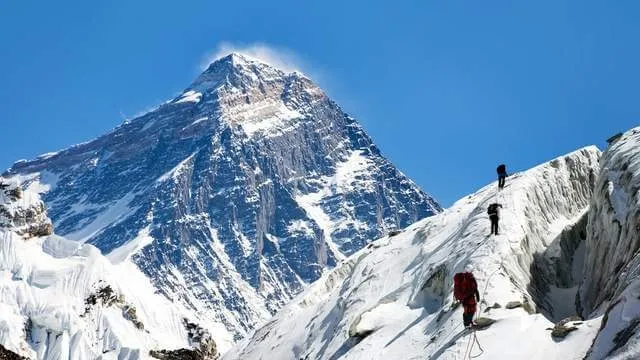
Mount Everest is renowned as the highest spot on earth, at 8,848.86 metres above sea level. It’s parked right on the border of Nepal and Tibet and is protected by Sagarmatha National Park in the Himalayas.
Mount Everest’s original name in Tibetan is Chomolungma (‘Goddess Mother of Snow’) and in Nepalese it’s Sagarmatha. The mountain received an English name in 1865 because Nepal and Tibet were closed to foreigners at the time, so the Royal Geographical Society in Britain did not know the mountain’s local names.
You can get a helicopter tour to get as close to the peak as possible without actually climbing the mountain, and this may be preferable for many people. Climbing Mount Everest is not something to be attempted lightly. The trek to base camp alone takes around 14 days, and the climb itself is arduous and risky. If it’s snowing, you probably won’t physically be able to get near the mountain. Delays are common.
Did you know? While Mount Everest is the highest spot above sea level on earth, it’s not actually the tallest mountain when measured from base to peak. That distinction belongs to the Mauna Kea volcano in Hawaii, which extends 4.2km into the air and around 6km into the sea. And because the Earth is not a perfect sphere (it bulges out around the equator), the tallest mountain in terms of distance from the Earth’s centre is Mount Chimborazo in Ecuador, whose peak is around 2km closer to the stars than Everest’s.
When to visit: Most specialist travel websites tend to recommend September-November or April-May, as Mount Everest is locked away by stormy snow for most of the year.
How to get there: Fly directly into Kathmandu in Nepal and make your way to the base camp, or take a helicopter from there. Alternatively, you can fly into Chengdu in China, head to Lhasa, and drive or trek to the base camp.
Travel insurance: If you’re planning a trip to Everest, it’s important to have travel insurance that covers snow sports, hiking, and trekking. When comparing travel insurance with Canstar, you may be able to find a provider that covers these activities, but it may come at an additional cost.
Although if you’re planning to actually climb Mount Everest, you’ll need to contact a provider directly and let them know all the details of your trip, so they can decide whether or not to cover you. You may also benefit from checking out the options from more specialised ‘adventure travel’ insurers.
On top of this, the Chinese and Nepalese governments both require you to get permits and climbers' insurance before climbing. The exact details of what this will cover and cost may vary depending on where and when you buy it.
2. Harbour of Rio de Janeiro
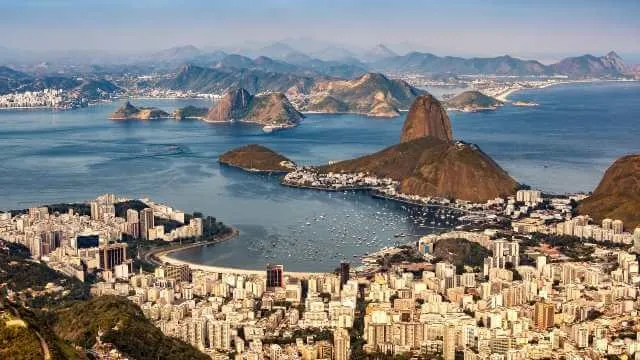
Located in Brazil, the Harbour of Rio de Janeiro is surrounded by unique granite and quartz mountains that were formed by erosion from the Atlantic Ocean. It’s also known as Guanabara Bay, and sits within sight of the famous white stone statue of Christ the Redeemer atop Corcovado Mountain. It’s the largest bay in the world based on volume of water.
The best way to see the bay is from the Sugarloaf Mountain cable car or from a helicopter, so you can take in the full view. You can also visit islands including Governador Island, Paquetá Island, and Ilha das Cobras (‘Island of the Snakes’).
Sunbaking is a popular way locals and tourists enjoy the harbour, but it can be quite polluted.
Did you know? Rio de Janeiro means “River of January” in Portuguese and is the second-largest city in Brazil. There’s no river there, but the Portuguese explorer Gaspar de Lemos reportedly thought that Guanabara Bay was the mouth of a river when he arrived there in January, 1502.
When to visit: September-October, before the humidity sets in.
How to get there: You can catch a flight directly to Rio de Janeiro.
Travel insurance: You can compare travel insurance policies and pricing for Brazil by clicking 'Compare' above and answering a few simple questions.
3. Great Barrier Reef
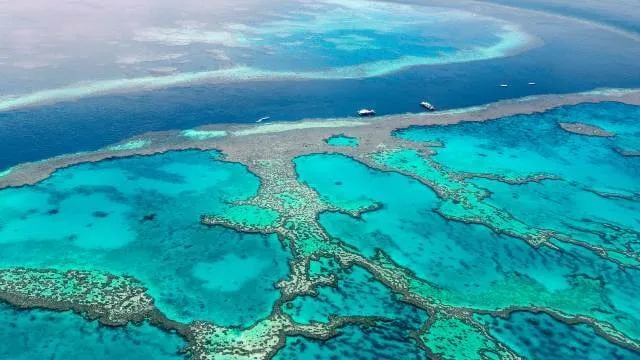
It’s the home of Nemo, and it’s right on our doorstep. The Great Barrier Reef is not just one big, long, connected reef; it’s made up of more than 2,900 individual reefs constructed by billions of minuscule coral polyps, which are living organisms. The reef stretches over 2,600km in length, takes up 344,000 square kilometres in area, and includes more than 900 islands.
If you’re not a fan of breathing through a tube or risking the stingers, you can still enjoy the reef from a glass-bottomed boat. There are a range of tour lengths, from a single day to an extended stay. A helicopter tour will also give you a great picture of the sheer vastness of this marine environment, and when the sun hits the reef you can see just about everything from the air.
The Great Barrier Reef is listed as a World Heritage Area (Queensland’s first) and is protected by the Great Barrier Reef Marine Park, a national park.
Did you know? While people often claim (wrongly) that you can see the Great Wall of China from space, it’s a fact that astronauts and satellites have taken photos of the Great Barrier Reef from space.
How to get there: Depending on what part of the Great Barrier Reef you want to visit, you can fly direct to Cairns, Port Douglas, Airlie Beach, Hamilton Island (in the Whitsundays), or Townsville. There are tours starting from almost every major city along the eastern coast of Queensland.
Travel insurance: You can also compare domestic travel insurance with Canstar. If you plan on snorkelling or scuba diving on your visit, you’ll need to ensure your policy covers water sports. This may come at an additional cost.
4. Victoria Falls
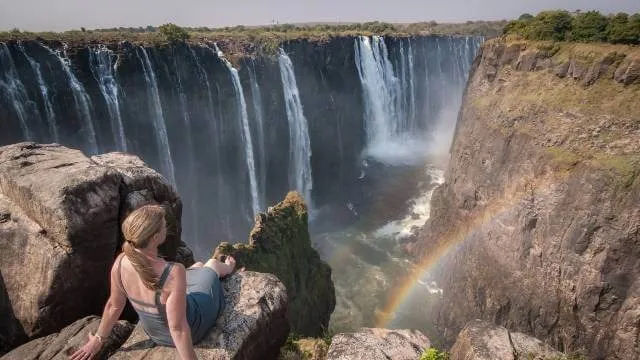
As the Zambezi River crosses the border of Zambia and Zimbabwe, it plunges 108 metres down in a stunning waterfall that’s 1.7km wide. The falls are also called Mosi-oa-Tunya, meaning ‘Smoke that Thunders’ in the local Lozi language. National parks in both Zambia and Zimbabwe protect this landmark.
When Zambia gained independence in 1964 and many of its geographic names were changed back to African names, only Victoria Falls and the nearby city of Livingstone kept their English names, because of the deep respect the Zambian people had for David Livingstone, the Scottish explorer who named the falls after Queen Victoria in 1855.
You can appreciate the splendour of the falls from the trails that follow alongside them, a boat cruise, or from the air in a helicopter. From the air, you have a chance of spotting elephants or the other wildlife of the national park. Both the Zimbabwean and Zambian sides of the falls offer “unique views and perspectives”, says The Seven Natural Wonders organisation.
Did you know? Victoria Falls is neither the highest nor widest waterfall on the planet, but it’s the largest single sheet of flowing water when you consider both its height and width.
When to visit: June-July (for the ‘prettiest’ combination of water levels and visibility of the waterfall).
How to get there: Fly direct to Victoria Falls in Zimbabwe, or fly into Livingstone in Zambia or Maun in Botswana.
Travel insurance: You can compare travel insurance policies and pricing for Zambia and Zimbabwe by clicking 'Compare' above and answering a few simple questions.
5. Paricutin Volcano
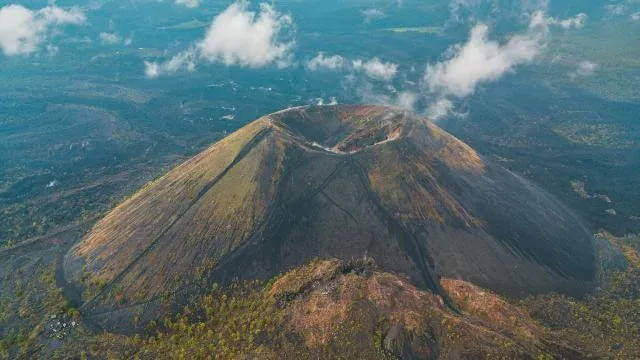
Paricutin is a once-active cinder cone volcano in Michoacán, Mexico. It was chosen as one of the Seven Natural Wonders because it’s the only volcano whose birth in 1943 was witnessed and documented by humans, as it emerged from the cornfields of a local farmer. It quickly grew hundreds of metres within its first year, and is now estimated to be around 3km above sea level (including over 400m from base to cone). It erupted for nine years straight before falling silent in 1952, hopefully never to be heard from again.
The best way to see Paricutin is by taking one of the 19km round-trip hikes to the top of the volcano. It’s not an easy hike, so another popular option is to visit it on horseback. Both options take you past lava fields, buried village homes, and a church near the summit.
Did you know? Access to Paricutin is usually via Angahuan, a town that survived the volcano’s eruptions. While this town was heavily damaged, it survived because it was located on a mountain rather than in the valley where the volcano sprang out of the ground.
When to visit: October-April (avoiding rainy season).
How to get there: Fly into Mexico City and travel 400km or so west to Angahuan.
Travel insurance: You can compare travel insurance policies and pricing for Mexico by clicking 'Compare' above and answering a few simple questions.
6. Grand Canyon
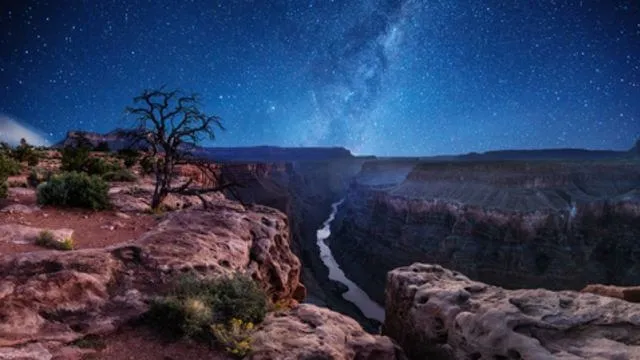
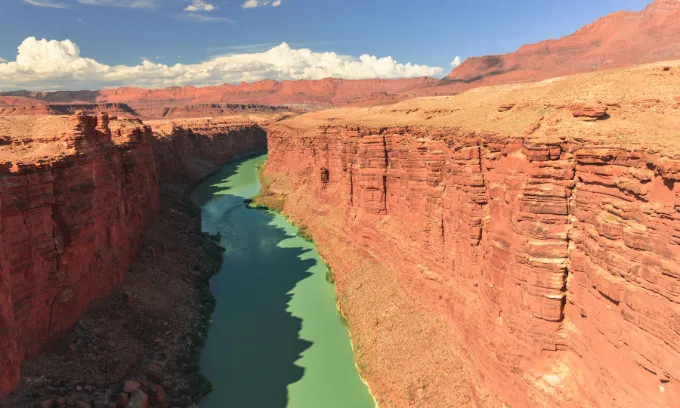
This famous gorge in Arizona can be explored on foot with either a day hike or overnight camping hike. For those with limited mobility, exploring the canyon on the back of a mule is a plausible option and one that visitors rave about.
The floor of the canyon can even be experienced with a whitewater rafting trip. A helicopter tour is the best way to appreciate how vast the canyon really is, but you can see a lot of the canyon no matter which method you choose, says The Seven Natural Wonders organisation.
Did you know? At over 1.8km deep and 446km long, the Grand Canyon is neither the steepest nor longest canyon in the world. It was chosen as a natural wonder for its overall scale, size, and beautifully coloured landscape.
When to visit: This is debatable. In winter the North Rim roads are closed, cutting off some great views, and in summer it can reach scorching temperatures. Spring and autumn may therefore be preferable. Over 5 million people have visited the Grand Canyon in some years, so be sure to book your travel early.
How to get there: Fly into Las Vegas, Phoenix, Flagstaff or Los Angeles for a guided tour leaving from these destinations. You can also make your way to the town of Williams and take a historic steam locomotive on the Grand Canyon Railway to Grand Canyon Village.
Travel insurance: You can compare travel insurance policies and pricing for the USA by clicking 'Compare' and answering a few simple questions. Depending on what you plan to do at the canyon, you may need to take out a policy that covers whitewater rafting or rock climbing, which can often come at an additional cost.
7. Aurora Borealis
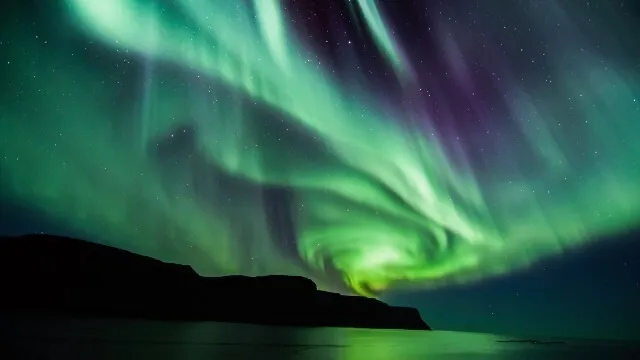
Also known as the Northern Lights, these naturally occurring ‘polar auroras’ appear as glowing lines of vivid colour along the horizon or waves across the sky. Humans have created legends around the cause of these lights in the heavens, which feature in Greco-Roman, Norse, and Native American mythology, to name a few. The science as we understand it today is that this effect is caused by ‘solar winds’ – cosmic particles originating from the Sun which appear as different-coloured lights as they enter Earth’s atmosphere.
Did you know? There’s also a Southern Aurora (Aurora Australis) that occurs in the southern hemisphere, but this is less well-known. A trip to Tasmania could be something to consider if you want to see a similar light show but are unable to make it to the far reaches of the northern hemisphere.
When to visit: This can depend on where you’re going. For example, the best time to see the Northern Lights in Iceland is typically between August and April. To see the Northern Lights in Norway, you should generally go between late September and late March. It may be wise to allow for a multiple-day stay, to increase your chances of seeing the lights.
How to get there: You can travel to many different places on earth to see the amazing Aurora phenomenon, though it can sometimes be difficult to predict exactly when or where the lights will appear.
Travel insurance: You can compare travel insurance policies and pricing for a variety of European countries, like Norway, Iceland, Finland, and Sweden, by clicking 'Compare' and answering a few simple questions.