






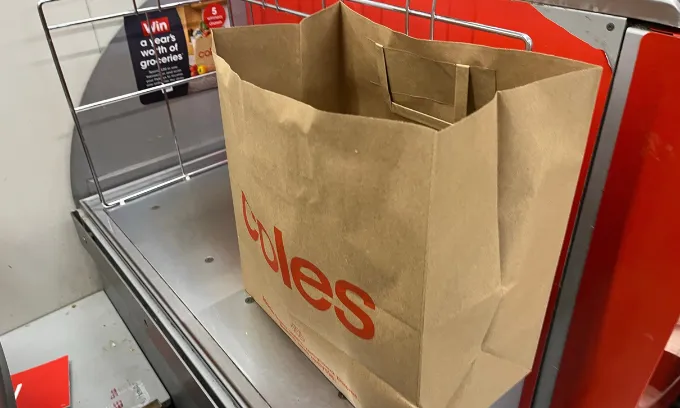
Coles has quietly upped the cost of its bagging fee for online grocery orders, leaving customers to absorb yet another supermarket price rise.
It’s the first time in seven years Coles has increased the bagging fee for online orders, with prices rising from $1.50 to $2 for both click-and-collet and delivery orders.
The flat-rate fee is charged regardless of how many bags are needed for your order, meaning whether it’s one bag or 10, you’ll be charged $2. The price jump brings Coles' bagging fee in line with Woolworths’, which also tacks a $2 bagging charge onto online orders.
How much will this add to your annual grocery bill?
If you were to make one online order every week for a year, that additional 50 cents adds $26 to your grocery bill. And while $26 a year might sound like small change, it represents an extra cost placed on households already dealing with high cost-of-living pressure.
Orders per | Old annual | New annual |
|---|---|---|
1 order | $78 | $104 |
2 orders | $156 | $208 |
3 orders | $234 | $312 |
"This change highlights why it pays to review the small fees we often overlook at the online checkout,” says Canstar’s Consumer Editor Meagan Lawrence.
“An extra $26 a year won't break the bank for everyone, but it is an unnecessary expense if you have other options. When supermarkets quietly chip away at your budget with minor fee increases, the best response is to change your habits to avoid paying them.”
Can I skip the bagging fee?
You can skip the bagging fee, but only for click-and-collect orders and only if you’re willing to pack the bags yourself.
If you select BYO bags at the online checkout, Coles will put your groceries into baskets for you to pack when you pick up your order.
Unfortunately, those choosing home delivery can’t skip the bagging fee.
Aussies feeling supermarket pressure
The bag fee hike comes as Canstar research reveals 80% of Australians have changed their shopping habits over the past six months to help reduce the strain on household budgets.
Nearly six in 10 (58%) are now strictly buying what's on sale, while half (50%) are actively ditching brand loyalty to split their groceries across multiple supermarkets.
So how can you save on your weekly shop?
- Go frozen: Canstar research shows frozen staples like broccoli, spinach, and strawberries are, on average, 53% cheaper than fresh alternatives.
- Check catalogues: Reviewing weekly supermarket deals helps you compare prices and plan your shop ahead of time.
- Compare unit prices: Know your budget and seek the best unit price for the quality you need.
- Buy in bulk: Stock up on frequently used items, and consider splitting bulk purchases with family or friends for extra value.
- Learn restocking times: Knowing your local store's schedule can help you score markdowns on items nearing their use-by dates.
- Shop seasonal: In-season produce is typically cheaper, so plan meals and your grocery list around it.