

How much does a carport cost?
Should you invest in a carport? We weigh up the benefits and costs to consider.

 03 July 2024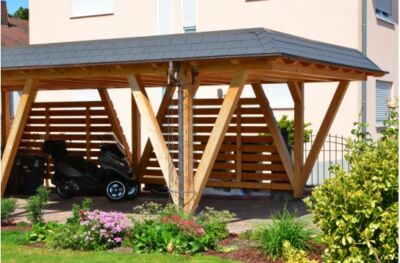
Should you invest in a carport? We weigh up the benefits and costs to consider.
If you want to keep your car protected from the elements, but don’t have the need or budget for a garage, a carport could be a solution. Not only will it typically keep your vehicle in better condition in the long run than if you parked it in a driveway or on the street, it could also help keep you and your belongings dry when you’re leaving or arriving home in the rain. In addition, it could help protect your car from being damaged by events such as storms or falling tree branches.
What are the benefits of carports?
You might be wondering if you really need a carport at all, particularly if you’ve been parking your car on the road, the driveway or your grass for a while now. Perhaps one of the key reasons to get a carport is that it can contribute to keeping your car in good condition, helping to better retain its value.
A carport can also help keep your paintwork and interiors from fading in the sun and provide some cover from hailstones, debris from overhanging trees and bird droppings. In warmer climates, it can also help keep the internal temperature of your car lower, so you don’t feel like you’re stepping into a sauna as much when it’s time to hit the road.
Getting your car off the street could make it less likely to be broken into, particularly if the carport is behind a locked gate. Having a carport may reduce your car insurance premiums. So, how much does it cost to build a carport?

How much does it cost to build a carport in Australia?
The exact cost of building a carport will vary depending on a range of factors, such as its size, the materials and design elements used, how simple or complex it is to build, and whether you want to add any additional features. Tradie listings website hipages says the custom carport price can start from around $6,000 for a single carport and go up to $20,000 or more for a double carport. The average cost for a single carport in Australia is $10,000 and the average cost for a double carport is $20,000.
A potentially cheaper alternative is to purchase a carport kit rather than having it custom-built. Again, prices will vary based on the carport’s size, design and the material of its roof, but as a guide, hipages say carport kits can cost between $1,000 and $5,000. Regardless of whether you choose to go for a custom design or purchase a kit, it could be worth considering engaging the services of a licensed builder or carpenter to install your carport, which will add to the carport cost.
Bear in mind that whilst these pricings can serve as a helpful guide, building costs have been on the rise in Australia. So, you may need to budget a bit extra for your carport in the event that the cost of materials and labour increase.
What are the options to finance a carport?
Before you dive into the work, thinking about the most suitable way to pay for your renovation is an essential step. When considering how much does a carport costs, your options could include:
- Paying out of your own pocket. You could consider using your savings if you have enough reserves. It’s a simple way to avoid the additional costs of interest that go hand in hand with using credit to pay for your carport.
- Home loan. If this job is big enough, or you are doing broader home improvements at the same time, one choice you may consider is refinancing or restructuring your home loan. Or, if you’re ahead with your home loan, you may be able to withdraw some cash through a redraw facility.
- Personal loan. Depending on your personal circumstances and the carport cost, you may consider using a personal loan to fund the work. This could be a secured loan or an unsecured loan. It’s worth keeping in mind, though, that interest rates are generally higher for personal loans than for home loans, and it’s a good idea to read the lender’s terms and conditions before signing up, as well as any Target Market Determinations (TMD) for preferred products.
- Credit card. It may also be possible, depending on the cost and your ability to repay the debt quickly, to pay for the project on a credit card. There could be some fringe benefits for doing so, such as extra insurance cover in some cases (read the card’s Product Disclosure Statement to find out the conditions of the cover). Keep in mind that credit card interest rates are typically much higher than home or personal loan interest rates. Interest can quickly accumulate on large balances, so it is a good idea to weigh up your options and consider them carefully. If you don’t think you’ll be able to pay off the card’s balance in full each month, it may be worth re-considering whether a credit card is the right option for you.
What does a garage cost?
A single car garage may cost about $50,000 to $60,000, while naturally you can expect to pay around double that for a double garage, according to estimates from a cost calculator by Archicentre. hipages says the materials, builders permits, insurance and plans you choose will influence pricing for a garage, and that you can expect to be quoted on a square metre basis. It estimates garage building costs at $1200 to $1680 per square metre.
Is a carport cheaper than a garage?
You could potentially save a significant amount of money by opting for a carport over a garage. With a carport, the open sides and doorless entry mean (depending on the layout of your yard) that you only need a concrete or gravel ground cover, posts and a roof. The fewer materials needed, the cheaper it will be, in most instances.
Is it cheaper to build a carport or buy one?
If you’re a handyperson, and you have all the necessary tools, it may well be possible to take a DIY approach and build a carport from scratch. However, there may be some wastage on materials if you need to buy some of them in bulk. It’s also worth crunching the numbers to see if it works out cheaper to buy a carport kit that you can put up yourself.
A carport kit is also an option and will be prefabricated. This means that you won’t have the issue of wastage, and as everything is pre-measured and cut to size. The carport may also be installed sooner.
Is a building permit required for a carport?
The laws in Australia around permits for carports can vary from state to state and even council to council. Before planning your design, you may want to contact your local council to find out what guidelines are in place for carports in your district. This will help you budget for your carport and avoid any nasty setbacks mid-project.
Does a carport add value to your home?
Generally speaking, a well-designed carport has the potential to add to your property’s value by providing a protected space to park a vehicle. Carports can be especially important for families who need to get babies and young children buckled into their car seats when it’s raining and for older people who may need to be conscious of getting in and out of the car safely.
Main image source: By klikkipetra/Shutterstock.com

- What are the benefits of carports?
- How much does it cost to build a carport in Australia?
- What are the options to finance a carport?
- What does a garage cost?
- Is a carport cheaper than a garage?
- Is it cheaper to build a carport or buy one?
- Is a building permit required for a carport?
- Does a carport add value to your home?


 Owner occupied
10% min deposit
Redraw facility
Owner occupied
10% min deposit
Redraw facility
Try our Home Loans comparison tool to instantly compare Canstar expert rated options.