





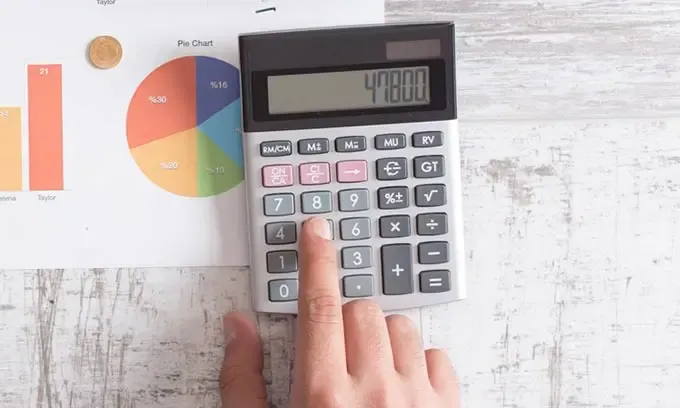
Trying to accurately calculate how much you can save from switching plans can be a challenge in itself. Our latest electricity bill calculator simplifies your search — all you need is a few minutes to spare and your latest power bill.
How to use the electricity bill calculator
- Have your latest electricity bill ready.
- Enter your home’s postcode into the calculator and click ‘Next’.
- Enter the following information by reading your electricity bill:
- Average daily usage: The amount of electricity you use daily in kilowatt hours (kWh). This can typically be found under the "Average Daily Usage" or "Daily Average" sections displayed near the usage summary section of your bill.
- Number of days in billing period: The number of days you’re billed for your electricity use. This can typically be found under the “Billing Period”, “Reading Period” or “Service Period” on your bill. You must either count the days between the start and end date manually or your bill may show you the exact number of days.
- Total bill cost ($) (inc GST): Found on the front page of your latest electricity bill.
- Do you have solar panels installed?: Select “Yes” or “No”. If the answer is “Yes”, enter the total kWh that you’ve exported back to the grid, which can be found in the usage summary section of your bill.
- Click ‘Calculate’. The results page will show you a clear breakdown of how your current electricity plan compares to a single-rate plan from our database.
Why is the electricity bill calculator important?
Our electricity bill calculator is linked to some of the best electricity plans and providers in Canstar’s database. The results you see are based on some of the plans in our database you can switch to online. Keep in mind that these results will differ in real-time depending on your postcode.
More crucially, our energy comparison platform advertises prices based on general annual usage estimates (e.g. 4,000kWh), which differ between states and electricity distributor networks. That means your actual usage may differ drastically from these general estimates.
By inputting your historical electricity usage into the calculator, you immediately get a clearer picture of how much you could be saving by simply switching.
However, do keep in mind that the results:
- Are still estimates.
- Are currently limited to single-rate plans on our database.
How much could I save by switching electricity providers?
If you haven’t switched energy providers or plans for a while, you’re positioned to potentially save hundreds annually by switching.
Our energy comparison platform helps you compare some of the cheapest plans and providers available at your address, helping you switch in mere minutes.
How is my electricity bill calculated?
Your electricity bill will contain two charges — supply charges and usage charges.
- Supply charges: A fixed cost (in c/day) you pay to remain connected to the grid.
- Usage charges: A variable cost for every kilowatt hour (kWh) of electricity used.
Plans can also have different tariff structures, which relate to how they are priced*:
- Single rate: Fixed electricity rates regardless of the time of day.
- Time of use (ToU): Varying rates depending on the times electricity is consumed — peak, off-peak, and shoulder times, where peak times cost the most, off-peak the least and shoulder times sit between them. To be eligible, you’ll need to have a smart meter installed. Note that your plan’s peak, off-peak and shoulder times will depend on your provider.
- Demand charge: A charge based on your peak electricity usage during specific hours daily. This charge is added on top of your supply and usage charges. You’ll need to have a smart meter installed for this tariff.
- Controlled load: Power-hungry appliances (e.g. pool pumps) are metered independently at a cheaper rate than your main electricity circuit, with limited hours of operation. To qualify, you’ll need to have a separate CL meter or a smart meter installed.
*The availability of tariffs will depend on the state you live in.
Depending on your electricity plan and retailer, your electricity bill may contain a credit as part of:
- An ongoing promotion
- A sign-up bonus
- A solar feed-in tariff (FiT), which credits you (in c/kWh) for every kWh of solar exported from your solar system back into the grid.
Your plan’s billing cycle will also determine how much your next bill will cost, with quarterly cycles costing more than monthly. However, your total electricity bill spending for the year will remain the same.
How much your electricity bill will cost will depend on the features above and your total electricity use (in kWh) across the billing period.
Average electricity bill
If you don’t have a recent electricity bill on hand, you can visit our page on average electricity bills to see how they fare against the bill calculator’s results.
Average electricity cost per kWh
In Australia, the average electricity cost for every kWh of electricity falls between 24c and 43c. If you’d like to learn more about how averages differ between states and distributors, you can visit Canstar’s page on average electricity cost per kWh.
How do I calculate my appliance electricity costs?
If you’re adding a power-intensive appliance (e.g. hot water system) to your household, you can estimate its running electricity cost by following the steps below:
1. Find and convert your appliance’s power rating
A power rating reflects the maximum amount of power a device can safely generate. It is measured in Watts (W) and can typically be found on the appliance’s bottom, side or back.
Because electricity costs are measured in c/kWh, you’ll have to convert your appliance’s power rating by dividing it by 1000.
E.g. 1,500 W (Power rating) ÷ 1,000 = 1.5 kilowatts (kW)
2. Calculate your appliance’s daily energy usage
Estimate the number of hours you use your appliance each day and multiply it by your power rating to calculate your appliance’s daily energy usage.
E.g. 1.5 kW (Power rating) X 8 hours = 12kWh (appliance’s energy use per day)
3. Calculate the cost of using your appliance daily
Multiply your appliance’s daily energy use by your electricity plan’s usage charge, which can be found on your plan’s basic production information document (BPID) or latest bill under ‘metering details’.
E.g. 12kWh (appliance’s energy use per day) X 33c/kWh (usage charge) = $3.96 (appliance's daily running cost)
4. Calculate your appliance’s running costs across the bill cycle
Multiply your appliance’s daily running costs by the duration of your bill cycle. Your billing cycle information can be found in the ‘Billing Period’ section of your power bill.
E.g. $3.96 (appliance’s daily running cost) X 90 days = $356.40 (appliance’s running cost for the entire bill cycle).
This figure ($356.40) represents the total cost to use your appliance for the entire billing cycle.
Why is my electricity bill so high?
Your electricity plan has expired
If you haven’t switched energy plans for more than twelve months, your electricity plan has likely expired and your provider has moved you onto their standing offer plan.
A standing offer generally reflects the highest rates a provider is willing to charge you. Additionally, standing offers don’t have features such as discounts and sign-up bonuses.
An unexplainably high electricity bill could be attributed to increased rates on a standing offer and expired discount conditions from your previous plan.
Your electricity plan’s rates have changed
The majority of electricity plans in Australia are variable rate plans, meaning their rates can be changed at any time by their providers. However, they must give you written notice five business days before making any rate changes.
If you haven’t checked your mailbox or email inbox in a while, your plan’s rates may have been increased by your provider.
You’re using more electricity during peak times
If you’re on a ToU or demand tariff, you may be running too many appliances during peak hours, resulting in higher usage or demand charges.
Your household energy habits have changed
Your household energy habits may have grown from:
- Adding new appliances (e.g. PlayStation, TV, air-conditioning)
- New tenants or roommates
- Having more guests over.
If your home’s running electricity usage has increased, expect to pay more in future electricity bills.
Your solar system isn’t working properly
If you’re on an electricity plan with a solar FiT, you may have noticed that the credit earned from your FiT has dwindled with each passing bill. A loss in FiT earnings could explain a high electricity bill.
Alternatively, if you’re partially relying on solar to power your home, a sudden lapse in solar means that you’ll have to pay more for grid electricity to make up for the loss.
In either case, your rooftop solar system may not be working properly because of:
- Infrequent maintenance
- Damage to your panels
- Dirty solar panels
- Obstruction/shading from trees and plants.
Seasonal differences
If your recent bill covers the change in seasons, a high electricity bill could be caused by increased heating and cooling costs, especially in winter and summer.
You’ve received an estimated power bill
If you live in a house with a legacy electricity meter, your provider must send a physical meter reader to your home to record the electricity you’ve used.
But if the meter reader is somehow obstructed from accessing your meter, you may receive an estimated power bill:
- If the estimated power bill overcharges you, you could be left paying more than you should.
- If the estimated power bill undercharges you, you’ll have to pay the difference on the subsequent bill.
For more information on electricity meters, you can visit our guide to electricity meter types and how to read them.
How to reduce my electricity bill
Compare and switch to a new electricity plan
Use our energy comparison platform to find a cheaper and better plan.
Maintain your solar panels
Frequently pay to professionally maintain and clean your rooftop solar system. That way, you can maximise the amount of solar energy captured.
You can either use it to power your home or increase your FiT earnings to lower future power bills.
If you don’t have a rooftop solar system and you’re interested in installing one, you can visit our solar guide before committing.
Manage your household electricity use
Reduce your home’s electricity use by:
- Turning off appliances (e.g. lights) when they aren’t in use (including standby appliances).
- Only turn appliances on when they are in use.
If you’re on a ToU or demand tariff, steer away from running appliances during peak times. Try to defer your appliance use to off-peak or shoulder periods, where usage rates are lower.
Purchase energy-efficient appliances
Consider purchasing energy-efficient appliances to lower the cost of future power bills. Keep in mind that an energy-efficient appliance is only worth it if the long-term savings it brings surpass its upfront cost.
If your household doesn't run it enough, investing in an energy-efficient replacement could leave you paying out of pocket.
In Australia, energy-efficient appliances are marked with an Energy Label Rating sticker on the front or side.
Depending on the type of appliance, their stickers may also share a slightly different format. For example, Energy Label Ratings for air conditioners include separate star ratings for distinct climate zones.
Use heating and cooling efficiently during different seasons
Our efficient heating and cooling guide explores popular heating and cooling appliances and the best ways to maximise the comfort and savings they bring in each season.
Install a smart meter
A smart meter takes down your exact energy usage in five to 30 minute intervals. Because that data is being transmitted wirelessly to your provider, you will be accurately billed for your electricity use.
Some providers may even offer you virtual access to your smart meter via a smartphone app. That way, you can proactively monitor your electricity use, such as the hours or the appliances that consume the most electricity.
As part of the National Electricity Rules and Accelerating Smart Meter Deployment program, all legacy meters will be replaced by smart meters by 2030 and Aussies can no longer opt out of the replacement.
If you’d like to upgrade as soon as possible, you can contact your electricity provider for more information.