


7 ways to protect your home while you're away this holiday season

 17 Dec 2025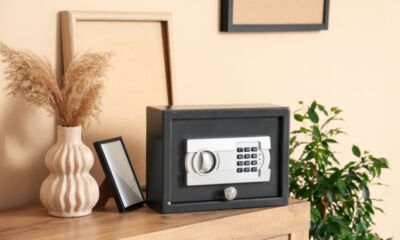
For many of us, summer holidays are inching closer, but travelling can often mean leaving your home unattended, making it a potential target for break-ins. An NRMA insurance survey reported “a 19% rise in home theft claims during summer, with January recording the highest number of claims”.
Preparing your home for a trip away doesn’t need to break the bank— here are some of Canstar’s tips on how to secure your home for your much-needed vacation.
1. Consider updating or purchasing home and contents insurance
A home and/or contents insurance policy could give you peace of mind that you’re financially covered for damage or theft while you’re away. If you already hold a policy, it may be a good idea to update your details and double check that your policy includes everything you want covered.
Here are a few things to consider when taking out or updating your home and/or contents insurance:
- Assess events that you’d like your home to be insured for: For example, do you have appropriate flood cover?
- Create a detailed inventory: Make sure your possessions are insured for the correct amount to avoid underinsurance should you need to make a claim.
- Consider your excess: A higher excess will mean lower monthly premiums, but also more to pay upfront in the event you need to claim.
2. Rent a safety deposit box
An insurance policy can cover you financially for loss or damage, but it doesn’t guarantee the safety of your belongings. For this, you might want to consider renting a safety deposit box, a private locker where you can stow valuables like jewelry to give you peace of mind while you’re away.
Generally, safety deposit boxes come in different price tiers, which can be rented monthly or annually. Prices can vary wildly depending on your needs, ranging from $15 to $50 a month. Higher price tiers usually offer a larger capacity with higher contents insurance coverage for extra peace of mind.
3. Improve your home’s security
To deter thieves from breaking and entering your home, it’s important to improve both its perceived and actual security.
Actual security
- Install security cameras at vulnerable points around the house: These can deter thieves, and you can view footage remotely while you’re away.
- Contact a house-sitter: Having someone physically present in your home can also help keep it safe and be a deterrent to thieves.
Perceived security
- Clear your mailbox: A packed mailbox can signal to thieves that nobody’s home; if you’re away for a while, ask a neighbour to periodically clear your mailbox.
- Install timers for your lights: Lights in a home, like a lamp on a timer, can also give the impression that somebody is present, deterring thieves.
4. Park your car inside
If you’re leaving your car behind when you go away, then it’s important to park it somewhere safe, preferably in your garage, if you have one — that way, it isn’t left to fend for itself against thunderstorms, hail and theft. If you don’t have a garage, ask a neighbour to help keep an eye on your car if it’s parked on a nearby street.
As an extra precaution, you can consider taking out a third party fire and theft car insurance policy, which financially shields you in the event your car is stolen or experiences fire damage in your absence.
5. Turn off your storage water heater
If your home relies on a storage water heater, you may want to consider switching it off while you’re away, to avoid paying for electricity unnecessarily. Additionally, turning your storage water heater off can lower the risk of your tank rupturing or possible leakages.
Here’s how you switch off your storage water heater.
Gas-powered storage water heaters
- Turn the gas valve near your unit’s tank to ‘pilot’. Pilot mode refers to a pilot light, which is a constant flame that ignites the main burner to heat your water up.
- Turn the isolation valve (commonly located on the pipe connected to the tank) to ‘on’.
Electricity-powered storage water heaters
- Find the circuit breaker in your home’s switchboard and turn the switch marked ‘HWS’ or ‘hot water system’ off.
- Turn the isolation valve (commonly located on the pipe connected to the tank) to ‘on’.
Keep in mind that once you turn your system back on, it may require extra time before providing you with a steady stream of hot water again.
If you’d like to learn more about other types of water heaters, you can visit our guide on the best hot water systems.
6. Prevent nesting on your solar panels
If your home has a rooftop solar system, you run the risk of attracting flocks of pigeons. Pigeons typically nest under tilted panel arrays because of the warmth and shelter they provide.
Unfortunately, their presence poses a series of dangers:
- Flammable nesting materials: Pigeons build nests with dry materials that easily catch fire.
- Corrosive droppings: Bird droppings (guano) are acidic and can corrode wiring and components, running the risk of electrical faults and potential fires.
- Trapping of heat: Nesting materials block airflow, creating hot spots that can ignite flammable debris.
- Electrical damage: Birds chew on wires and debris can damage cables, increasing the likelihood of electrical fires.
Before leaving for a vacation, consider installing a solar panel mesh by contacting a professional installer. This can obstruct birds from building their forever-homes under your panels.
7. Turn off vampire appliances
A ‘vampire appliance’ is an appliance that isn’t completely turned off when it isn’t being used. It enters what’s called ‘standby mode’. For example, a microwave is classified as a vampire appliance because it requires a small amount of power to keep its display turned on.
While our recent story on vampire appliances reveals that you don’t save a lot by turning them off, doing so can also lower the likelihood of an electrical fire when your home is unattended.

This article was reviewed by our Deputy Finance Editor Alasdair Duncan before it was updated, as part of our fact-checking process.