
Top 10 best suburbs to invest in Hobart in 2026
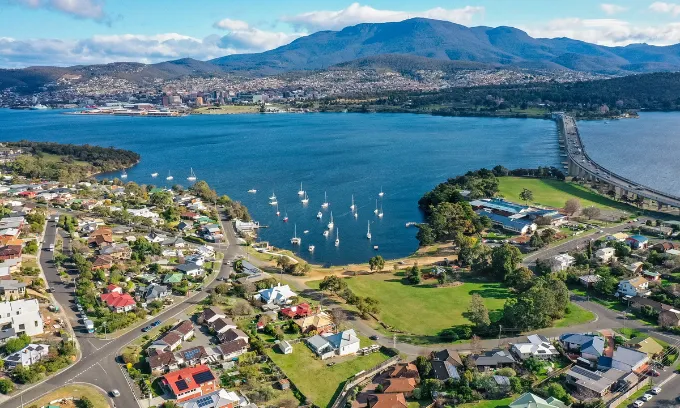
Hobart, Australia’s second oldest city, sits alongside the stunning River Derwent and holds plenty of character and charm. But for investors looking at property in Tassie’s capital, which are the best suburbs in Hobart that could present a good opportunity?
The ‘best’ suburb will vary based on your budget, strategy, and risk tolerance, and opinions among investors vary on what positions a suburb among the ‘best’ in its class. One might consider vacancy rates the deciding factor, while another may prefer measures like economic growth or buyer demand.
For our purposes, we’ve considered Cotality data highlighting suburbs boasting the largest annual growth in median property values from the 12 months to July 2026:
Rank | Hobart suburb | Median value | Annual change |
|---|---|---|---|
1 | Dodges Ferry | $726,714 | 19.5% |
2 | Carlton (Tas.) | $731,910 | 19.4% |
3 | Bridgewater (Tas.) | $546,395 | 19.2% |
4 | New Norfolk | $570,924 | 19.2% |
5 | Goodwood (Tas.) | $668,724 | 18.5% |
6 | Chigwell | $640,155 | 18.4% |
7 | Derwent Park | $675,580 | 18.2% |
8 | Montrose (Tas.) | $709,752 | 18.1% |
9 | Risdon Vale | $563,590 | 17.2% |
10 | Rosetta | $739,596 | 17.2% |
Source: Cotality, July 2026
What do you need to know about the Hobart property market in 2026?
Hobart is typically one of the cheapest capital cities for buying property, making it a relatively affordable prospect for investors.
Cotality data shows that dwelling values in Hobart have risen slightly by 0.1% for the month in July 2026.
As of July 2026, the median dwelling value in Hobart is $756,951.
Looking solely at houses, Cotality data shows that Hobart prices experienced a quarterly increase of 1.5% to July 2026, bringing the median value to $805,165. Units, meanwhile, saw a quarterly increase of 1.3% in the same period, to a median value of $587,863.
Some other considerations to keep in mind about Hobart property:
- Vacancy rates: According to SQM Research, the vacancy rate in Hobart has risen by 0.7% in June 2026, following an increase of 0.6% in May 2026.
- Sales volumes: Cotality data shows that the sales volume in Hobart has increased by 6.8% in the 12 months to June 2026.
- Rental growth: Rents in Hobart have risen by 8.6% in the year to June 2026, per Cotality.
- Rental yield: Data from Cotality shows gross rental yields in Hobart have increased by 4.4% in the year to June 2026. Domain’s June 2026 Rental Report shows the average rent for houses in Hobart is $625 per week, while rent for units average $520 per week.
- Infrastructure spending: The City of Hobart council’s draft Housing Action Plan aims to improve Hobart’s housing future where it’s expected that 30,000 new homes will be needed in the next 30 years. The state government is also considering developing 1,000 new homes at the Derwent Barracks site.
What is impacting price growth in Hobart?
Apart from the general cost of living pressures and rising core inflation, additional factors may impact investor demand in Hobart:
- RBA cash rate hikes: A series of RBA cash rate hikes throughout 2026 has prompted lenders to increase their own home loan rates, putting the squeeze on home loan borrowers.
- Proposed changes to negative gearing and CGT: An attempt to drive investors towards new builds over existing properties, is likely to have contributed to the cooling investor interest following the 2026 Federal Budget announcement.
Hobart property market forecast: Where to from here?
Economists at the nation’s big four banks make forecasts about what’s to come for dwelling prices in the nation’s major property markets.
The big four banks generally agree that Hobart will experience an increase in prices for 2026, although projections for 2027 differ.
- ANZ: Economists at ANZ forecast an increase of Hobart’s housing price annual growth by 3.6% in 2026, followed by a drop of -3% in 2027.
- CommBank: CommBank’s economists are predicting that Hobart dwelling prices will increase by 4% in 2026 followed by an additional increase of 2% in 2027.
- NAB: Economists at NAB are forecasting an increase to the dwelling price in Hobart of 7% in 2026, followed by an additional rise by 2% in 2027.
- Westpac: Economists at Westpac are predicting a modest increase of 1% in Hobart’s dwelling price in 2026, followed by an increase of 3% in 2027.
What else could impact Hobart property prices?
- Macquarie Point Multipurpose Stadium: The new stadium, being built at Macquarie Point, is set to be completed late 2030. It will also deliver housing as part of the Mac Point Precinct, contributing to the 30-Year Greater Hobart Plan.
- River Derwent Ferry Service Expansion: New ferry services will be added as part of the ferry service expansion to new points along with River Derwent to better connect Hobart’s suburbs and ease congestion in the CBD.
What to consider when buying Hobart property
Hobart’s population is predicted to grow to 60,651 people by 2053, with additional housing and developments set to accommodate the growing population needs.
However, there is still much to consider when buying an investment property in Hobart beyond pricing and demand trends.
- Flood and fire risk: Hobart is at risk of bushfires and flooding, with certain low-lying areas especially flood-prone.
- Transportation: Hobart is generally well served by bus services alongside an expanding ferry service, but some areas might not be as connected as others.
- Local services and amenities: Most of Hobart is well connected to healthcare, education, shopping and other amenities and services, however some newer and developing suburbs may not yet have the same facilities as more established areas.