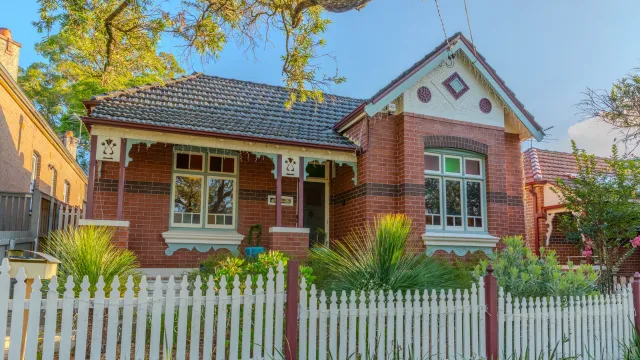


Top 10 best suburbs to invest in Canberra in 2026
Canberra, sometimes known as the “bush capital”, sits in the heart of the Australian Capital Territory, and is home to Parliament House and Lake Burley Griffin. While the ACT is small, Canberra is just a part of it, so there are plenty of opportunities for investors looking at properties in the CBD or beyond.
There’s no one definitive measure of the ‘best’ suburb in the ACT, as this will vary based on your budget, strategy, and risk tolerance. Investors have various opinions on what positions a suburb among the ‘best’ in its class. One might consider vacancy rates the deciding factor, while another might be more interested in local economic growth or buyer demand.
For our purposes, we’ve considered Cotality data highlighting suburbs (of both Canberra and the wider ACT) boasting the largest annual growth in median property values in the 12 months to July 2026:
Rank | ACT suburb | Median value | Annual change |
|---|---|---|---|
1 | Waramanga | $949,580 | 9.8% |
2 | Strathnairn | $1,009,142 | 7.4% |
3 | Stirling (ACT) | $1,111,121 | 7.1% |
4 | Duffy | $1,049,322 | 6.9% |
5 | Richardson | $805,135 | 6.9% |
6 | Macarthur (ACT) | $1,087,067 | 6.1% |
7 | Rivett | $934,008 | 6.0% |
8 | Weston (ACT) | $994,050 | 5.5% |
9 | Chapman | $1,379,053 | 5.2% |
10 | Gilmore (ACT) | $905,487 | 4.9% |
Source: Cotality, July 2026
What do you need to know about the Canberra and ACT property market in 2026?
Canberra has traditionally been one of the more moderately-priced cities in Australia, but as it has a smaller land area, it naturally has a smaller property market to choose from.
Data from Cotality shows dwelling values in Canberra have experienced a drop of -1% in July 2026, compared to the previous month.
The median dwelling value in Canberra as of July 2026 is $883,138.
According to data from Cotality, house prices in Canberra were down by -2.2% to a median value of $1,025,827 in the quarter leading to July 2026, while unit prices were also down -1.4% for the quarter to a median value of $594,894.
Other considerations:
- Vacancy rates: Data from SQM Research found Canberra’s vacancy rate is fairly steady, rising to 1.7% in June 2026 from 1.6% in May 2026, which was the highest vacancy rate in the country.
- Sales volumes: Cotality data shows the sales volume in Canberra has risen by 8.6% in the twelve months to June 2026.
- Rental growth: Rents in Canberra grew by 3.2% in the year up to June 2026, according to Cotality.
- Rental yield: Data from Cotality shows gross rental yields in Canberra have increased by 4.2% in the year to June 2026. Domain’s June 2026 Rental Report, found the average rent for houses in Canberra is $710 per week, while the average rent for units was $580 per week.
- Infrastructure spending: The ACT government is focusing on delivering 30,000 homes by 2030 as part of its Housing Supply and Land Release Program to ensure Canberra and the ACT can meet the growing population’s need for housing.
What is impacting price growth in Canberra?
Apart from the general cost of living pressures and rising core inflation, additional factors may be contributing to Canberra’s slowdown and lower investor demand. These include:
- RBA cash rate hikes: RBA cash rate hikes in 2026 have prompted banks and lenders to increase their own home loan rates.
- Proposed changes to negative gearing and CGT: Proposed legislation aiming to drive investors towards new builds over existing properties is likely to have contributed to the cooling investor interest following the 2026 Federal Budget announcement.
Canberra property market forecast: Where to from here?
Economists at the nation’s big four banks make forecasts about what’s to come for dwelling prices in the nation’s major property markets.
There is some agreement among the big four banks that Canberra will experience a decline in property prices, but economists are split on whether it will continue to decline in 2027.
- ANZ: Economists at ANZ forecast a drop in the annual growth of Canberra’s housing prices in 2026 by -5.4%, followed by another drop of -1.9% in 2027.
- CommBank: CommBank’s economists are predicting that the ACT’s dwelling prices will drop by -2% in 2026 and rise by 3% in 2027.
- NAB: Economists at NAB don’t go into as much detail on dwelling price forecasts for Canberra as they do for other capital cities, but reporting showed a drop of -1.5% to the dwelling price growth for 2026, and general expectations are that dwelling prices of combined capital cities will fall by -2% over 2026.
- Westpac: Forecasting from Westpac’s economists don’t show dwelling price forecasts for Canberra (or the ACT), but predictions for the whole of Australia show a 0% change in 2026 and 3% increase in 2027.
Other considerations
- Canberra light rail expansion: Canberra relies on its light rail network in addition to bus services, and planned upgrades to the network are set to better connect Canberra to meet its growing transport needs.
What to consider when buying Canberra property
It’s expected that Canberra will be home to around 700,000 people by 2050, and up to 800,000 by 2065.
There is still much to also consider when buying an investment property in Canberra beyond pricing and demand trends.
- Flood and fire risk: Canberra has a high risk of bush fires, but a lower risk of flooding compared to other capital cities.
- Transportation: Canberra is reasonably well served by public transport but access isn’t as widespread as it is for other capital cities.
- Local services and amenities: Canberra is reasonably well connected to healthcare, education, shopping and other amenities and services, however some newer and developing suburbs may not yet have the same facilities as more established areas.