






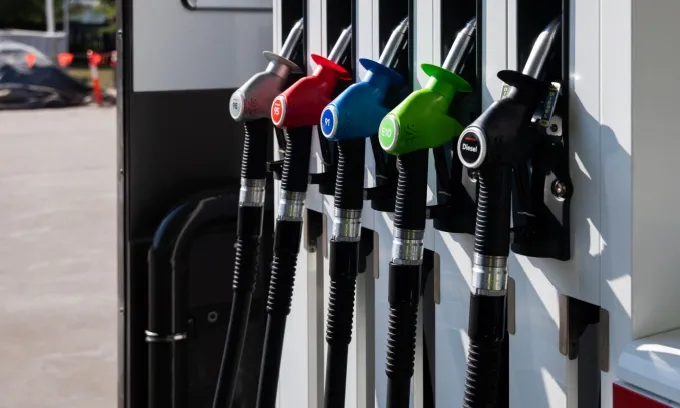
The price of petrol and diesel has soared over the past month due to the war in Iran. In an effort to ease some of the pressure on motorists, on March 30, the Australian Government announced a plan to halve the fuel excise for three months. Here’s what this change could mean for you.
What is the fuel excise in Australia?
The fuel excise is a tax that's paid by petrol companies when they buy fuel wholesale. This cost is then passed on to motorists when paying for a tank of petrol or diesel. The Federal Government uses the money raised this way to fund projects like building and maintaining roads and highways.
The fuel excise is 52.6 cents per litre, but has been halved to 26.3 cents per litre for the next three months. Fuel companies are expected to pass the savings on to customers. Federal Treasurer Jim Chalmers says that with the cuts, a motorist purchasing a 65L tank of petrol could save nearly $19.
The Australian Government also charges a fee called the Heavy Vehicle Road User Charge to vehicles over 4.5 tonnes. The fee, previously 32.4 cents per litre of fuel, has also been cut to zero, and the next increase delayed by six months in an attempt to help the nation’s truck drivers.
When does the fuel excise cut start and end?
Cuts to the fuel excise began on the 1st of April and will end in three months, on the 30th of June.
When will petrol and diesel prices go down?
The cuts kicked in on April 1, but that doesn't mean you'll see cheaper fuel at your local servo right away. It’s important to remember that petrol companies are the ones who pay the excise, so any fuel that they purchased from a depot before April 1 will have been bought at a more expensive price.
Once they sell this more expensive fuel off, it will be replaced with fuel bought at a cheaper price, and this saving will be passed on to you at the pump. The busier the service station, the more quickly you might expect prices to drop as old, more expensive fuel is replaced.
The Australian Competition and Consumer Commission (ACCC) has said that it will monitor prices to help make sure that savings are fully passed on at the bowser.
To put things in a realistic perspective, the fuel excise was last halved in 2022 in the wake of Russia’s invasion of Ukraine. That 24.3-cent-per-litre saving lasted for six months, with the ACCC reporting a roughly six-week lag in savings being passed on to consumers.
What are fuel prices looking like in early April?
I checked the fuel prices in my area on the 1st of April as I was in dire need of a fill-up, and found there had been about a 25 to 30 cents per litre drop in prices at some service stations. There was even a 26.3-cent difference in the price of Unleaded 91 between two stations on the same road – about a seven minute drive from each other.
Thankfully by using the fuel tracking app Petrolspy and a 4 cent discount I get from being an RACQ member, I saved 34 cents per litre. That said, I still felt the sting when it was time to pay for the full tank.
Why are petrol and diesel so expensive right now?
The spike in the price of fuel is mainly due to the surging price of crude oil, which currently costs around $99 USD per barrel. This is up from around $65 since late February.
The conflict in Iran is also impacting the Strait of Hormuz, an important shipping lane that a fifth of the world’s oil and liquefied natural gas (LNG) usually passes through. The Iranian Government has been targeting US and Israel-aligned vessels with drone and missile strikes and naval mines, causing a large number of ships to wait in nearby gulf countries due to safety concerns.
Although the Australian Government insists any supply shortage isn’t a longer-term issue at the moment, demand for petrol and diesel has surged in recent weeks. Australians are being urged not to panic-buy or hoard fuel as it could lead to shortages in some areas and storing fuel can be dangerous.
Are petrol stations running out of fuel?
Reports suggest hundreds of petrol stations across Australia have been running out of petrol or diesel at different points over the last couple of weeks. That said, Australia has around 30 days’ worth of diesel and 39 days’ worth of petrol in reserve and is securing fuel shipments through to May. This means supply remains the same as pre-conflict levels, despite shortages in some areas.
Australia has a four-stage plan for the fuel crisis, with the further stages potentially involving fuel rationing and encouraging working from home. These plans still appear to be under consideration and it’s unclear if or when more strict measures could come into play.
How long will high fuel prices last?
We can’t say for certain how long petrol and diesel prices will remain higher than normal. The only way we’ll see longer term price relief is if the price of oil drops back down, which may require tensions to ease in the Middle East. Unfortunately, the fact that the government is making these fuel excise cuts seems to suggest our leaders don't see the conflict cooling any time soon.
It’s also important to note that if demand for fuel increases off the back of these excise cuts, inflation may remain elevated. This could lead to further cash rate rises from the RBA, with Westpac now predicting a further three rate rises (in May, June and August) which would bring the cash rate to 4.85%. For home loan borrowers, this could mean that savings you make at the fuel pump could be eaten away by rising rates.
What else is the government doing to combat fuel price shock?
Since the conflict commenced, the Federal Government says that they’ve:
- Passed new laws to double the penalties for petrol companies that are price gouging
- Appointed a national Fuel Supply Taskforce Coordinator and Taskforce
- Released 20% of Australia’s petrol and diesel fuel reserves, targeting them at regional areas
- Changed fuel standards to help increase local supply
- Changed diesel standards so Australia’s refineries can supply more diesel
- Tasked the ACCC with ramping up fuel price monitoring and issuing on-the-spot fines
- Engaged with international partners to keep supply flowing, including securing a supply agreement with Singapore
- Introduced laws to make sure companies pay truck drivers fairly when fuel prices spike
- Introduced legislation to underwrite the purchase of fuel by the private sector
The Federal Government has also announced that it will offer temporary aid to small businesses struggling with fuel supply issues. This will be in regards to their tax obligations with the Australian Tax Office (ATO). This could prove beneficial as a survey from the Business Chamber of Queensland found that 63% of businesses in the state were seeing moderate to severe cost impacts from the conflict in the Middle East.