






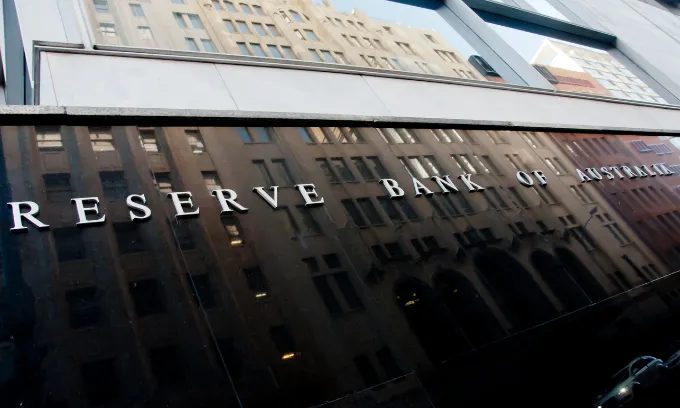
The cash rate and interest rates are two separate but related things – here’s how the RBA’s decisions can affect your home loan repayments.
What is the cash rate?
The cash rate is a rate set by the Reserve Bank of Australia (RBA) representing the interest banks and lenders have to pay on the money they borrow. Over the course of doing business, banks transfer money back and forth between each other, and the cash rate is the interest paid on this money.
The cash rate is sometimes referred to as the ‘overnight money market interest rate’, because transfers between banks are typically processed overnight.
Currently, the cash rate sits at 4.60%.
What is the RBA and how does it control the cash rate?
The RBA is Australia’s central bank. Per the bank’s charter, which is displayed on its website and the walls of the RBA building in Sydney, it has a duty to guide monetary and economic policy in a way it thinks will best contribute towards:
- the stability of the currency of Australia (AUD);
- the maintenance of full employment in Australia; and
- the economic prosperity and welfare of the people of Australia.
The RBA’s Monetary Policy Board (MPB) meets eight times per year, over two days, announcing its decision on a Tuesday afternoon. The board sets the cash rate as a means of regulating the economy, and at each meeting, they can choose to move the cash rate up or down, or hold it steady.
In November of 2020, the board set the cash rate at a record low level of 0.10%, to combat the ongoing economic effects of the COVID-19 pandemic. Former chairman Philip Lowe said that the cash rate likely would not rise again until 2024, however, high inflation led the central bank to act sooner, raising it in May of 2022, and continuing to raise it almost every meeting until November 2023.
2025 saw the RBA cut the cash rate three times, with inflation in the economy seemingly under control, but hope for further cuts was dashed at the start of 2026, with inflation and tensions in the global economy thanks to the conflict in the Middle East leading to a series of hikes.
ANZ and Westpac economists expect there will be one more hike this year, taking the cash rate to 4.85% which would be the highest since November 2008. However, Commonwealth Bank and NAB are officially predicting rates will remain at 4.60% until a cutting cycle next year.
2026 Reserve Bank of Australia (RBA) upcoming board meetings
- 2–3 November
- 7–8 December
Economists at the big four banks have all made predictions as to what will happen with the cash rate in 2026, with ANZ and Westpac predicting one final hike in November and Commonwealth Bank and NAB that the rate tightening cycle is over.
Bear in mind that the RBA’s decisions, including setting the cash rate, are only one half of the economic policy picture in Australia. The Federal Government accounts for the other half, setting the nation’s fiscal policy through its Budget, as well as other policies and laws.
Nonetheless, the cash rate plays a key role in determining how much banks have to pay to borrow money from each other, which in turn can influence how much interest they charge customers on loans, and how much they offer on products like savings accounts and term deposits.
How does the cash rate affect interest rates?
Banks and other lenders set their own interest rates for the loans and deposit products they offer – generally speaking, you’ll pay interest on money that you borrow, and earn it on savings you deposit. While the cash rate does not determine interest rates directly, banks and lenders will pay close attention to it when setting them, and will often respond to moves that the RBA makes.
If the RBA raises the cash rate, then it will cost more for banks to transfer money between themselves. Banks and lenders will typically pass these costs on to borrowers in the form of rate rises, meaning anyone who has borrowed money from that institution will be charged more in interest.
An example of this was seen recently as the RBA raised the cash rate by 25 basis points or 0.25% at its March 2026 meeting. In the following weeks, Australia’s big four banks and other lenders raised interest rates on their variable home loans by the same amount.
When the RBA raises the cash rate, some banks may also choose to raise interest rates on savings accounts and term deposits. This means that customers may be able to earn more interest on the money they deposit with these institutions.
If the RBA lowers the cash rate, banks and lenders may respond by lowering the interest rates on their home loans, but may also lower the interest rates on savings accounts and term deposits.
What factors can affect the cash rate?
When the RBA sets the cash rate, it takes into account three main indicators: the level of inflation (specifically ‘trimmed mean’ inflation), the level of employment, and the rate of growth in the economy. The levels of these three indicators can dictate whether the RBA chooses to move the cash rate up or down or hold it steady.
When would the RBA move the cash rate up?
The RBA might move the cash rate up if it feels that inflation is getting too high. Inflation refers to the increase in the price of goods and services across the economy, often referred to as the Consumer Price Index (CPI). If it gets too high, such as above the RBA’s target band of 2%-3%, the RBA might raise the cash rate to assist Australians in maintaining their purchasing power and to combat runaway inflation.
When would the RBA move the cash rate down?
If the RBA is concerned that the unemployment rate in Australia is too high, it might move the cash rate down in order to stimulate investment and spending in the economy by making it cheaper for businesses to borrow money, potentially creating jobs as a byproduct.
If the RBA perceives economic growth to be slowing, then it might choose to lower the cash rate for similar reasons. This was the case in November 2020, when the board dropped the cash rate to 0.10% to encourage economic growth and activity.
When would the RBA maintain the cash rate?
If the RBA feels that employment, inflation, and economic growth are at a balanced level, it might choose to hold the cash rate steady. Despite rising inflation and house prices throughout the period, the RBA chose to hold the cash rate from December 2020 until May 2022, in an attempt to help the Australian economy recover from the COVID-19 pandemic.