
What is 4x4 insurance?
4x4 insurance is car insurance tailored for four-wheel drive vehicles. Unlike standard car insurance, 4WD insurance policies can offer additional cover for off-road use and modifications and accessories, depending on the insurer.
As well as mandatory Compulsory Third Party (CTP) insurance cover in Australia, 4WD owners are typically encouraged to also get cover for third party property damage, third party fire and theft, or comprehensive car insurance.
What does 4x4 insurance cover?
The extent of your cover under a 4x4 insurance policy will depend on the insurer and the level of cover you choose. While some standard comprehensive car insurance policies may cover 4WD vehicles, specialist policies offer features specifically designed for off-road driving and modified vehicles, including:
- Damage to your vehicle
- Damage to other people's property
- Modifications and accessories (such as bull bars, roof racks, winches, snorkels and upgraded suspension)
- Off-road driving
- Towing and recovery
- Trailer cover
- Optional benefits (such as roadside assistance, rental car cover and excess-free windscreen replacement for an additional cost).
What isn’t covered by 4x4 insurance?
Like any car insurance policy, illegal or reckless behaviour that leads to a claim will often cause that claim to be denied.
Other common exclusions for 4x4 insurance can be:
- Some off-road use: Some insurers may deny claims for breakdowns or bogging in off-road areas that can’t be safely reached by roadside assistance, or that occur when driving against manufacturer's specifications.
- Undisclosed or illegal car modifications: If you fail to inform your insurer about any modifications that have been made to your vehicle, claims relating to the modification itself or more generally may be rejected.
- Participating in races/motorsports: Even if these events are legal, most providers will not cover you for claims arising from these types of competitions. There may be, however, some specialised policies that include coverage for racing, but they will often be more expensive.
- Mechanical failures: This refers to failures and breakdowns caused by electrical or mechanical issues with your car that result from general wear and tear or faulty parts. This will typically apply regardless of whether it was caused by off-road driving.
How to compare 4x4 insurance
Not all 4x4 insurance policies are made alike, and not all offer the same cover. If you're comparing policies, look beyond the premium. Consider how you use your vehicle, particularly if you drive off-road, tow a trailer or have added modifications and accessories.
Below are some inclusions to look for when comparing 4x4 insurance.
Beach and off-road driving
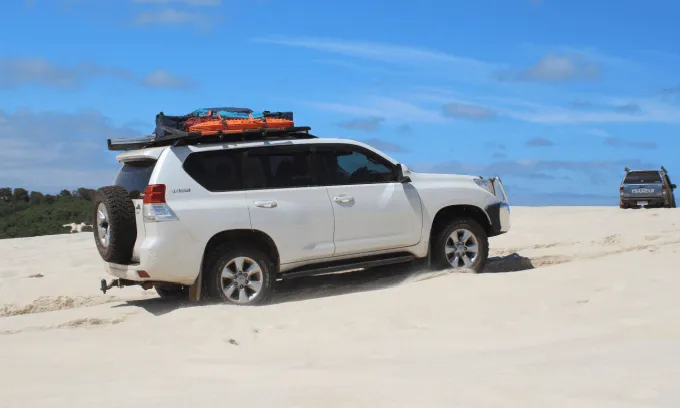
If you intend to use your 4x4 vehicle off-road, check that your insurance policy will cover you for driving off the bitumen, on a beach or on private property. Some insurers are less likely to cover you if you’re stuck in the mud on a dirt road, off the beaten track or bogged in a sand dune.
Some policies may offer roadside assistance at an additional cost. However, many policies specify that vehicle recovery staff must be able to reach your location in a two-wheel drive vehicle. This may be difficult if you’re off-road.
4x4 accessories and modifications
If you are adding any modifications or accessories to your vehicle and want to make sure they’re covered, it could be a good idea to get them insured. This includes add-ons such as specialised tyres, bull bars, LED headlights and roof racks.
Make sure to check with your insurer what the total insured amount is for any add-ons, because in some cases the level of cover can be far below the actual cost of replacement.
Agreed value or market value cover
- Market value: In the event that your car is written off following an accident, the amount you would receive from the insurer under a market value policy is based on what your car would sell for on the open market before the accident. The market price of your vehicle decreases over time, which means a market value policy covers you for less the longer you are insured. Because the market price is generally modelled off a standard vehicle, any modifications you have made will not be covered unless you list them in your policy.
- Agreed value: An agreed value policy covers your car for a fixed amount agreed on by you and your insurer, with the amount set each time the policy is renewed. The cost for agreed value policies tends to be higher than for a market value policy, but they typically offer a greater level of certainty around the compensation you could expect to receive if you need to make a claim.
Towing and recovery benefits
If you use your 4WD in remote areas, check if the policy includes towing or vehicle recovery following an insured event. Limits, conditions and exclusions can vary between insurers.
Trailer and camper cover
You may be covered under a 4x4 insurance policy for damage your trailer does to other vehicles, but only while it’s being towed by your 4WD. There may be coverage limits if your trailer is damaged in an accident.
Some providers may offer specialised camper trailer or caravan insurance policies, which provide coverage for damage caused by an accident.
Personal effects cover
If you’re taking your 4WD for a road trip, you’re likely to bring appliances (e.g. fridges), clothes and other gear.
You may prefer a policy that covers the total cost of all your gear and personal belongings being transported inside your vehicle.
Windscreen cover
Exposure to the harsh elements increases the risk of a shattered or chipped windscreen. Windscreen cover can help cover the cost of repairing or replacing it, but you may need to pay an excess.
Rental car hire
If your car is damaged after an insured accident, rental car hire could offer extended cover if you hire a similar vehicle while your car is being repaired/replaced.
While rental car hire is typically available to standard car insurance as an add-on, you’re usually limited to standard sedan/four-seaters as a temporary replacement. However, a 4x4 insurance policy may permit you to hire a 4WD instead.
What are the exclusions and limits of 4x4 insurance?
Understand what exactly is included and excluded from any policy you’re comparing. For example, if you know you want towing and vehicle recovery included as part of a policy you choose, be sure you’re also comparing like-for-like to avoid any discrepancies in cover.
Before taking out cover, read the Product Disclosure Statement (PDS) and Target Market Determination (TMD) to understand any exclusions, conditions, excesses and benefit limits that may apply.
Can young drivers get 4x4 insurance?
Young drivers, specifically those under 25, generally can get 4×4 insurance; however, it will often be more expensive for inexperienced drivers, including learner drivers and provisional licence holders.
How much does 4x4 car insurance cost?
How much 4x4 insurance costs is influenced by factors such as:
- The model, age and colour of your 4WD
- The value of the car (depends on whether you’ve chosen agreed or market value)
- Any modifications made
- Your claims history
- Your 4WD’s parking location
- Add-ons chosen (e.g. roadside recovery).
As a rule of thumb, insuring a 4WD costs more than a standard car. That’s because:
- 4WDs are much larger than standard cars and can do more damage to other vehicles.
- 4WDs have more complex components (e.g. sensors, safety tech), which are more expensive and harder to replace/repair.
Insuring your 4WD with 4x4 insurance over standard car insurance costs more, but the extra peace of mind and broader coverage could be worth the premium.
Do I need 4x4 insurance?
No matter the type of car you’re driving, it will need some form of insurance to cover you for the unexpected. At a minimum, you will need compulsory third party (CTP) insurance to be able to drive on Australian roads.
But a 4×4 vehicle could make the level of cover you choose even more essential, especially if you’re more likely to be adventuring outdoors or modifying the vehicle.
As well as standard insurance inclusions, consider what else you may need on a 4×4 insurance policy to make your life easier (like roadside assistance, rental car hire or trailer cover). A standard comprehensive policy may have exclusions, such as off-road driving or certain legal modifications, that may be covered by specialised 4x4 insurance.