





What is the Solar Sharer Offer?
Originally announced in November 2025, the Solar Sharer Offer (SSO) promises to deliver at least three hours of free electricity to homes with smart meters in the daytime — when demand is low and solar electricity is abundant.
The SSO will be released alongside the Default Market Offer (DMO) on July 1 2026 in NSW, QLD and SA, with the remainder of the country in 2027.
What are the Solar Sharer Offer’s limitations?
However, there are conditions in the proposed offer, notably a tentative 24-kilowatt-hour (kWh) cap during the free-electricity period — this cap is modelled after the average needs of a five-person household.
That means the SSO will limit how much free electricity you can use. But there are ways to maximise or bypass the cap.
How much energy does a five-person household use?
According to the CSIRO, the average five-person household uses about 20 kWh per day — that’s four kWhs lower than the free-electricity cap.
This means the 24kWh cap should be more than adequate for most Aussies, especially for three hours of use.
However, your actual usage may differ from the national average. Here are two simple ways to paint a more accurate picture of your daily electricity use:
- Download your provider’s smartphone app: Some providers offer a smartphone app that allows for real-time tracking of your electricity consumption, giving you an accurate glimpse of your day-to-day use.
- Read your latest electricity bill: Under the “Energy usage summary” section of your latest electricity bill, you will typically see a breakdown of your month-on-month electricity use. Divide the latest monthly electricity use by the number of days in that month.
One thing to keep in mind: the 24kWh ceiling may not be enough if you have an electric vehicle to fast-charge. For context, the Electric Vehicle Council (EVC) reports that EV ownership results in an average 50 per cent increase in electricity use at home. AGL also reports that EVs may consume 40-70kWh to fully charge.
What can I use the 24kWh worth of free electricity for?
The secret to maximising your 24kWh of free electricity is to defer your energy-intensive use from the evening to the day. Here are some examples that you can ‘mix and match’ in the day.
Running your washing machine
According to Energysage, a washing machine could use anywhere between 400 and 1,400W per load or cycle.
Running your clothes dryer
According to the Commonwealth of Australia E3 Program’s Registration database, a condenser dryer with a 5kg - 10kg capacity, on average, consumes 3.31 kilowatt hours (kWh) of energy per load.
Running your dishwasher
According to the Commonwealth of Australia’s database, the average dishwasher in Australia uses approximately 727 watts per load.
Leave the air conditioning on
Typically, air-conditioners can consume anywhere between 0.5 and 3.2kWh per hour depending on their energy efficiency rating, size and type.
What if there isn’t enough free electricity?
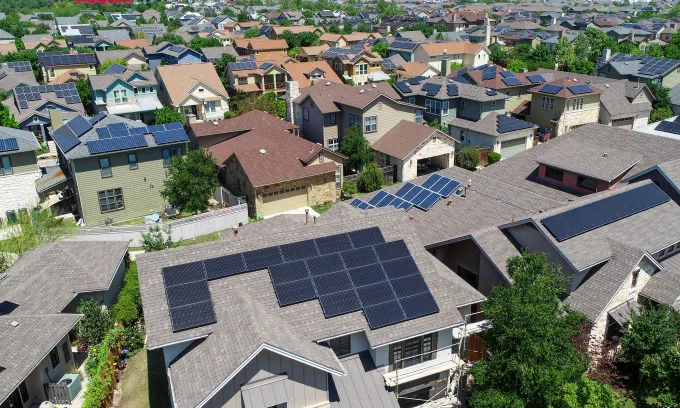
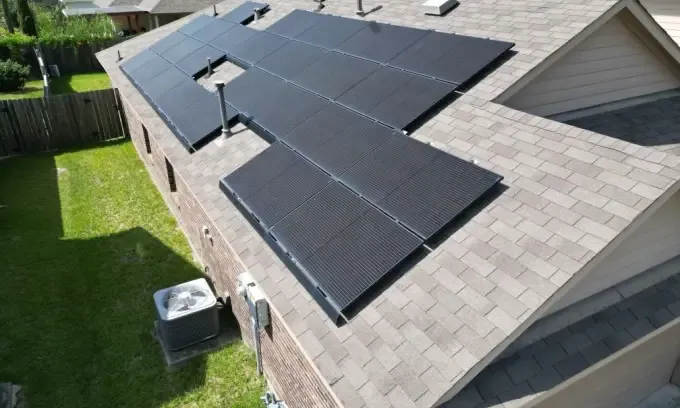
You can supplement your three hours of free electricity by installing rooftop solar. Electricity produced by your rooftop solar system can be used to power your home.
If you’re powering any appliances during the SSO’s free electricity window, you’ll have access to 24kWh of free electricity on top of what your solar panels produce.
How much extra electricity you have access to will boil down to the size of your rooftop solar system and weather conditions on that day. For context, a 6.6kW solar system will generate around 22-26kWh on a sunny day. That gives you at least 46kWh of grid-free electricity.
Any unused electricity (from your rooftop solar) will be exported back to the grid, contributing to the pool of solar powering the SSO scheme. If you’re on a solar feed-in tariff, you’ll also be paid a bill credit (in c/kWh).
A solar feed-in tariff (FiT) credits you (in c/kWh) for excess solar exported from your rooftop solar system to the grid. It’s often advertised as a feature on each electricity plan.
However, installing a rooftop solar system will cost thousands of dollars upfront — how much you can save and when you start saving will boil down to its payback period.
A payback period refers to the time taken for your savings to break even with the cost to purchase it. In this case, ‘savings’ refers to:
- The savings you make from using your own solar-generated electricity instead of paying for grid electricity.
- The savings earned from your solar FiT.
The length of the payback period will be affected by the size, make, model and price of your rooftop solar. Your ‘real’ savings only kick in once you’ve passed the payback period.
Payback periods are difficult to calculate, so we highly recommend speaking to a solar installer, who can assist with those calculations based on your energy needs and habits.
What if I am not home to use the free electricity?
Another cheat code is to install a solar battery and an inverter. A solar battery storage system for unused electricity (e.g. excess solar) for use later in the evening.
Despite its misleading name, you don’t actually need to install solar panels to use a solar battery — you can set it to charge using grid-drawn electricity during the free-electricity window.
The beauty of this strategy is the ability to defer the free electricity window to a later time when the sky turns dark. If you’re on a time-of-use plan where grid electricity in the evening (peak times) costs more, you’ll save a lot more by using your fully-charged battery to keep the lights on.
To store the full amount of 24kWh of free electricity, you will, at minimum, need a 24kWh solar battery to store the maximum amount with an 8kW inverter to recharge your battery in three hours.
Like solar panels, your solar battery’s payback period will depend on:
- How much you’ve paid for the battery and inverter
- How much you can save using free electricity instead of paid electricity.
The good news is that the Federal government is still running the Cheaper Home Batteries Program, meaning that a hefty discount for eligible solar batteries is still up for grabs, depending on the size you’ve chosen.
What if your retailer doesn’t offer the Solar Sharer Offer?
There’s one more catch — smaller energy providers may be exempt from offering the SSO. Depending on the providers servicing your address, you may not even have access to this scheme.
If you live outside of NSW, QLD and SA, you’ll also be left waiting until 2027 to be eligible.
However, free electricity isn’t a new concept. In fact, AGL, GloBird Energy, OVO Energy and Red Energy each offer similar plans with free electricity:
AGL | GloBird Energy | OVO Energy | Red Energy | |
Plan name | Three for free | FOUR4FREE | The Basic Free 3 | Red EV Saver |
States | SA | NSW, VIC, QLD, SA | NSW, VIC, QLD, SA | NSW, VIC, QLD, SA |
Free electricity hours | 10am - 1pm (Three hours) | 10am - 2pm (Four hours) | 11am - 2pm (Three hours) | 12pm - 2pm (Two hours) Only for use to charge your electric vehicle every Sunday and Saturday. |
Source: AGL, GloBird, OVO Energy, Red Energy. March 2026.
But at the end of the day, free electricity is one of many ways to slash your power bills. From sign-up bonuses to tariffs, there are other bill-cutting methods worth looking into.
If the window of opportunity for free electricity is too narrow for you, you should pay closer attention to cheaper electricity rates instead.
Through Canstar’s energy comparison journey, you can directly compare some of the cheapest electricity plans from over 20 providers at your address.