






The push to switch to smart meters is ramping up, but there’s still plenty of confusion and concern from households who have yet to make the upgrade.
In May 2024, Stop Smart Meters Australia Inc, a volunteer-based advocacy group, voiced their frustrations against the Accelerating Smart Meter Rollout.
Many like-minded Aussies have been apprehensive about moving to a smart meter because they fear that this is a thinly-veiled attempt to invade their privacy and increase the cost of future power bills.
However, with the Australian Energy Market Commission (AEMC) set to accelerate the smart meter rollout beginning December 1, customers will soon have no choice but to get on board.
The AEMC’s main objectives are to rapidly modernise and decarbonise the National Electricity Market (NEM), which covers most of Australia (minus Western Australia and the Northern Territory). For customers, smart meters promise more choice and transparency around energy usage - but will a fast-tracked rollout actually help cut your power bill?
Here’s what you need to know.
What is a smart meter?
A smart meter, also known as a digital meter, records your exact energy usage every five to 30 minutes, sending the data to your electricity provider.
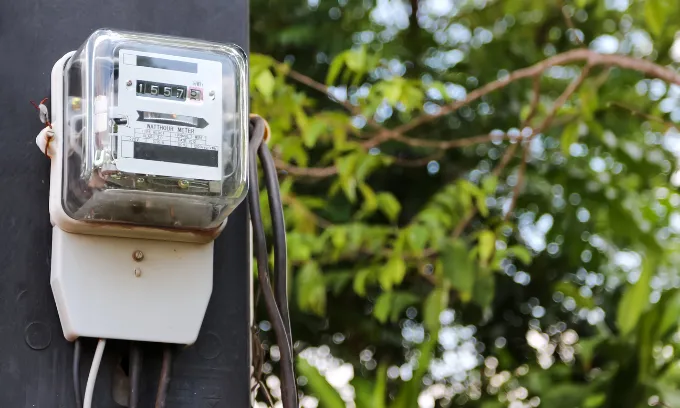
Historically, legacy meters did the exact same thing — measure your electricity use. However, an electricity provider must send a physical meter reader to your property to record your actual electricity use to bill you correctly.
If the meter reader can’t access your legacy meter, you’ll be billed based on your estimated electricity use — you could end up overpaying or underpaying.
With a smart meter, your electricity use is transmitted wirelessly, which means a manual read is no longer required.
National Electricity Rules (NER) prevent you from opting out of a smart meter installation. That means your legacy meter will eventually be replaced by a smart one.
With the rule change, expect a faster national deployment starting in December. In Victoria, there shouldn’t be any real impact because 99% of homes already have a smart meter installed
How does a smart meter give me more choice?
Realtime monitoring
Some providers offer smartphone apps that can be linked to a smart meter. This gives you access to real-time monitoring of:
- How much electricity you use
- When you use the most electricity
- Running electricity bill costs.
Having access to live data allows you to identify opportunities to save electricity, or move to a tariff that suits your usage patterns. As part of the rollout, providers will be required to educate customers on how to better monitor their habits and seasonal electricity use.
More choice of electricity tariffs
Tariffs refer to how your electricity use is priced.
On a legacy meter, customers were restricted to single-rate tariff plans — a flat rate for every kilowatt hour (kWh) of electricity used (in c/kWh).
In comparison, a smart meter opens the doors to the following tariffs and their respective benefits*:
Tariff type | How it works | Saves the most money if: |
|---|---|---|
Time of use (ToU) tariff | A varying rate (in c/kWh) for every kWh of electricity use, where rates are most expensive during peak hours and cheapest during off-peak hours. | If you don’t use much electricity during peak hours. |
Block rate tariff | One rate for the first electricity ‘block’ and another for the remainder (e.g. paying 30c/kWh for the first 10kWh daily, then 35c/kWh) | If your electricity use constantly sits below the first block’s threshold. |
Demand tariff | Supply and usage charges plus a ‘demand’ charge that’s calculated from your maximum electricity use during a high-usage time period. | If you can minimise your maximum energy use during peak hours. |
Controlled load tariff | A cheaper rate exclusive to an energy-intensive appliance that you nominate. Noted that this will limit its hours of operation. | You have a power-hungry appliance (e.g. hot water system) that you don’t mind running with limited hours. |
However, choosing any of these tariffs doesn’t guarantee you immediate savings.
For example, we compared Nectr’s Home Buzz single rate plan to a TOU plan also available from Nectr at the same address. The single rate plan actually came out $0.30 less per day than the ToU plan.
Keep in mind that these figures are based on the Default Market Offer’s (DMO) usage profile in NSW totalling 10.68kWh over 24 hours. This is an estimate that could differ significantly from your lifestyle.
By spoiling you with options to choose from, you can pick a tariff option that’s cheaper for your home.
Solar
If you’re thinking of installing a rooftop solar system, a smart meter is a mandatory requirement. The Accelerated Smart Meter Rollout speeds up your access to the sunny world of solar.
A rooftop solar system could slash your power bills by reducing your reliance on grid electricity. You can learn more about solar and its benefits in our guide to all things solar.
However, take note that real savings only start once you’ve broken even with the cost of installing and purchasing your solar system.
How are customers who move to smart meters protected from higher bills?
The AEMC has approved new consumer protections from upfront costs (e.g. service fees, installation costs) for smart meter installations. This creates an even playing field that doesn’t disadvantage customers who can’t afford these charges.
More importantly, every smart meter installation must be followed by a two-year buffer where customers cannot be moved onto a different tariff by their provider without their consent.
Customers with new smart meters are most likely on a single-rate tariff. If they typically use electricity consistently throughout the day, being moved onto a ToU tariff could unknowingly result in bill shock from the higher usage rates charged in peak hours.
On the other hand, a ToU tariff is a money-saving opportunity if you typically run your appliances during off-peak hours when electricity rates are at their cheapest.
However, customers are free to move onto another tariff structure within the two-year buffer. Once the two-year buffer expires, providers are then permitted to move customers onto a new tariff, but must:
- Provide customers with a clear price estimate under the new and existing tariff based on their historical use in the last twelve months: Illustrating how much an existing tariff compares to the new one provides customers with a comparison of how tariffs can impact their final bill, giving a clear breakdown of their electricity use and habits.
- Notify customers within 30 business days: A 30-day window gives customers time to consider other tariff options or switch electricity plans before the due date.
- Provide information educating customers on managing, monitoring and understanding how much electricity they use.
Some regions may require providers to continuously offer customers with smart meters access to a single rate tariff after the two-year buffer passes.
These safeguards apply from 1 December 2025 until 31 May 2031.
The choice is yours
Smart meters can be an excellent tool to help households take advantage of a wider range of electricity plans. But for customers who don’t keep up with the market, too many options can result in choice overload, or higher power bills from being on the wrong plan or tariff.
While there are horror stories from customers unhappy with a mandatory move to a smart meter, AEMC’s work to champion consumer empowerment and simplify the energy market is a step in the right direction. But looking at how you use energy and which tariff type works best for your household will also set you up for success
Fortunately, saving money on your power bills doesn’t require a complete understanding of the energy market. Canstar’s energy journey showcases some of the cheapest and best energy plans available in our database.
If you haven’t switched electricity plans in a long time, you’re positioned to save hundreds a year by switching plans or providers in mere minutes.