




.webp?w=3840)

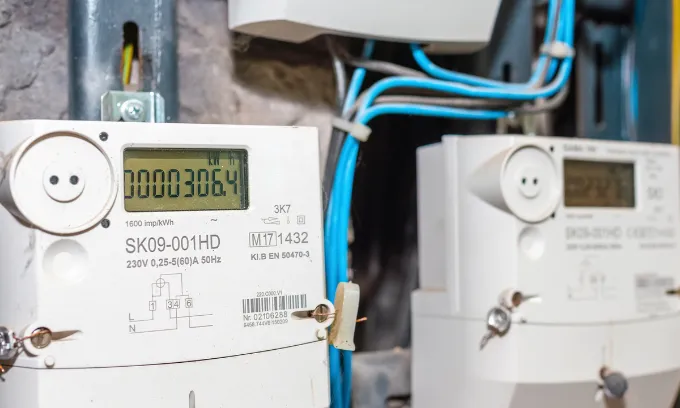
The days of a meter reader wading through the weeds in your front yard are numbered. A national mandatory rollout of smart meters is officially underway and while the technology promises a more efficient grid, many Australians have questions about costs, privacy and the potential pitfalls of time-of-day pricing.
At Canstar, we’ve broken down exactly what this means for your back pocket and your daily routine.
What is a smart meter?
A smart meter is a digital device that electronically records your electricity usage in 5-minute to 30-minute increments and sends that data to your provider.
Unlike old analogue meters that have rotating dials, smart meters have a digital screen that also includes the date and time.
How can I tell if my meter is smart or not?
By all means, head out to the electrical box and check but don’t just assume that if it has a digital screen, you have a smart meter.
To be smart, your meter needs to be feeding the data back to your provider in 30-minute increments, at a minimum.
If you have solar panels or live in Victoria, then you almost certainly have a smart meter. If you don't fall into either of those buckets, one of the fastest ways to work it out is to pick up the phone and ask your electricity provider.
Who is involved in the rollout?
The mandatory rollout began last December and is happening across New South Wales, Queensland, South Australian and the ACT.
Western Australia and Tasmania are running their own rollout programs, which are both well underway.
Interestingly, Victoria completed its rollout of smart meters over a decade ago and has lived to tell the tale, with 99 per cent of homes in the state now using a smart meter.
The smart meter program is mandatory and applies to both houses and apartments, owners and renters alike. In apartments, meters are often switched over in blocks to make the logistics easier for technicians.
Is smart meter installation free?
Yes. Under the mandatory rollout rules, installation is free for households.
However, if you don’t want to wait for your spot in the rollout, you can ask your provider to have one installed early, which they’ll typically do within a few weeks, and while this is often also free, some providers may charge a fee.
What happens on installation day?
- Your electricity provider (for example EnergyAustralia, Origin or whoever it is that sends you an electricity bill) will contact you when it’s time to switch and send an approved technician out on the allocated day.
- You don’t need to be at home to have it installed, provided the person has safe access to the meter box (that means keeping any dogs inside that might stand in between the installer and the electrical box).
- Your power will go off for a moment but it should be for less than an hour (often a lot less).
- Finally, your installer should not ask for personal information or money. If they do, call your provider straight away.
The big question: will a smart meter send my electricity costs soaring?
If you have a smart meter you can access time-of-day pricing, which is an electricity plan that charges you different amounts depending on when you use your power, with the daytime rates typically a lot cheaper than the night.
The concern is, people will be forced on to these types of plans even when they don’t want to be. If that’s your worry, there are two rules you need to be across:
- The rules of the mandatory rollout state that anyone who switches over to a smart meter in this program can’t be forced on to a time-of-use plan within the first two years of having a smart meter.
- There is also an additional rule (electricity regulators must have all been teachers in past lives because they truly love rules) that applies in Queensland, South Australia and shortly, NSW, that says that ‘designated’ providers will be required to keep offering flat-rate plans for those who prefer them.
What we don’t know is the prices of the flat-rate plans that could be available, with the potential for electricity providers to stop offering competitively priced flat-rate plans in an effort to push customers on to time-of-day plans.
Plan type | How it works | Potentially good for | |
|---|---|---|---|
Flat rate plan | Any meter type | Same price for power regardless of what time of day you use it. Some flat rate plans charge more if you use over a certain amount of power in a day, often worked out as an average | People who use the majority of power at night and don’t have the capability to shift this. Plus, people who don’t want to have to worry about when they use electricity. |
Time of use plan | Smart meter only | Difference rates depending on when you use the electricity, where the day time rates are typically a lot lower than the evening peak | Those home during the day or who use timers for dishwashers/dryers. |
Controlled load | Either | Some houses have what’s known as a ‘controlled load’ which specifically runs big appliances (e.g. a pool filter) at specific times of day, for a lower price. | If you have a controlled load, you’ll have to pick this type of plan but you should have the choice between a flat rate or a time-of-day one. |
Time to debunk (or prove) some of the questions circulating about smart meters
Can my provider cut my power if I’m using too much?
There is a fear that providers will cut your power if you use too much. This is a myth. Providers want to sell you power, not stop you from using it. Disconnection is only possible in extreme circumstances, usually related to unpaid bills.
Are smart meters safe?
While it is natural to feel a bit on edge when something new gets installed on the side of your house, think of your smart meter as a very boring digital bean-counter.
To feed data back to the network, they’re using mobile phone networks emit non-far weaker signals than your smartphone in your pocket or the Wi-fi in your kitchen. So in terms of radiation risk – it’s incredibly low.
In terms of fire risk - the smart meter rollout is heavily regulated, using approved technicians and plenty of rules. In NSW, for example, you can check them out here.
Is my data secure?
Data is encrypted and sent via secure mobile networks to your provider. While no digital system is 100% unhackable, the security standards are equivalent to those used by banks and telecommunications companies. Additionally, metering data doesn't feature customer names or addresses and all of the information collected is covered by the Privacy Act.
Is this just a ruse to push up prices?
The move to smart meters isn’t likely to be a big ruse to push up prices, because, I’m sorry to say, these prices are on the rise regardless of whether you have a smart meter or not.
The government says getting people to use more electricity in the day will help keep a lid on prices at night and this has plenty of truth to it – provided the sector remains competitive and customers can easily shop around.
Smart meter pros and cons: at a glance
Pros
- Accuracy: No more estimated bills because the meter reader couldn't get past your dog.
- Insights: See your usage in near-real time via apps to track energy-guzzling habits and potentially identify appliances sucking extreme amounts of power.
- Solar benefits: Essential for accessing solar feed-in tariffs and free lunchtime electricity offers.
- Grid reliability: Helps distributors find and fix blackouts faster.
Cons
- Short outage: You’ll lose power for up to an hour during installation.
- Complexity: Managing time of use electricity rates means more planning around when you use optional appliances such as the dryer. People who can’t be at home due to work or other commitments could potentially get stung with higher prices on a time of use plan (depending on the rates).
- Technical complications: glitches in technology can happen, although with digital technology it should get picked up relatively quickly and you can run checks yourself.
The verdict
The key is to understand your lifestyle. If you can set your appliances to run at 1pm, a smart meter could potentially work out well for you. If you can’t, you might find you’re better off finding a provider that still offers a flat rate.
Whichever plan you choose, it’s critical to shop around, not just every time you move house but at least once a year. Electricity companies are often offering sharp rates to new customers and while the idea of switching providers can be tiring, electricity is typically one of the easiest bills to switch if you know which provider you want to jump ship to.