
What does it mean when a car is written off?
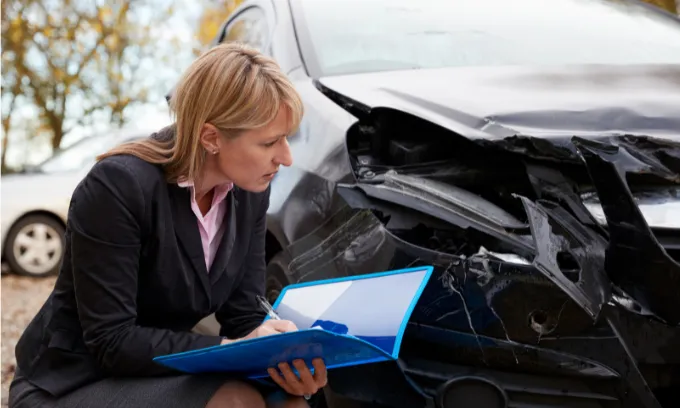
Sometimes after an accident, your car may be damaged beyond repair, or your insurer may decide the repair cost would be more than the car’s insured value.
In these cases, your car may be written off, meaning that instead of the vehicle being repaired, you may receive an insurance payout.
A car could be written off for any number of reasons, including:
- severe structural damage due to an accident
- damage due to fire, impact or water
- severe hail and storm damage.
Are there different types of write-off categories?
When a car is written off, it will fall into one of two categories, usually determined by the insurer:
Statutory write-off: A vehicle that has been damaged so severely that it can never be safely driven again, regardless of any repairs. Once declared a statutory write-off, the vehicle is recorded on the relevant state or territory's Written-Off Vehicle Register (WOVR) and can never be re-registered.
The Written-Off Vehicle Register (WOVR) records vehicles that have been written off due to severe damage or because they are considered uneconomical to repair. In most states and territories the WOVR applies to vehicles up to 15 years old and weighing less than 4.5 tonnes.
Repairable write-off: A vehicle that could technically be repaired, but where the cost of repairs and the vehicle's salvage value exceed its insured value before the accident. In this situation, an insurer will generally retain the vehicle and pay the policyholder its agreed or market value, depending on the policy.
If your car is uninsured
Following an accident, the at-fault party's insurer may offer to assess and repair your vehicle as part of the claims process. However, this assessment could result in the vehicle being declared a write-off.
You can choose not to proceed with an insurer assessment
If you'd prefer to manage the repair or replacement of your vehicle yourself, you are generally entitled to decline the insurer's assessment. You may still be able to seek compensation for your losses from the at-fault party's insurer, although obtaining legal advice may be worthwhile.
What happens when a car is written off?
Once you've accepted your insurer’s decision to write off your car and its details have been entered in the Written-Off Vehicle Register (WOVR), you will typically receive a payout from your insurer, to the sum outlined in your insurance policy.
If your insurance includes new-for-old replacement cover (also known as ‘new car in case of write-off’) and your car is written off, then you may be eligible to receive a replacement car from your provider, instead of a payout. This may be a car of the same model, or the same market or agreed value, depending on your certificate of insurance.
How much will I get if my car is written off?
The amount you'll be paid following a car insurance write-off will be determined by the car’s market value or agreed value.
Agreed value is a fixed sum that's determined when you first take out the policy, while market value is the amount your car would fetch on the open market, which takes into consideration factors such as:
- its listed value and condition before the accident
- the age, make and model of the vehicle
- how many kilometres it travelled
- its service and accident history.
As well as offering a payout if your car is written off in a road accident, some comprehensive car insurance policies cover accidental damage, including hail, storm and flood damage.
What factors impact how much money you get?
Your excess
Normally, if you make a car insurance claim, you’ll pay the excess, then your insurer will cover the remaining repair cost. But if your car is written off, your excess will typically be deducted from your insurance payout.
Your remaining premiums
Car insurance policies are typically renewed annually, meaning that even if you pay your premiums monthly, it’s likely you'll have agreed to pay a year’s worth of premiums under your contract. If your car is written off, your insurer may deduct any unpaid premiums from the time the claim was made until the date when your current 12-month period concludes.
Your unused registration and CTP
Your insurer will likely consider your car’s registration and CTP when determining its market value. In some cases, an insurer may deduct the remaining value of both from your payout, and you will need to organise a refund for your unused CTP from your CTP insurer, and your unused registration from your state or territory’s transport and road authority. Your policy's Product Disclosure Statement (PDS) should explain how your insurer treats registration and CTP.
Is it bad to write off a car?
Car accidents are an unfortunate reality of life, and they are one of the many reasons why car insurance exists. The reality is, when your car is written off, there can be an emotional impact on you, as well as potential implications for your future insurance premiums.
Your driving and claims history can affect how much an insurer charges, and depending on your insurance provider, writing off your car may cause your premiums to increase, even if you were not the driver at fault.
Can an insurer refuse to write off a car?
Sometimes even if an insurer deems a vehicle repairable, you still may not feel safe driving it. It is possible to dispute the insurer’s decision, though you’ll need to provide your own evidence that the vehicle is unsafe or uneconomical to repair.
Insurers use qualified smash repairers to assess vehicle damage and make repairs, which often come with quality guarantees. If you experience problems following a repair, you may be able to return to the insurer and/or the repairer for resolution. If problems persist, you can escalate the matter with the Australian Financial Complaints Authority (AFCA).
What happens if you disagree with a car being written off?
Once an insurer declares a car to be a repairable write-off, it will notify the relevant WOVR. It is possible to dispute your insurer’s decision, but you’ll need to gather supporting evidence quickly to present your argument.
For example, you could gather:
- Quotes from qualified smash repairers outlining how much they estimate it would cost to repair the car
- Quotes from salvage yards about its salvage value
- Information about your car’s market value from car sales websites.
If you present this information to your insurer before it notifies the WOVR, you may be able to convince it to change its decision.
If you're unable to resolve your dispute with your insurer to your satisfaction, you may be able to take your case to the car insurance ombudsman for resolution.
Can you keep a repairable write-off?
If you wish to keep your car after it's been deemed a repairable write-off, you can request your insurer to do so. If you choose to keep a repairable write-off, you'll still receive the sum for which it was insured, minus any salvage value the car might have.
You might also choose to keep a repairable write-off if you plan to salvage parts from the car yourself, especially if you've made modifications to it that can be salvaged. Likewise, you may want to have the car repaired yourself, if this is possible.
Can you re-register a repairable write-off?
It is possible to re-register a repairable write-off, but the rules vary depending where you live, and are stricter in some places than others. The current rules are as follows:
Australian Capital Territory
In the ACT, a vehicle that is considered a repairable write-off can be re-registered in the territory; however, it must have been registered before the write-off and pass an inspection.
New South Wales
In NSW, a repairable write-off can be re-registered so long as it's not a statutory write-off, and meets certain ownership conditions. You also need an Authorisation to Repair, from Transport for NSW (TfNSW), and the vehicle must pass both an Authorised Unregistered Vehicle Inspection Scheme (AUVIS) inspection and an inspection by TfNSW's Vehicle Identification Inspection Unit (VIIU).
Northern Territory
Northern Territory Government regulations say a repairable write-off can be re-registered once it's undergone a roadworthy inspection, a vehicle identity inspection and a stolen motor vehicle (SMV) check.
Queensland
In Queensland, a repairable write-off can be re-registered once it passes a safety certificate inspection and a written-off vehicle inspection.
South Australia
South Australian government regulations say a vehicle considered to be an economic repairable write-off can be re-registered after it's repaired, as long as its identity has been verified and it has passed a road safety inspection.
Tasmania
In Tasmania, a repairable write-off can be re-registered subject to a three-tiered inspection process: a structural inspection at an Approved Motor Body Repair Inspection Station (AMBRIS), a pre-registration inspection at an Approved Inspection Station (AIS) and a transport identification check.
Victoria
VicRoads says a write-off must be repaired in accordance with the manufacturer’s repair instructions. To re-register a write-off, you must get a Certificate of Roadworthiness and a Victorian Vehicle Identity Validation (VIV).
Western Australia
Transport WA says a repairable write-off vehicle can be re-registered after it's been inspected by an authorised write-off inspection service provider and undergone an identity and roadworthiness inspection.
Can you buy a repairable write-off car?
It's possible to purchase a repairable write-off car, but there are many potential risks to consider:
- The cost of repairing the damage can often be greater than the cost of the vehicle itself
- A repairable write-off typically has little to no resale value
- Your insurance premiums could be driven up by the fact that the car has been damaged previously.
Can you buy a hail-damaged write-off car?
Buying a used car that's previously been written off due to hail damage can be a relatively cheap option, but there may be even more risks involved that could make it uneconomical in the long term. Repairing hail damage can be expensive, and if left unrepaired, hail damage can eat away at the paintwork of a car, causing rust.
Queensland's Legal Aid also warns there could be other damage from any hail or storm, such as damage to the car's electronics.
What happens if your car is written off with finance owing?
Even if your car is written off, you’re still responsible for paying off the outstanding car loan or personal loan. If you don't, then you may be in default of your loan contract. Typically your insurer will be required to pay the outstanding amount to your lender.
If there's a gap between the amount paid out by your insurer and the finance owing on the car, you may be required to pay this amount to your lender yourself. If you have motor equity insurance (MEI), then this may cover the shortfall.
If you're experiencing any financial hardship, your lender may be willing to negotiate a payment plan for the outstanding amount.
You can contact the Financial Rights Legal Centre’s Insurance Law Service on 1300 663 464 for insurance advice, and the National Debt Helpline for free support with debt problems on 1800 007 007.