


Rate Tracker
RBA Cash Rate
Stay up to date with the RBA cash rate and how it’s impacting current Home Loan interest rates.
What’s happening with interest rates?
After 13 straight rate hikes starting in May 2022—which pushed the cash rate from just 0.10% up to 4.35%—the RBA finally started easing things a bit in 2025.
The RBA’s Monetary Policy Board delivered two rate cuts in February and May 2025, bringing the official cash rate down to 3.85%. A further 25-basis-point cut in August 2025 reduced the rate again to 3.60%.
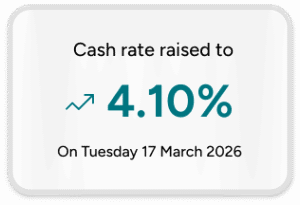
However, the easing cycle proved short-lived. In 2026, the Board lifted the cash rate twice in a row, pushing it back up to 4.10% at its March 2026 meeting. The move came as inflation remained stubbornly high—often referred to as “sticky inflation”—with global pressures such as geopolitical conflict in the Middle East contributing to ongoing price pressures.
On this Page
Rate changes for Owner Occupier Variable
Home Loan Rates
← Mobile/tablet users, scroll sideways to view full table →
Table last updated 20 March 2026. Table sort order based on latest known owner occupier variable rate change by big four banks, then alphabetically. Excludes intro rates, green or eco loans. Lowest rates listed reflect current variable interest rates, plus 25 basis points unless specified by the lender.

Get alerted as soon as providers change their rates on our database
Create a watch list on the Canstar App to track providers’ home loan or savings rate changes
Why do interest rates change?
The RBA is Australia’s central bank. The bank and its Monetary Policy Board must follow a specific charter, which includes maintaining stable employment and keeping inflation, specifically ‘trimmed mean’ inflation, within what’s called the ‘target band’ of 2% – 3%.
The MPB’s only tool to maintain stability is raising or lowering the cash rate. It meets regularly to assess a large range of data and make a decision to either hike, hold or cut the cash rate.
The increases to the cash rate that started in May 2022 and finished in November 2023 were due in part to a significant rise in the level of inflation for Australia, which was tracking at a headline rate of 7.8% in the December 2022 quarter—far higher than the target band.
Why do interest rates change? In simple terms:
-
When inflation is too high, the RBA may raise rates to slow spending and borrowing.
-
When the economy weakens, it may cut rates to encourage households and businesses to spend and invest.
How do cash rate changes impact your home loan?
The cash rate, which is set by the MPB, is essentially the rate of interest that banks and lenders have to pay when they borrow money from other banks or lenders.
When the cash rate goes up, so does the amount of interest banks have to pay. This impacts the amount of money that you, as their customer, will then have to pay for borrowing from them in the form of a loan.
Changes to the cash rate can flow through to the interest rates banks offer on a range of products, including:
-
Home loans: Variable mortgage rates often rise or fall after RBA decisions, affecting monthly repayments.
-
Savings accounts and term deposits: Higher rates may mean better returns for savers, while cuts can reduce interest earned.
However, banks are not required to pass on rate changes in full, meaning the impact on borrowers and savers can vary between lenders.
Find out how these cash rate changes impact your home loan.
How can I compare home loans?
With rates changing, it pays to check whether your mortgage is still giving you the best bang for your buck.
Canstar makes it easy to compare home loans from a wide range of lenders, so you can see at a glance how interest rates, fees, and features stack up.
A few things to keep in mind when comparing:
-
Interest rate: Even a small difference can add hundreds to your repayments over time.
-
Comparison rate: This includes certain fees and charges, giving a clearer picture of the loan’s true cost.
-
Fees: Watch out for application, ongoing, or discharge fees—they can sneak up on you.
-
Features: Things like offset accounts, redraw facilities, or extra repayment options can make a big difference in the long run.
A quick comparison could reveal a home loan that’s cheaper, more flexible, or just better suited to your situation.