





Australia's top 10 suburbs for property growth
After a strong start to 2026, Australia’s housing market has noticeably cooled. The combination of higher interest rates and overall cost of living pressures appears to have impacted demand from investors and would-be homeowners, but it’s not all bad news. Even with capital city home values declining, there are still plenty of regional and metro suburbs where prices continue to grow.
While past growth isn’t a guarantee of future performance, it’s one of several factors you may look at when deciding where to buy in Australia. The ‘best’ suburb for investors in any state or region will vary based on your budget, strategy, and risk tolerance. What positions a suburb among the ‘best’ in its class will also vary between investors: one might consider vacancy rates the deciding factor, while another would look at local economic growth or buyer demand.
Top 10 suburbs in Australian capital cities
For our purposes, we’ve considered Cotality data highlighting suburbs boasting the largest annual growth in median property values over the year to July 2026.
To spread the love, we’ve included the top two suburbs from New South Wales and Victoria, plus the top suburbs from Queensland, South Australia, Western Australia, Australian Capital Territory, Northern Territory and Tasmania.
Rank | Suburb | Median value | Annual change |
|---|---|---|---|
1 | Serpentine - Jarrahdale (Perth) | $976,576 | +28.2% |
2 | Beaudesert (Brisbane) | $933,746 | +20.8% |
3 | Darwin City (Darwin) | $560,453 | +17.1% |
4 | Hobart - North West (Hobart) | $669,998 | +15.3% |
5 | Campbelltown (Adelaide) | $1,153,579 | +13.5% |
6 | Richmond - Windsor (Sydney) | $1,007,861 | +7.5% |
7 | Wyong (Central Coast) | $954,707 | 7.4% |
8 | Weston Creek (Canberra) | $1,000,643 | +5.4% |
9 | Sunbury (Melbourne) | $729,763 | +4.3% |
10 | Brimbank | $722,595 | +3.7% |
Source: Cotality, July 2026.
Top 10 suburbs in regional Australia
For the below table, we’ve included the top two suburbs from regional New South Wales, Victoria, Queensland, and South Australia, plus the top suburbs from regional Western Australia and Tasmania.
Rank | Suburb | Median value | Annual change |
|---|---|---|---|
1 | Goldfields (WA) | $464,513 | +32.7% |
2 | Darling Downs - East (QLD) | $627,463 | +23.8% |
3 | Darling Downs - Maranoa (QLD) | $458,138 | +22% |
4 | Dubbo (NSW) | $599,950 | +19.9% |
5 | Wagga Wagga (NSW) | $652,663 | +19.1% |
6 | Central Highlands (TAS) | $488,722 | +16.3% |
7 | Mid North (SA) | $361,833 | +15.9% |
9 | Eyre Peninsula and South West (SA) | $433,128 | +15.5% |
9 | Latrobe Valley (VIC) | $518,889 | +14.1% |
10 | Grampians (VIC) | $390,314 | +13.5% |
Source: Cotality, July 2026.
What do you need to know about the Australian property market in 2026?
According to August insights from Cotality, median dwelling values across Australia are up by 5.3% year-on-year. However, growth has stagnated in the second half of 2026, dropping 1.9% in the May-July quarter.
Cotality lists the median dwelling values across Australia’s major cities in August 2026 as:
City | Median house price | Median unit price | Combined |
|---|---|---|---|
Sydney | $1,529,308 | $889,617 | $1,244,617 |
Melbourne | $936,528 | $632,021 | $797,354 |
Brisbane | $1,207,039 | $875,135 | $1,104,094 |
Adelaide | $1,007,684 | $692,861 | $944,909 |
Perth | $1,073,500 | $760,708 | $1,029,797 |
Hobart | $805,165 | $587,863 | $756,951 |
Darwin | $755,082 | $475,907 | $642,175 |
Canberra | $1,025,827 | $594,894 | $883,138 |
Source: Cotality, August 2026.
No matter where you’re looking to buy in Australia, consider the following factors when comparing suburbs.
Vacancy rates: According to SQM Research, Australia’s national vacancy rate is 1.3% as of July 2026. Comparing the capital cities, Canberra’s rate is highest at 1.8%, with Sydney and Melbourne both at 1.7%. Darwin has the least amount of vacancies, at just 0.3%.
Vacancy rates are generally considered a herald for tenant demand, with higher rates suggesting less demand and lower rates suggesting more.
It’s worth noting that, at 1.3%, vacancy rates are far below what’s historically considered ‘healthy’ (around 2% to 3%) around most of the country.
- Sales volumes: Cotality data shows a year-on-year drop in sales volume, falling -0.8% nationwide in the 12 months to July 2026. Areas with the biggest increases include regional Northern Territory (20.1%), regional Victoria (18.4%), and regional New South Wales (11.9%). Darwin (12.2%), Canberra (10.1%), and Hobart (6.8%) also performed strongly.
- Rental growth: National rental rates have grown by 5.9% in the 12 months to August 2026 (Cotality). Strongly performing cities include Darwin (10.4%), Perth (8.1%), and Hobart (8%).
- Rental yield: Cotality data indicates that gross rental yields in Australia are 3.7% as of July 2026. The capital city with the highest yield is Darwin (6.2%), while Sydney is the lowest at 3.3%. CommBank’s July data shows the median Australian rent is $705 per week across all dwellings and states.
- Infrastructure spending: On a national scale, the Australian Government’s 2026-27 Budget includes a $2 billion Local Infrastructure Fund, designed to build essential infrastructure to support up to 65,000 new homes. This includes roads and bridges, stormwater and drainage works, water and wastewater management, electricity infrastructure and public transport works.
What is impacting price growth across Australia?
Alongside cost of living pressures and high core inflation, factors contributing to a mid-year slowdown in price growth and buyer activity include:
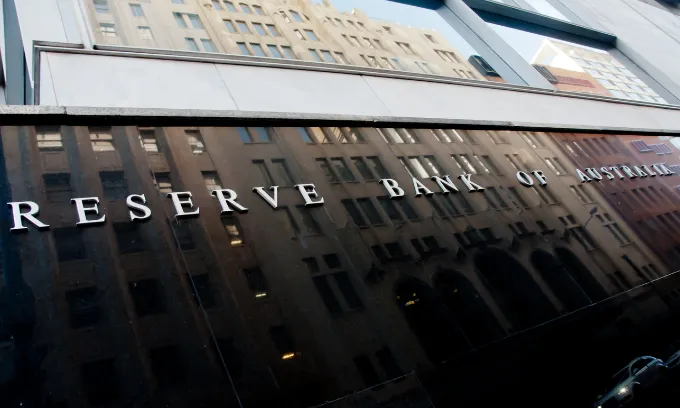
- RBA cash rate hikes: Multiple rate hikes through the year have led banks and lenders to increase their own home loan interest rates.
- Proposed changes to negative gearing and CGT: Investors may be hesitant due to Federal Budget reforms to Capital Gains Tax and negative gearing, set to apply from 2027.
Australian property market forecast: where to from here?
Economists at Australia’s big four banks generally agree that country-wide growth will continue to slow over 2026, but may make a comeback in the second half of 2027.
- ANZ: Economists at ANZ predict dwelling prices across capital cities will fall by 4.3% in 2026, and 3.4% in 2027.
- CommBank: Economists at CommBank predict that dwelling prices will begin to recover in 2027, with around 2% growth over the year.
- NAB: Economists at NAB predict prices across capital cities will decline by 5% over 2026.
- Westpac: Economists at Westpac predict that dwelling prices will be flat by the end of 2026, but may increase by 3% over 2027.
What to consider when buying property in Australia
In addition to price and demand trends and general market data, consider the following when you’re researching where to buy your next property in Australia.
- Utility costs: Essential services including water supply, sewerage and waste collection, electricity and gas suppliers and mobile and broadband coverage.
- Flood and fire risk: Natural disaster risks and management, which may be particularly important in rural and regional areas.
- Local amenities: Access to healthcare, education, public transport, shopping, entertainment, and other services.
- Economic diversity: The impact of the region’s biggest employers and industries on the local economy.