
What is caravan insurance?
Caravan insurance is an insurance policy that can provide financial cover if something were to happen to your caravan and/or its contents.
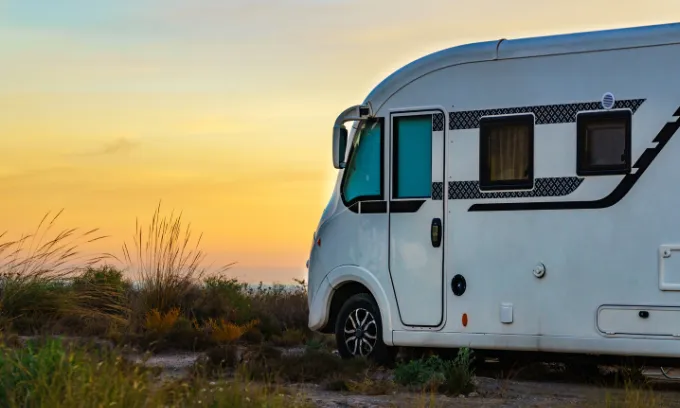
A caravan is an unpowered (engineless) vehicle that can be towed by a car. It often includes some basic bedding, seating, bench space, kitchen facilities, and sometimes a shower and toilet.
You can typically purchase insurance to cover your caravan while it is:
- Travelling on the road
- On-site at a caravan park
- Not being used for a certain period of time.
Because caravans are unpowered and externally towed by a vehicle, caravan insurance is a standalone policy independent of standard car insurance.
However, caravan insurance offers levels of cover similar to a standard car insurance product (depending on the insurer).
There are typically different levels of cover available under a caravan insurance policy:
- Comprehensive: Policies that cover damage or loss of the caravan and property inside it, as well as any damage to other people’s property
- Third party property damage (TPPD): Policies that only cover damage to someone else’s property where the policyholder is at fault.
- Third party fire and theft (TPFT): Policies including cover for fire and theft of your caravan as well as damage to someone else’s vehicle.
Do you need caravan insurance?
Caravan insurance is not a legal requirement in Australia, unlike Compulsory Third Party (CTP) insurance, which is mandatory for all motorised vehicles driven on public roads.
If your caravan was involved in an accident where someone else is hurt or killed, associated liabilities may be covered by your car’s CTP insurance, provided the caravan was:
- Registered with your state’s transport authority
- In a roadworthy condition (deemed safe to drive)
- Towed by a registered car.
Why should you get caravan insurance?
In the case of an accident, CTP only financially covers liability for injuries or death caused to other people. CTP insurance will not cover damage to your own property, or the property of others. More crucially, drivers taking their caravans for long-haul trips or adventuring may face these challenges:
- Environmental risks: If you're driving off-road, your caravan will be exposed to rougher terrain and unpredictable weather (e.g. flood waters), increasing the risk of damage or being trapped.
- Higher accident risk: Because of the increased weight and length from a towed caravan, sudden steering or braking can cause your caravan to sway violently, increasing the likelihood of an accident.
- Higher fire risk: Caravans are typically made with combustible materials and equipped with fuel-powered appliances (e.g. LPG cylinders, ovens, heaters) and high electrical loads (e.g. mobile solar batteries) that can overheat or malfunction.
- Theft and vandalism: Caravans and the camping gear/appliances inside them (e.g. fridges, beds) are worth a lot of money. Moving from campsite to campsite with your caravan can also increase your exposure to thieves and burglars.
- Caravan or vehicle failure: If your caravan or towing vehicle fails, you may be left paying hundreds for specialist roadside tow and emergency accommodation in the interim.
Caravans are not typically covered by standard types of car insurance, unless your policy’s Product Disclosure Statement (PDS) states otherwise. You may be covered for damage your caravan causes to other people's property while it's attached, but not damage to the caravan itself.
If you need cover for damage or loss, then you may want to consider separate caravan insurance.
What does caravan insurance cover?
You can generally expect some financial protection for loss or damage to your caravan caused by or arising from:
- Accidental damage
- Theft or attempted theft
- Fire
- Storm and floods
- Earthquake
- Vandalism or a malicious act by a third party
- Emergency repairs, accommodation and transport.
It could also cover the costs of:
- Food spoilage
- Storage
- Towing
- Contents up to a certain amount
- Campsite booking cancellations (if your caravan is damaged or being repaired).
- Transport costs to collect your repaired caravan.
- Debris disposal (if your caravan and its contents are written off).
- Caravan replacement.
Like standard car insurance, the breadth of coverage offered by your caravan insurance policy will vary with the tier chosen:
- If you’ve chosen TPPD caravan insurance: None of the events are covered.
- If you’ve chosen TPFT caravan insurance: Only covers theft or attempted theft and fire, and emergency repairs, accommodation and transport (if caused by theft or fire).
However, between the same tiers, insured events may differ from insurer to insurer. Always read each policy’s PDS to understand its inclusions clearly.
What does caravan insurance not cover?
Exclusions for caravan insurance will vary depending on your policy. Some common exclusions that may apply include loss, damage, injury or death arising from:
- Off-road use
- Deterioration, depreciation, rust, corrosion, mould, or wear and tear of the caravan
- Vermin
- The lawful seizure or confiscation of your caravan or any part of it
- Acts of war or terrorism
- Faulty design, or mechanical or structural failure in the caravan
- Fusion of electric motors
- A failure to secure your caravan, or leaving it in an unsafe position
- Using your caravan for an unlawful purpose
- An intentional act by you, a family member, or a person who has your permission to use your caravan
- Pre-existing damage from before you took out your policy
- Water escaping from a shower recess or shower base
- Scorching or melting where there was no flame (check details with your insurer).
Does caravan insurance offer optional benefits?
Yes, caravan insurance providers generally offer some optional benefits you can add to your policy for an extra fee.
Contents cover
Some insurers will only cover your caravan’s contents up to a certain limit, while others may not cover them at all.
If you want to take out contents cover beyond what your policy offers, you may be able to purchase this through your provider as an optional benefit.
You may also be able to specify particularly valuable items on your policy so you can cover them for what it would cost to repair or replace them.
Keep in mind your insurer may exclude certain items from your policy (e.g. sporting equipment, computers or cameras). Check your exclusions in the PDS for more details.
Lay-up cover
Lay-up cover allows you to add cover for your caravan while it is not being used. This option typically lets you maintain your policy at a reduced premium for the specified period you aren’t using your caravan.
However, this cover may only apply if you keep your caravan in a safe and secure spot while it is not being used (e.g. a carport or lockable garage).
It may also only be available for a maximum period of time. Check with your provider to see if this optional add-on is available.
Annexe cover
A caravan annexe is an enclosed room that attaches to your caravan, effectively turning your outdoor awning into an extra living space.
Some providers may not cover (or offer limited cover for) your caravan’s annexe (if you have one) under their standard benefits for caravan insurance. .
If it is not included in your standard benefits, your insurer may offer annexe cover as an optional extra for an additional premium.
Electric motor burnout
Electric motor burnout occurs when electric appliances in your vehicle short-circuit from a sudden power surge.
In the case of a caravan, appliances like fridges, heating and air-conditioning are susceptible to short-circuiting and damage.
Electric motor burnout cover may cover you for those damages, but certain conditions may bar you from compensation. You may not be eligible if:
- Your appliances are still under warranty.
- Your appliances are being used for business purposes.
Windscreen and glass cover
Some insurers may cover the repair or replacement of your windscreen, windows, sunroof, or moonroof if they are damaged (for an extra fee).
Whether or not you will have to pay an excess (the portion you pay to access your policy’s benefits) will differ from insurer to insurer.
How much does caravan insurance cost?
The cost of your caravan insurance will depend on a range of factors, including:
- How you use your caravan: Your premium will differ depending on whether you choose to cover a touring caravan, or an on-site caravan (e.g. one located at a caravan park).
- Sum insured: Providers of this type of insurance may offer agreed value or market value when determining the sum insured for your caravan. Agreed value is a fixed sum you and your insurer choose for the caravan, whereas market value is based on the amount your caravan is worth at the time of the claim. Agreed value policies tend to carry a higher premium.
- Excess: If you choose a higher excess, this will tend to lower your premium, and vice versa.
- Claims history: If you’ve made multiple claims before, you’ll often be penalised with higher premiums to account for that risk. But if you have a clean history, you may be entitled to a no-claims discount.
- Level of cover: Including any extras.
What to consider when choosing caravan insurance
Before you take out caravan insurance, read each policy’s PDS thoroughly so you are aware of the benefits, exclusions, and any additional excesses that may apply.
If you are buying caravan insurance from the same provider you use for other insurance policies, such as your car insurance, it could be worth checking to see if you are entitled to a multi-policy discount.